Challenges in Regulation and Reimbursement of Patient-Operated Imaging
Background
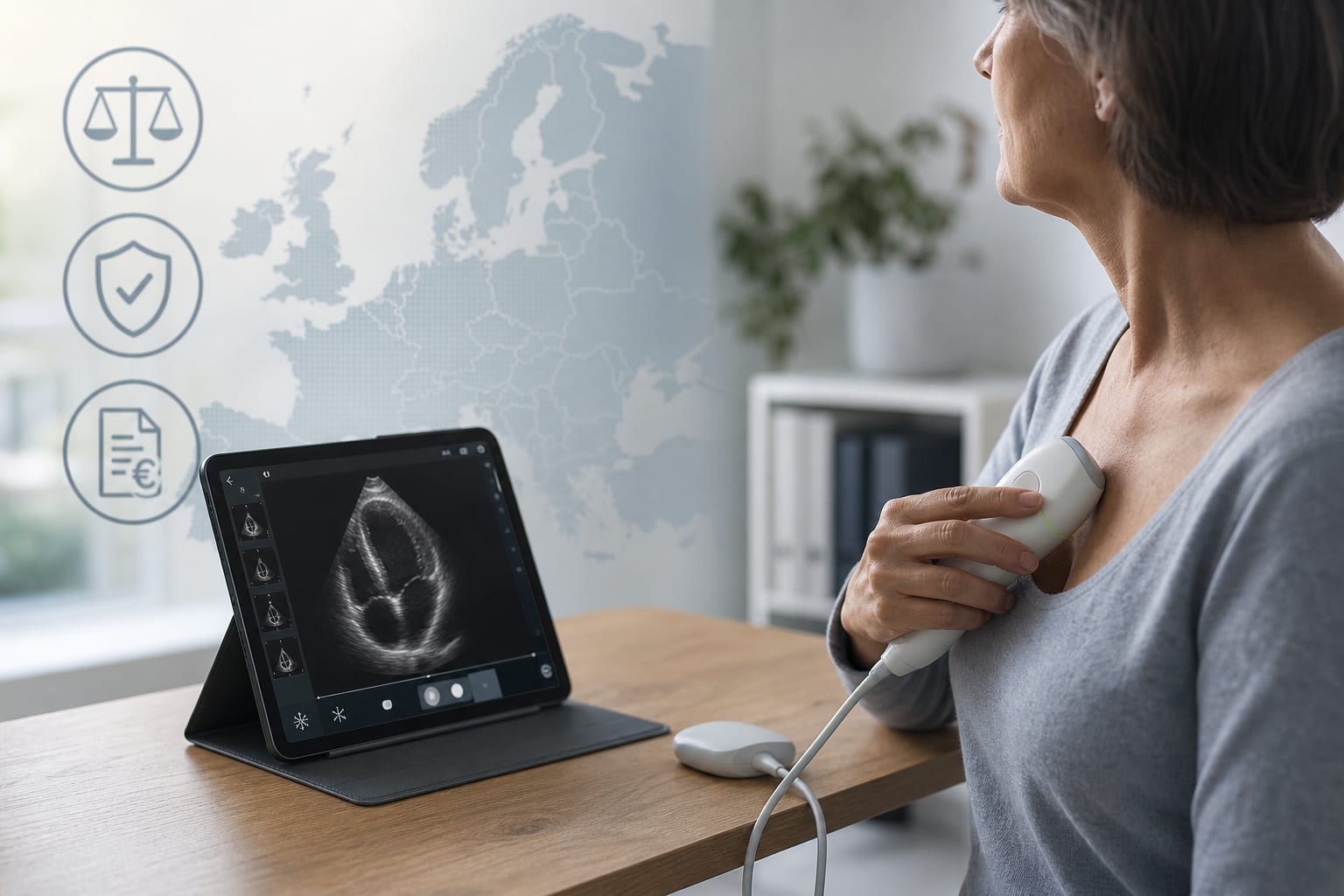
The integration of patient-operated medical technologies into European healthcare is increasing, necessitating a clear understanding of regulatory and reimbursement frameworks. Under the EU Medical Device Regulation (MDR), devices must demonstrate safety and performance, while reimbursement requires evidence of clinical and economic value. The traditional model of imaging, where acquisition and interpretation occur in a single clinical act, is evolving as imaging becomes decentralized.
Data Highlights
No numerical data or trial data presented in the source material.
Key Findings
Patient-operated imaging challenges existing regulatory classifications and reimbursement models.
Decentralization of imaging acquisition requires explicit adequacy criteria under the MDR.
Usability validation must focus on interpretative reliability rather than just procedural completion.
Responsibility for image acquisition becomes hybrid, with patients acquiring images and clinicians interpreting them.
Current reimbursement models are disrupted by the shift from a bundled professional imaging act.
Clinical Implications
Healthcare providers must navigate the complexities of integrating patient-operated imaging within existing regulatory frameworks. Ensuring the reliability of patient-acquired images and clarifying responsibility will be essential.
Conclusion
The integration of patient-operated imaging into European health systems depends on demonstrating the reliability of acquired images and adapting reimbursement mechanisms.