Prevalence and associated factors of scabies among school going children in Khulna division: a comparative cross-sectional study between schools and madrasahs (Islamic religious schools) - Report - MDSpire
Conexiant’s news site is now MDSpire News. Learn more
Advertisement
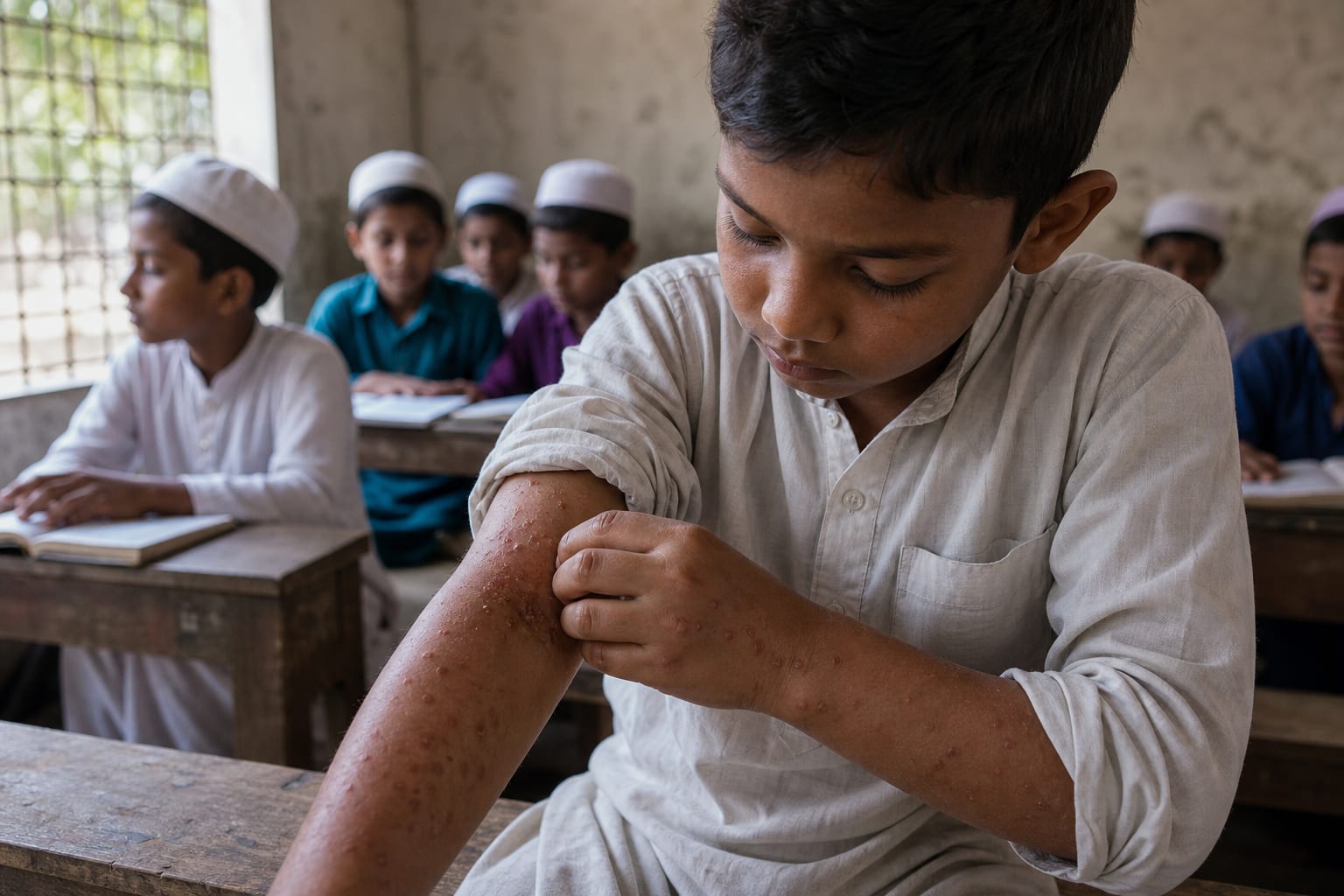
Assessment of Scabies Prevalence and Contributing Factors Among School-Aged Children in Khulna Division: A Comparative Cross-Sectional Analysis of Schools and Madrasahs
Clinical Report: Assessment of Scabies Prevalence in Khulna Division
Overview
This study assessed scabies prevalence among school-aged children in Khulna Division, Bangladesh, finding an overall prevalence of 40.35%. Key associated factors included poverty, overcrowding, and irregular bathing, with higher prevalence in madrasa students compared to school students.
Background
Scabies is a neglected tropical disease that significantly impacts children, particularly in low-resource settings, leading to physical and mental health issues, social stigma, and school absenteeism. The World Health Organization recognizes scabies as a major public health concern, especially in overcrowded environments. Understanding its prevalence and contributing factors is crucial for developing targeted interventions.
Data Highlights
Group
Prevalence
Overall
40.35% (159/394)
Madrasa Students
51.3% (90/176)
School Students
31.65% (69/218)
Key Findings
Overall scabies prevalence was 40.35% among 394 children.
Madrasa students had a higher prevalence (51.3%) compared to school students (31.65%).
Key associated factors included poverty (aOR=3.07), overcrowding, and irregular bathing.
Scabies risk was significantly higher among students from poorer households and those with close contact with affected individuals.
Living in tin-shed houses and sharing personal items were also significant risk factors.
Clinical Implications
The findings highlight the need for targeted interventions in schools and madrasas to address scabies prevalence. Health education and community-level treatment strategies may be essential in reducing transmission in these settings.
Conclusion
The study reports a high prevalence of scabies among school-aged children in Khulna Division.
Nearly 90% of patients who met algorithmic criteria for postacute sequelae of SARS-CoV-2 infection had at least 1 chronic or potentially chronic condition requiring ongoing clinical management.