Clinical Outcomes in Single Ventricle Patients Who Initially Did Not Pursue Fontan Completion
Overview
This study evaluates the clinical outcomes of single ventricle patients who initially did not undergo Fontan completion following stage II palliation. It highlights the reasons for contraindication.
Background
The Fontan procedure is crucial for the management of patients with univentricular hearts, providing a pathway to improved hemodynamics and quality of life. However, many patients face challenges that prevent timely completion of the Fontan procedure.
Data Highlights
No numerical or trial data presented in the source material.
Key Findings
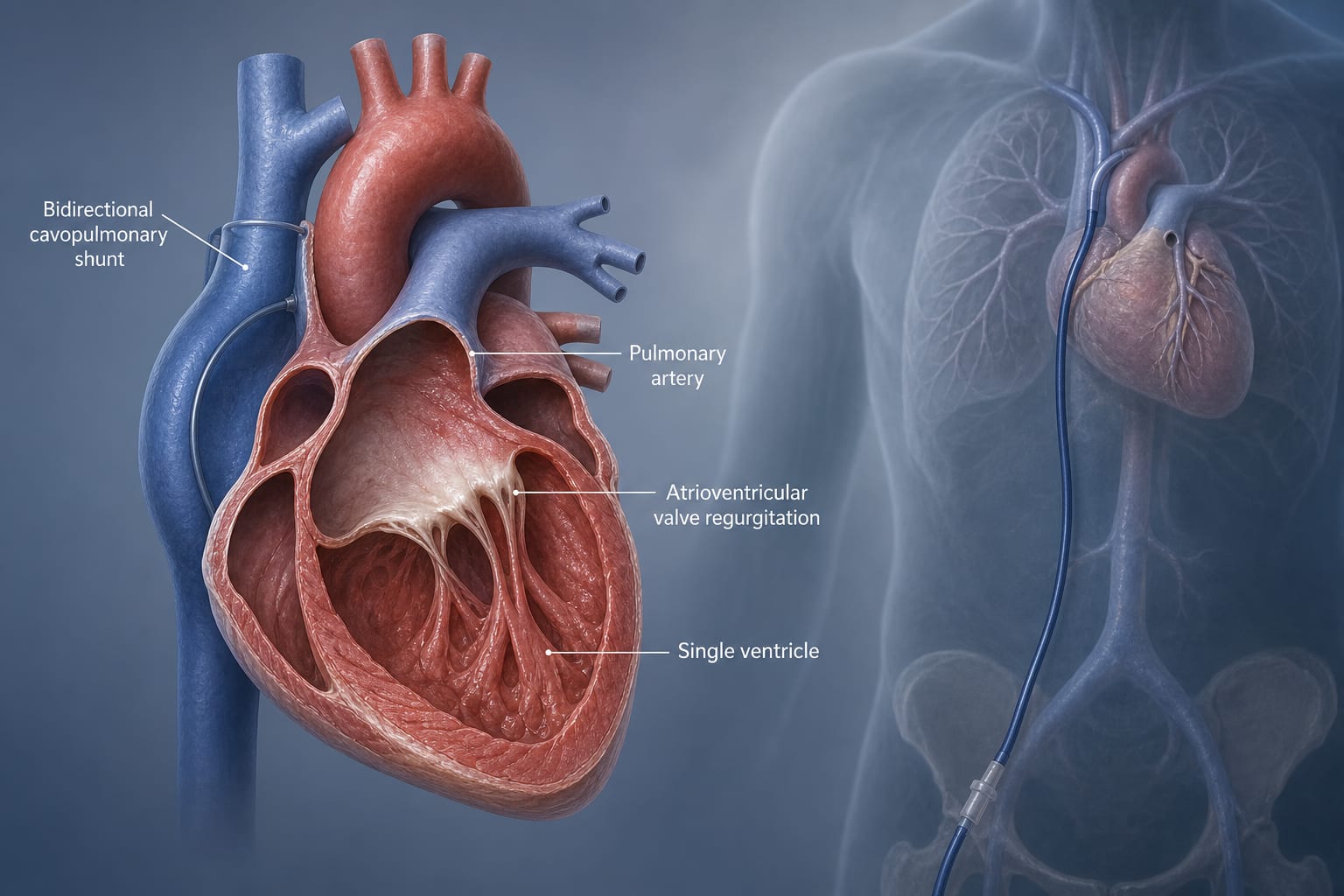
A significant proportion of patients cannot undergo Fontan completion due to elevated pulmonary artery pressure, pulmonary artery stenosis, reduced ventricular function, or significant atrioventricular valve regurgitation.
Patients who initially do not qualify for Fontan completion may still achieve candidacy after medical and interventional therapies.
Long-term outcomes for patients who do not complete the Fontan procedure include a high risk of heart failure, arrhythmias, and mortality.
Re-assessment of patients after appropriate therapies can lead to successful Fontan completion in some cases.
Criteria for Fontan candidacy include pulmonary artery pressure of 15 mmHg or less and normal or mildly reduced ventricular function.
Clinical Implications
Regular re-evaluation of these patients is important, as advancements in medical and interventional therapies may improve candidacy for Fontan completion.
Conclusion
The study highlights the importance of ongoing assessment for patients with univentricular hearts who initially do not qualify for Fontan completion.
by Carolin Niedermaier, Cornelius Przybilla, Thibault Schaeffer, Muneaki Matsubara, Christina Ruda, Jonas Palm, Nicole Piber, Peter Ewert, Jürgen Hörer, Masamichi Ono