Host TLR4 activation by tenascin-C is associated with MMP14-dependent glioma invasion - Report - MDSpire
Coming Soon: Introducing MDSpire News. Learn more
Conexiant’s news site is now MDSpire News. Learn more

Activation of Host TLR4 by Tenascin-C Correlates with MMP14-Driven Invasion in Gliomas

  • By

  • Hannah Haneke

  • Ibrahim E. Efe

  • Omar Dzaye

  • Helmut Kettenmann

  • Fatih Yalcin

  • September 8, 2026

Share

Activation of Host TLR4 by Tenascin-C Correlates with MMP14-Driven Invasion in Gliomas

Overview

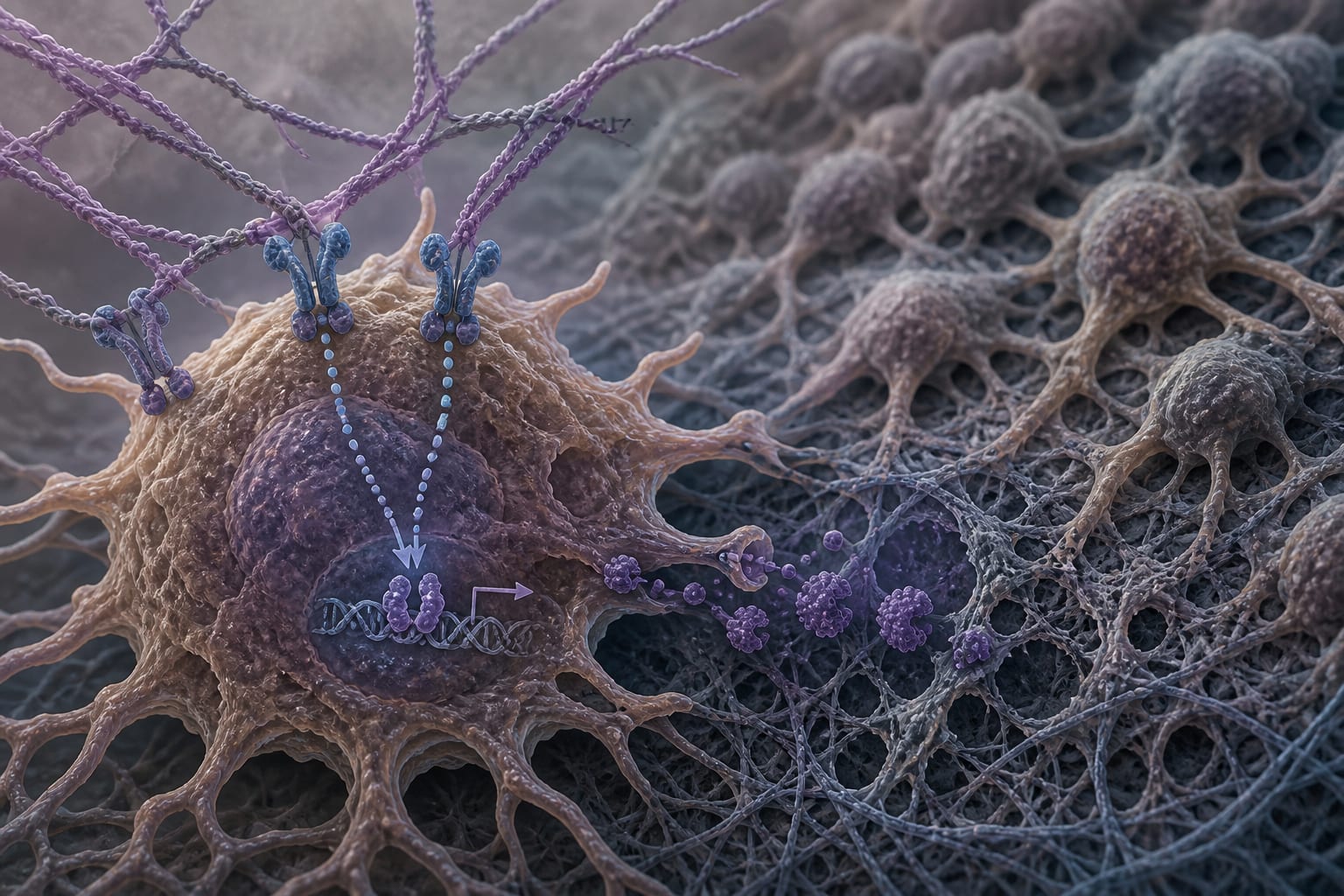
This study investigates the role of Tenascin-C (TNC) in glioblastoma invasion through Toll-like receptor 4 (TLR4) activation in myeloid cells. Findings indicate that TNC correlates with MMP14 expression.

Background

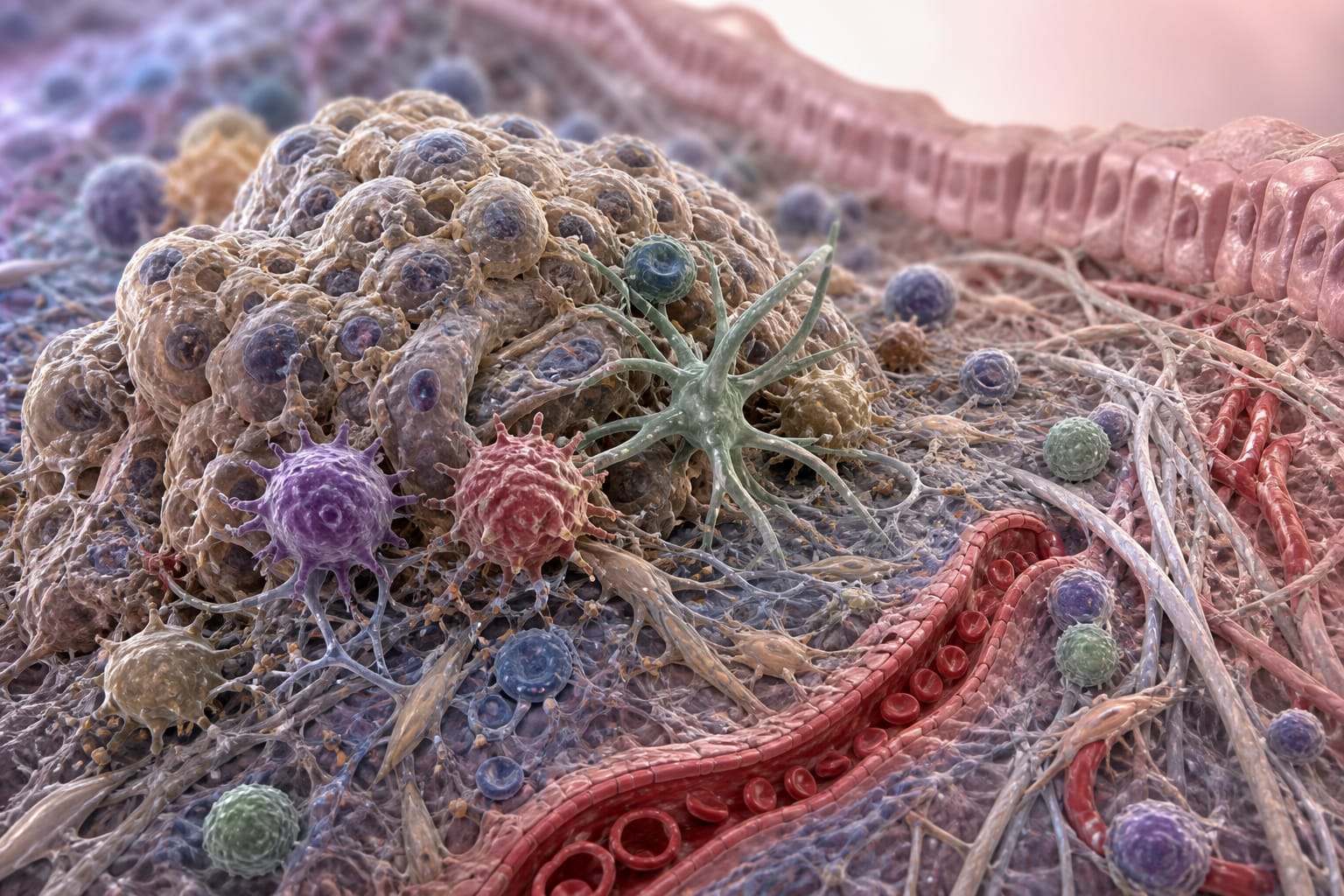
Glioblastoma (GBM) is the most aggressive primary brain tumor in adults, characterized by diffuse invasion and poor prognosis despite treatment. Understanding the mechanisms that drive GBM progression, particularly the role of the tumor microenvironment, is crucial for developing effective therapies. The interaction between tumor cells and non-malignant myeloid cells is particularly significant in facilitating tumor invasion.

Data Highlights

No numerical data or trial data presented in the source material.

Key Findings

  • Tenascin-C (TNC) is upregulated in glioblastoma and correlates with MMP14 expression.
  • TLR4 is enriched in CD11b+ tumor-associated myeloid cells and associated with immunoregulatory macrophage signatures.
  • High expression of both TNC and MMP14 is linked to shorter overall survival in glioma patients.
  • Activation of TLR4 by TNC in myeloid cells promotes MMP14 induction, contributing to glioma invasion.
  • Loss of TLR4 in host cells reduces glioma expansion and infiltrative behavior in organotypic brain slices.

Clinical Implications

Understanding the role of myeloid cells in glioma invasion could inform strategies to mitigate tumor progression.

Conclusion

The study highlights the role of TNC in glioblastoma invasion through TLR4 activation, linking extracellular matrix remodeling with innate immune responses in the tumor microenvironment.
Related Resources & Content

  1. Journal of Neuro-Oncology, Regulatory Mechanisms of Diffuse Glioma Growth and Invasion in the Central Nervous System: Insights from Single-Unit Physiology to Circuit Alterations, 2024
  2. Acta Neuropathologica, RhoA Modulates the Translation of Nogo-A Decoy SPARC in Glioblastomas Invading White Matter, 2019
  3. The ASCO Post, Extracellular Matrix Stiffness Promotes Malignant Progression Via PTEN-Reducing Effect of Micro-RNA, 2014
  4. Journal of Neuro-Oncology, Inhibition of invasion-associated thromboxane synthase sensitizes experimental gliomas to γ-radiation, 2008
  5. Glioblastoma in adults: A Society for Neuro-Oncology (SNO) and European Society of Neuro-Oncology (EANO) consensus review on current management and future directions, 2023
  6. Frontiers, Emerging insights into the immunosuppressive tumor microenvironment and its implications for glioblastoma immunotherapy, 2025
  7. Glioblastoma in adults: A Society for Neuro-Oncology (SNO) and European Society of Neuro-Oncology (EANO) consensus review on current management and future directions - PubMed
  8. Frontiers | Emerging insights into the immunosuppressive tumor microenvironment and its implications for glioblastoma immunotherapy

Original Source(s)

Related Content