Household wealth and timing of first birth among highly educated women in sub-Saharan Africa: evidence from survey-adjusted survival analysis - Report - MDSpire
Advertisement
Household wealth and timing of first birth among highly educated women in sub-Saharan Africa: evidence from survey-adjusted survival analysis
Clinical Report: Impact of Household Wealth on First Childbirth Timing in Africa
Overview
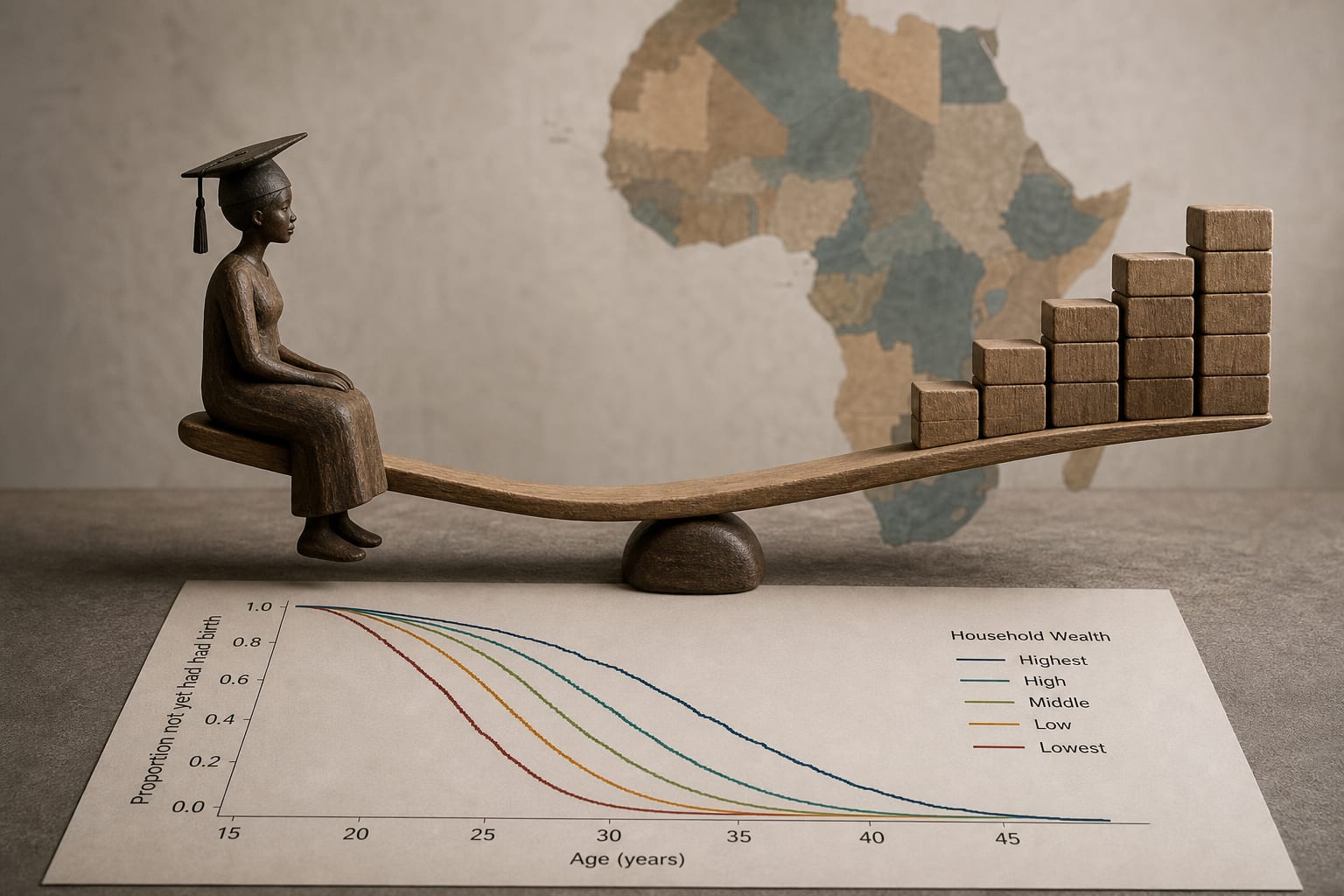
This study investigates the relationship between household wealth and the age of first childbirth among highly educated women in sub-Saharan Africa. Findings indicate that wealth disparities significantly influence fertility timing, even among educated women, highlighting the importance of socioeconomic factors in reproductive health.
Background
Sub-Saharan Africa faces persistent high fertility rates despite educational advancements among women. Understanding the interplay between education and household wealth is crucial for addressing fertility patterns and achieving public health goals. This study sheds light on how socioeconomic stratification affects family formation, particularly in the context of the Sustainable Development Goals.
Data Highlights
Wealth Quintile
Hazard Ratio for First Birth
Richest
1.00 (reference)
Richer
1.19
Middle
1.28
Poorer
1.42
Poorest
1.33
Key Findings
Women in the poorest quintile have a higher likelihood of early childbirth compared to those in the richest quintile.
By age 25, over 50% of women in the poorest quintile have given birth, versus about one-third in the richest quintile.
The association between wealth and first birth timing is significant even among highly educated women.
Regional differences exist, with the strongest wealth gradient observed in Southern Africa.
Socioeconomic stratification in fertility timing persists despite educational attainment.
Clinical Implications
Healthcare providers should consider socioeconomic factors when addressing reproductive health and family planning among educated women. Interventions aimed at reducing wealth disparities may help in delaying first births and improving maternal health outcomes.
Conclusion
The study underscores the critical role of household wealth in influencing fertility timing among educated women in sub-Saharan Africa, emphasizing the need for targeted public health strategies to address these disparities.