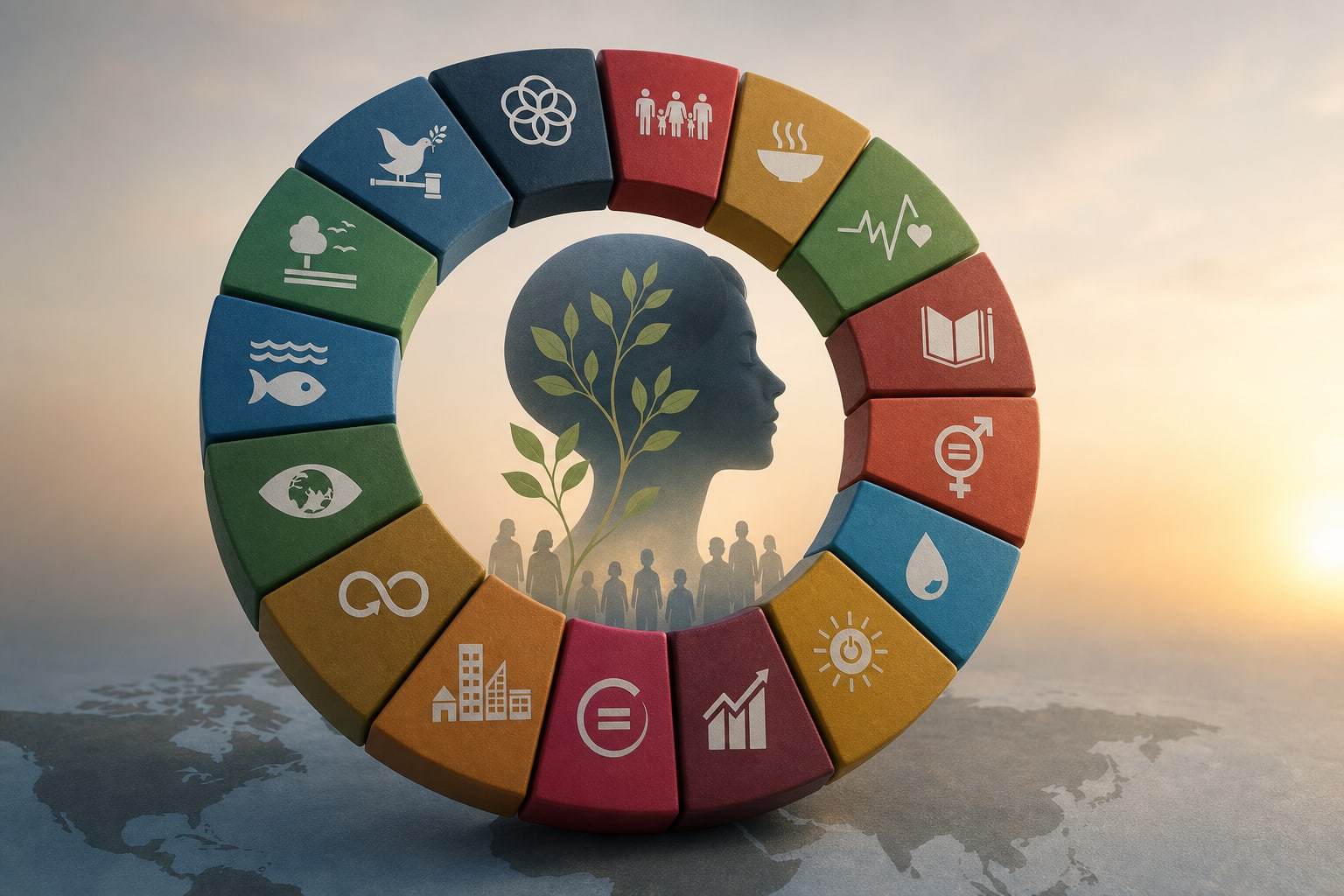
Utilizing Psychological Approaches to Advance the Sustainable Development Goals
Overview
The report emphasizes the critical need for mental health targets within the Sustainable Development Goals (SDGs), highlighting a 25% increase in global mental illness prevalence since the pandemic. It discusses the detrimental effects of hopelessness on mental health and the potential of hope as a mitigating factor.
Background
The inclusion of mental health in the SDGs is vital as previous initiatives like the Millennium Development Goals neglected this aspect. With rising rates of mental illnesses globally, particularly among vulnerable populations, addressing mental health is essential for achieving broader developmental goals. The urgency is underscored by the approaching 2030 deadline for the SDGs, with current progress significantly lagging.
Data Highlights
No numerical data or trial data was provided in the source material.
Key Findings
The prevalence of mental illnesses has increased by 25% globally since the pandemic.
57% of teen girls in the US reported persistent feelings of sadness or hopelessness in the past year.
65.4% of Canadian post-secondary students reported feelings of hopelessness.
Hopelessness is predictive of various negative outcomes, including self-harm and suicidal ideation.
Hope is a measurable and teachable construct that can mitigate mental health symptoms.
Hopeful programming has shown increases in hope through specific strategies.
Clinical Implications
Mental health professionals should consider integrating hope-based interventions into their practice to combat rising rates of hopelessness. Additionally, addressing mental health within the framework of the SDGs may enhance overall health outcomes and societal well-being.
Conclusion
As the 2030 deadline for the SDGs approaches, addressing mental health through the lens of hope is crucial for both individual well-being and global development efforts.