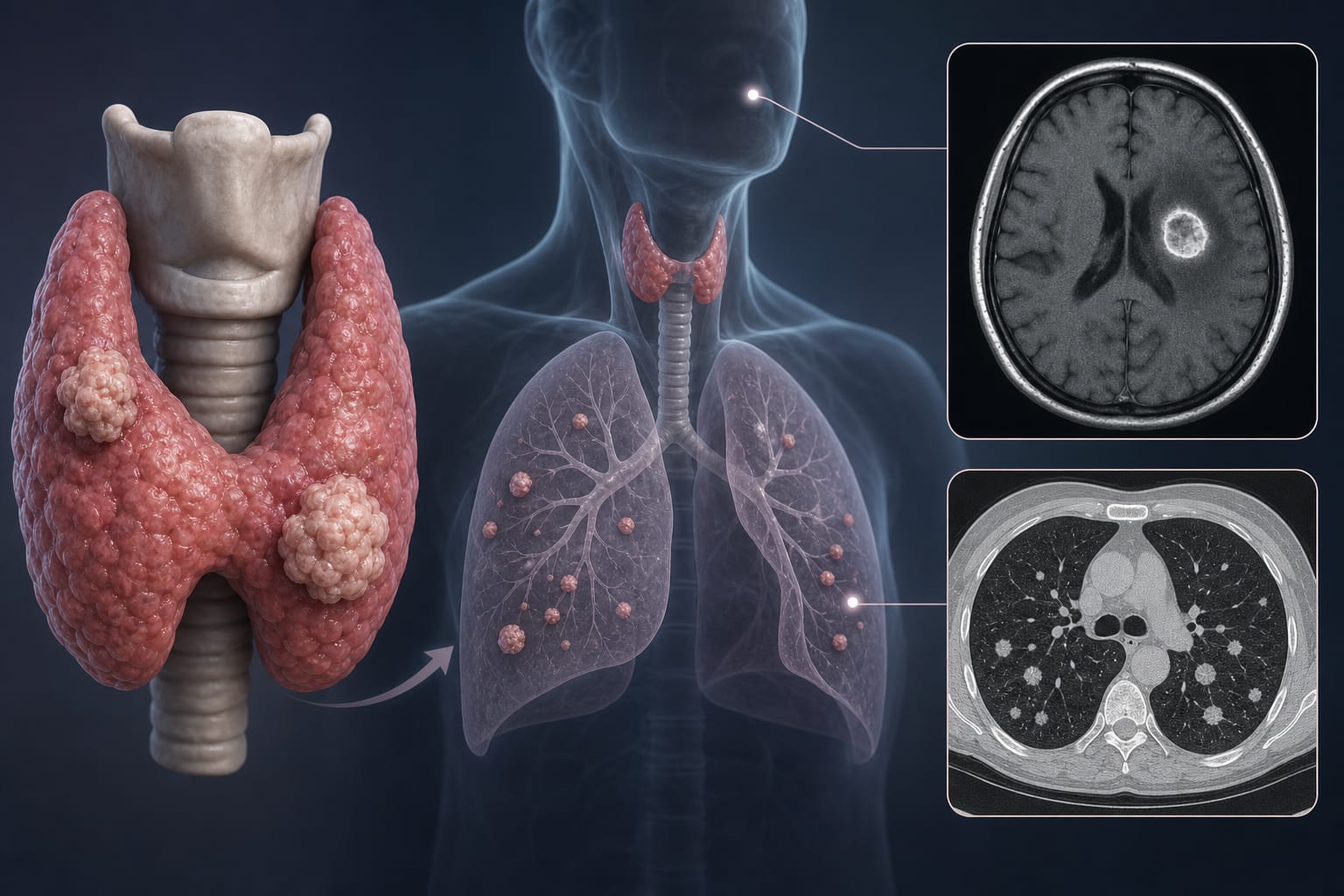
Accelerated Progression of Brain Metastases After Immune Checkpoint Inhibitor Therapy
Overview
Immune checkpoint inhibitors (ICI) can lead to hyperprogressive disease (HPD) in brain metastases (BM) patients, characterized by rapid tumor growth after treatment initiation. In a retrospective study of 25 BM patients treated with ICIs, 20% exhibited HPD with tumor growth rates increasing up to 207-fold.
Background
Immune checkpoint inhibitors targeting PD-1, PD-L1, and CTLA-4 have shown efficacy in treating brain metastases from melanoma and non-small cell lung cancer (NSCLC). Intracranial response rates vary by cancer type and treatment combinations, with combination therapies showing improved outcomes. However, a subset of patients experience hyperprogressive disease (HPD), a rapid tumor growth phenomenon associated with poor prognosis and median survival of approximately 3 months. Understanding HPD in the brain is critical due to the risk of neurological deterioration.
Patients with prior stereotactic radiosurgery (SRS)
10 (40%)
Patients with HPD
5 (20%)
Range of increase in tumor growth rate (TGR) post-ICI
4.9 to 207.7 times pre-ICI TGR
Key Findings
20% of brain metastases patients treated with ICIs developed hyperprogressive disease (HPD).
HPD was defined by a time-to-treatment failure under 3 months and a post-ICI tumor growth rate more than twice the pre-ICI rate.
HPD cases showed a dramatic increase in tumor growth rate, ranging from 4.9 to 207.7 times the pre-treatment rate.
Four of five HPD cases had melanoma as the primary tumor, one had NSCLC.
All HPD patients had received radiation therapy prior to ICI, with three receiving stereotactic radiosurgery to the hyperprogressive lesion within 3–21 months before ICI.
HPD was observed in single lesions even in patients with multiple brain metastases.
Clinical Implications
Clinicians should be aware of the risk of hyperprogressive disease in brain metastases patients initiating immune checkpoint inhibitor therapy, especially in those with prior radiation treatment. Early imaging follow-up is critical to detect rapid tumor progression, which may necessitate prompt surgical or alternative therapeutic interventions. Differentiating HPD from pseudoprogression is essential to guide treatment decisions and optimize patient outcomes.
Conclusion
Hyperprogressive disease occurs in a significant subset of brain metastases patients treated with ICIs, leading to rapid tumor growth and poor prognosis. Vigilant monitoring and timely management strategies are needed to address this adverse response.
References
Various Authors/Brigham and Women's Hospital Study/2024 -- Accelerated Progression of Brain Metastases After Starting Immune Checkpoint Inhibitor Therapy
by Charissa A. C. Jessurun, Francesca Siddi, Noah L.A. Nawabi, Alexander F. C. Hulsbergen, Yu Tung Lo, Rohan Jha, Timothy R. Smith, Marike L. D. Broekman