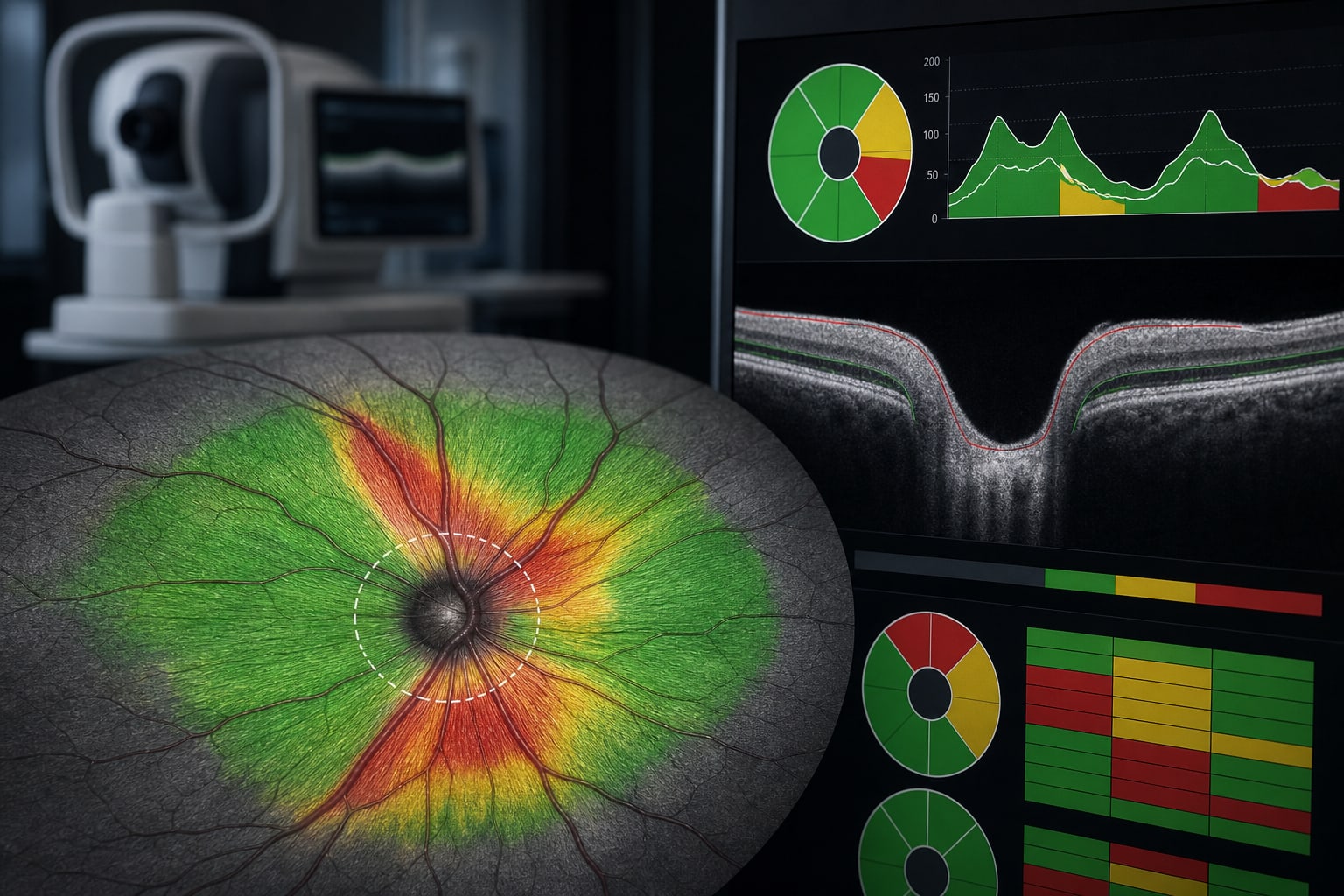
Clinical Report: Emerging Technologies in Continuous IOP Monitoring
Overview
Wearable and implantable devices for continuous intraocular pressure (IOP) monitoring show promise in capturing diurnal and nocturnal fluctuations, which traditional methods fail to detect. These technologies may enhance risk stratification and management of glaucoma patients, particularly those with treatment-resistant conditions.
Background
Elevated IOP is a key modifiable risk factor in glaucoma, yet conventional tonometry provides only limited insights into IOP variability. Continuous monitoring technologies, such as contact lens-based sensors and implantable devices, can offer comprehensive data on IOP fluctuations, potentially improving patient outcomes. Understanding these advancements is crucial for optimizing glaucoma management strategies.
Data Highlights
No numerical data available in the source material.
Key Findings
Continuous monitoring technologies can detect previously unrecognized IOP peaks.
CLBS readings correlate reasonably with standard tonometry methods, typically within ±5 mmHg of Goldmann applanation tonometry.
Implantable bioMEMS sensors provide direct IOP measurements but require surgical implantation.
Common side effects of CLBS include transient blurred vision and conjunctival hyperemia, typically resolving quickly.
Long-term IOP variability is associated with faster visual field deterioration in glaucoma patients.
Clinical Implications
The integration of continuous IOP monitoring technologies into clinical practice may facilitate more personalized treatment approaches for glaucoma patients. Clinicians should consider these devices for patients with unexplained visual field loss or those who exhibit significant IOP variability despite treatment.
Conclusion
Emerging technologies in continuous IOP monitoring represent a significant advancement in glaucoma management, offering the potential for improved patient outcomes through enhanced data collection and individualized treatment strategies.