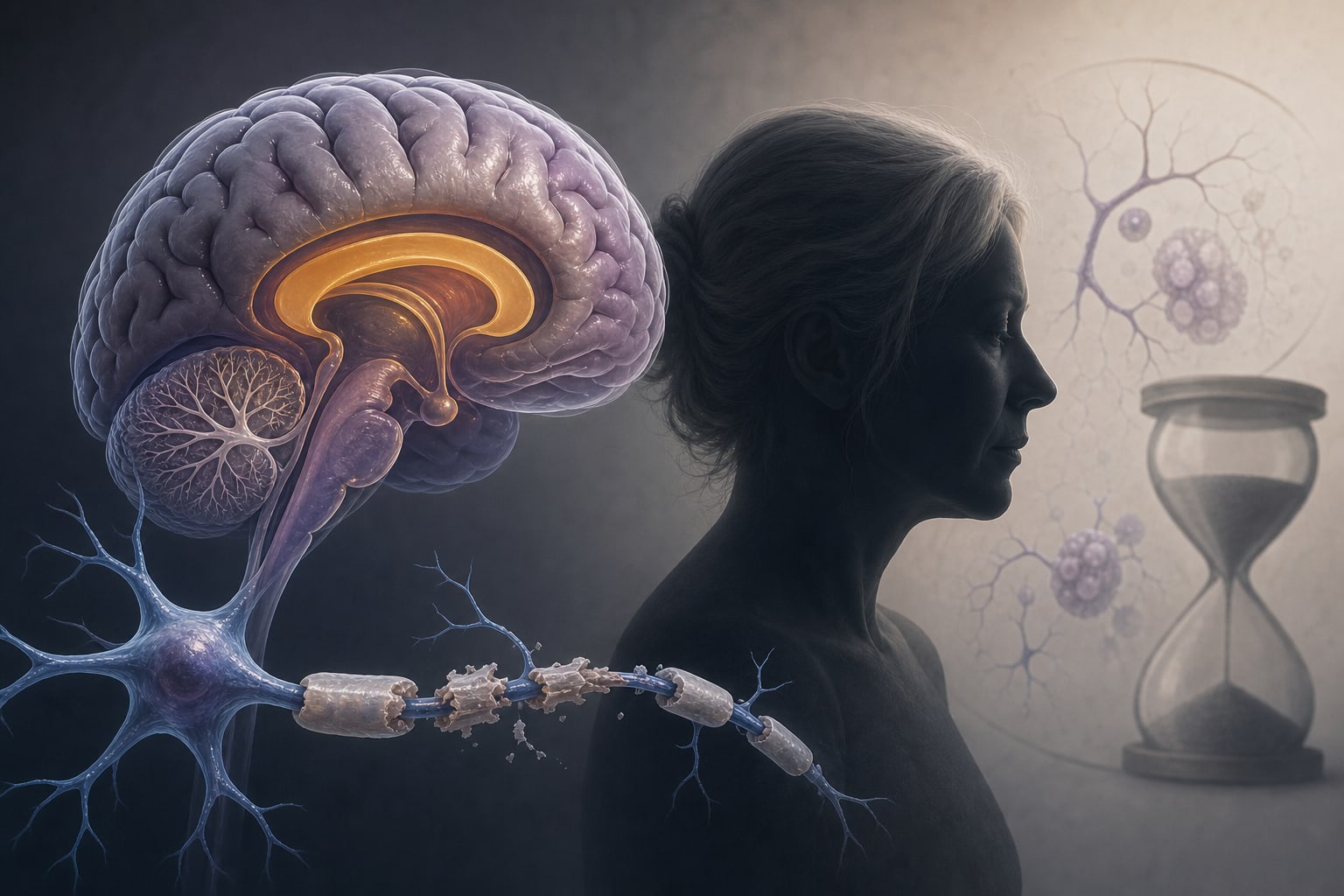
The Impact of Menopause and Ageing on Women Diagnosed with Multiple Sclerosis
-
By
-
Cecilia Smith Simonsen
-
Elisabeth Gulowsen Celius
-
June 9, 2026
Clinical Report: The Impact of Menopause and Ageing on Women Diagnosed with Multiple Sclerosis
Overview
Revise to emphasize that menopause interacts with biological ageing rather than being a distinct inflection point.
Background
The ageing MS population, particularly women who are peri- or postmenopausal, presents unique clinical challenges. Understanding the role of menopause in MS is crucial for optimizing management strategies and addressing symptom burden. Current evidence suggests that menopause may not independently influence disease progression, complicating the clinical interpretation of symptoms.
Data Highlights
Summarize qualitative insights from studies instead of stating no data was presented.Key Findings
- Menopause does not appear to be an independent inflection point for relapse activity or MRI-defined inflammation in MS.
- Recent studies indicate that menopause does not significantly affect Expanded Disability Status Scale (EDSS) progression after adjusting for age.
- Symptom burden often worsens during midlife, influenced by hormonal changes, comorbidities, and ageing.
- Menopausal hormone therapy may alleviate symptoms but its effect on disease progression remains uncertain.
- Menopause should be viewed as part of the broader context of biological ageing rather than a distinct event.
Clinical Implications
Clinicians should adopt a menopause-aware approach in managing MS to avoid misattributing symptoms to menopause rather than disease progression. Individualized care strategies are essential, considering the overlapping effects of hormonal changes and ageing.
Conclusion
The findings suggest that menopause is intertwined with the ageing process in MS rather than a standalone factor influencing disease trajectory. A nuanced understanding of these interactions is vital for effective clinical management.
Related Resources & Content
- Frontiers in Immunology, 2026 -- The epidemiological trends of multiple sclerosis among women of child-bearing age: a global analysis from 1990 to 2021 and forecasts to 2040
- Brain, 2025 -- Reducing and Stopping Disease-Modifying Treatments in Multiple Sclerosis
- The Journal of Clinical Endocrinology & Metabolism, 2025 -- Exploring the Relationship Between Menopause, Hormone Replacement Therapy, and Alzheimer's Disease: Insights and Future Perspectives
- Brain, 2023 -- Trends in Multiple Sclerosis in Denmark (1950–2023): Analysis of Age, Gender Distribution, Incidence, and Prevalence
- Advancing multiple sclerosis management in older adults - UCL Discovery, 2023
- Menopause Impact on Multiple Sclerosis Disability Progression | Gynecology | JAMA Neurology, 2025
- Menopause, 2022 -- The 2022 hormone therapy position statement of the North American Menopause Society
- Advancing multiple sclerosis management in older adults - UCL Discovery
- Menopause Impact on Multiple Sclerosis Disability Progression | Gynecology | JAMA Neurology | JAMA Network
- Menopause
Based on findings from:
Menopause and ageing in women with multiple sclerosis
Cecilia Smith Simonsen, Elisabeth Gulowsen Celius. Frontiers In Neurology, 2026.
https://www.frontiersin.org/journals/neurology/articles/10.3389/fneur.2026.1838550/full
This content is an AI-generated, fully rewritten summary based on a published scholarly article. It does not reproduce the original text and is not a substitute for the original publication. Readers are encouraged to consult the source for full context, data, and methodology.