Isolated prenatal foramen ovale closure or restriction presenting after birth: a distinct, under-recognized clinical condition - Report - MDSpire

Isolated prenatal foramen ovale closure or restriction presenting after birth: a distinct, under-recognized clinical condition

  • By

  • Tomaž Podnar

  • Ralf Geiger

  • Ira Winkler

  • Elke Griesmaier

  • Susanne Sprung

  • Ursula Kiechl-Kohlendorfer

  • June 5, 2026

  • 0 min

Share

Clinical Report: Isolated Closure or Restriction of the Prenatal Foramen Ovale

Overview

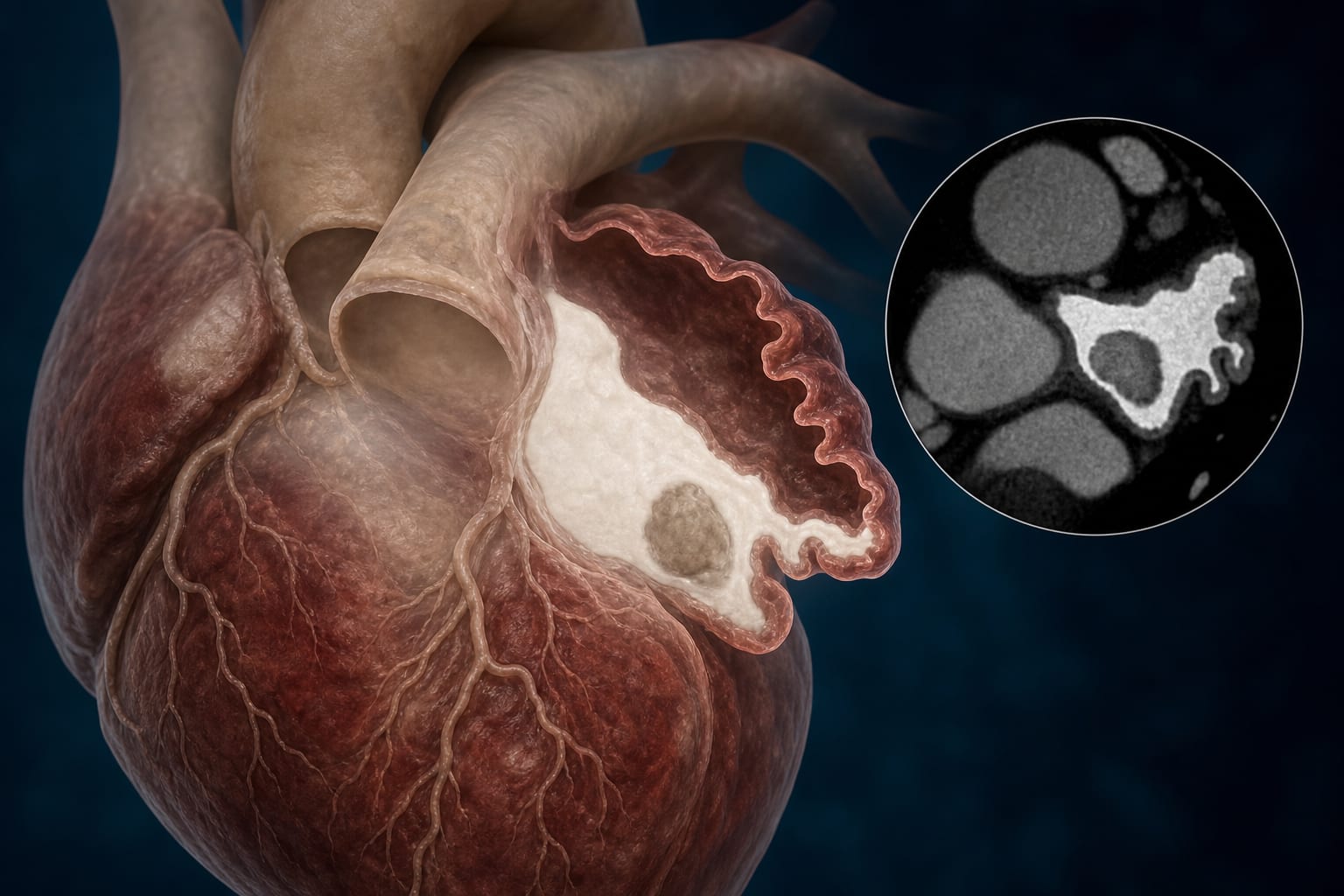
This report characterizes isolated prenatal foramen ovale (FO) closure or restriction diagnosed postnatally in neonates. The condition is associated with severe pulmonary hypertension and left ventricular failure, highlighting the need for careful evaluation and management.

Background

The foramen ovale is crucial for fetal circulation, and its closure or restriction can lead to significant complications. While prenatal closure is recognized in the context of congenital heart defects, isolated postnatal cases are rare and often overlooked. Understanding this condition is vital for improving neonatal outcomes.

Data Highlights

{'format': 'bullet points'}

Key Findings

  • Isolated prenatal FO closure or restriction was diagnosed in 10 out of 3,274 neonates (0.3%).
  • All neonates presented with cyanosis and respiratory distress within 9 hours after birth.
  • Echocardiography revealed persistent pulmonary hypertension of the newborn (PPHN) and impaired left ventricular function.
  • Management included prostaglandin infusion and inotropic support, with normalization of LV function in survivors within 1–4 days.
  • One neonate died from refractory LV failure and pulmonary hemorrhage; one developed global developmental delay.

Clinical Implications

Early recognition of isolated prenatal FO closure or restriction is critical for timely intervention. Clinicians should maintain a high index of suspicion for this condition in neonates presenting with cyanosis and respiratory distress, particularly when echocardiographic findings suggest PPHN.

Conclusion

Isolated prenatal FO closure or restriction is a significant but under-recognized cause of neonatal morbidity. Prompt diagnosis and management can lead to favorable outcomes in most cases.

Related Resources & Content

  1. Frontiers | Isolated prenatal foramen ovale closure or restriction presenting after birth: a distinct, under-recognized clinical condition
  2. Pediatric Cardiology — Prenatal Identification of Isolated Persistent Left Superior Vena Cava with Absent Right Superior Vena Cava: A Case Series
  3. Pediatric Cardiology — A Unique Case of Congenital Aortic-Left Atrial Tunnel Accompanied by Coarctation and Anomalous Left Coronary Artery Arising from the Pulmonary Artery
  4. Pediatric Cardiology — The Role of Chiari's Network in Fetal and Neonatal Health Issues
  5. Pediatric Cardiology — Innovative Open Atrial Septectomy Utilizing Placental Support: A Strategic Method for Managing Hypoplastic Left Heart Syndrome with Intact Atrial Septum
  6. Frontiers | Isolated prenatal foramen ovale closure or restriction presenting after birth: a distinct, under-recognized clinical condition
  7. Full article: Premature foramen ovale restriction/closure in pregnancy: echocardiographic features and overlap with aortic coarctation
  8. Persistent Pulmonary Hypertension of the Newborn - StatPearls - NCBI Bookshelf

Original Source(s)

Related Content