Radiomic features from intratumoral and peritumoral regions on portal venous phase CT for multicenter prediction of TP53 mutation in pancreatic cancer - Report - MDSpire
Advertisement
Radiomic features from intratumoral and peritumoral regions on portal venous phase CT for multicenter prediction of TP53 mutation in pancreatic cancer
CT Radiomic Analysis of Intratumoral and Peritumoral Areas in PDAC
Overview
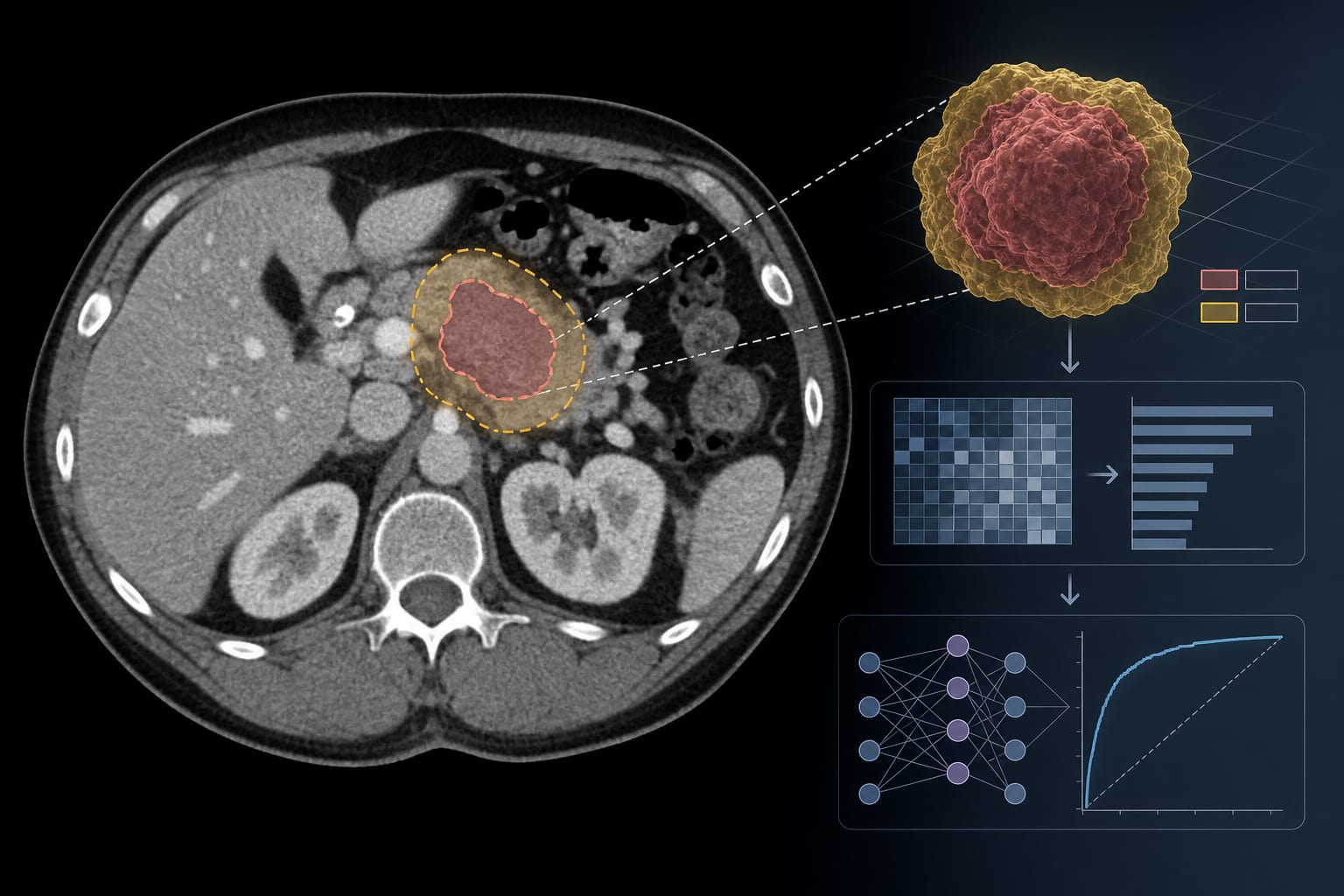
This study demonstrates the efficacy of a machine-learning model that integrates intratumoral and peritumoral radiomic features from portal-venous phase CT scans to predict TP53 mutations in pancreatic ductal adenocarcinoma (PDAC). The model achieved an AUC of 0.893, indicating strong predictive capability and highlighting the potential for non-invasive biomarker development.
Background
TP53 mutations are prevalent in 50-70% of PDAC cases and significantly influence tumor behavior and treatment response. Current methods for assessing TP53 status are invasive and may not accurately represent the tumor's genetic landscape due to spatial heterogeneity. There is a pressing need for non-invasive approaches to improve diagnostic accuracy and guide treatment decisions in PDAC.
Data Highlights
Model
AUC (95% CI)
XGBoost Classifier
0.893 (0.781–1.000)
Key Findings
The Intra-Peri Model (IPM) combining intratumoral and peritumoral features outperformed single-region models.
SHAP analysis identified intratumoral gray-level skewness and peritumoral texture correlation as key predictors of TP53 mutation.
Greater intratumoral asymmetry correlates with a higher likelihood of TP53 mutation.
Lower peritumoral correlation is associated with increased TP53 mutation risk.
The model's performance was validated across a multicenter cohort of 216 PDAC patients.
Clinical Implications
The integration of radiomic features from both intratumoral and peritumoral regions offers a promising non-invasive method for predicting TP53 mutation status in PDAC. This approach may enhance personalized treatment planning and reduce reliance on invasive biopsy procedures.
Conclusion
The study underscores the potential of radiomic analysis in improving the non-invasive prediction of TP53 mutations in PDAC, warranting further validation in prospective studies.