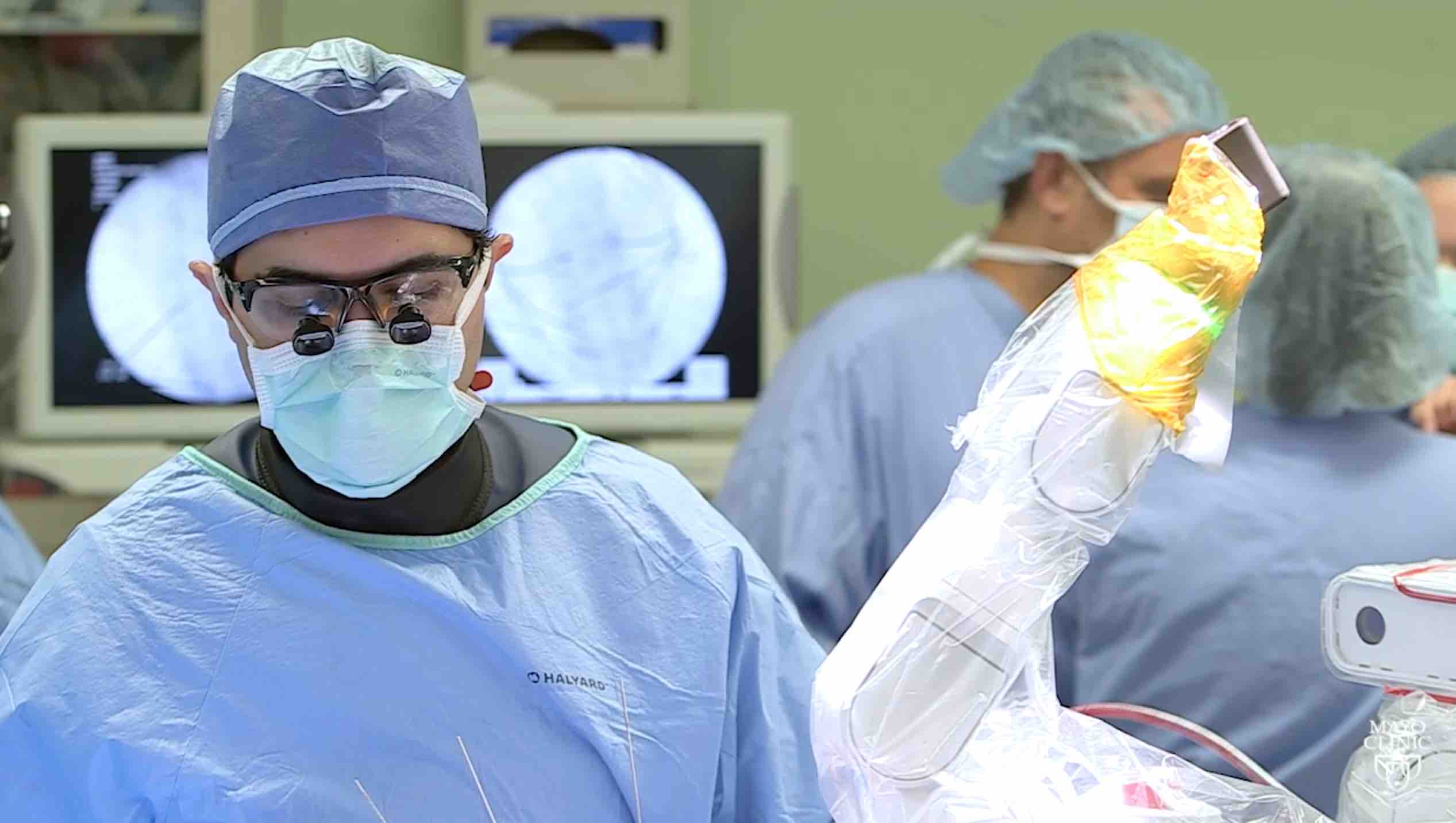
Clinical Report: Robotic-assisted spinal surgery improves outcomes
Overview
Robotic-assisted spinal surgery has been shown to enhance patient outcomes, including reduced pain medication needs and faster recovery times. These advancements are particularly beneficial for patients with degenerative spine disease undergoing spinal decompression and fusion procedures.
Background
The integration of robotic guidance in spinal surgery represents a significant advancement in minimally invasive surgical techniques. This technology not only improves the precision of spinal instrumentation placement but also has the potential to reduce complications and enhance recovery. Understanding these benefits is crucial for healthcare professionals as they consider the adoption of robotic-assisted techniques in their practice.
Data Highlights
No specific numerical data provided in the source material.
Key Findings
- Robotic-assisted spinal surgery leads to less need for pain medications postoperatively.
- Patients experience faster recovery times compared to traditional surgical methods.
- Robotic systems provide enhanced visualization and dexterity during procedures.
- Robotic-assisted techniques have shown improved accuracy in pedicle screw placement.
- There is a growing body of evidence supporting the use of robotics in spinal surgery for better perioperative metrics.
Clinical Implications
Healthcare professionals should consider the adoption of robotic-assisted techniques in spinal surgery to improve patient outcomes. Training and standardization in robotic procedures may enhance surgical accuracy and reduce complications.
Conclusion
Robotic-assisted spinal surgery represents a promising advancement in surgical practice, offering improved outcomes for patients with degenerative spine disease. Continued research and clinical consensus will further define its role in spinal surgery.
Related Resources & Content
- Surgical Endoscopy (Springer) — National adoption of robotic-assisted surgery in the United Kingdom: a decade of growth, distribution and speciality trends (2014–2024)
- Surgical Endoscopy — Does robotic-assisted esophagectomy improve outcomes compared to other techniques? An NCDB analysis of access and disparities
- Surgical Endoscopy — White paper on effective preacquisition evaluation of soft tissue robotic surgery platforms for healthcare institutions
- Obesity Surgery — Clinical Outcomes of Robotic-Assisted Versus Laparoscopic Bariatric Surgery Remain Comparable
- Evidence-based clinical guideline for robot-assisted internal fixation of the upper cervical spine (2026 Edition) - PMC
- Robot-assisted pedicle screw placement in spinal surgery: an updated systematic umbrella review and meta-meta-analysis of comparisons against freehand and navigation-guided techniques - PMC
- Pedicle screw placement accuracy in robot-assisted versus image-guided freehand surgery of thoraco-lumbar spine (ROBARTHRODESE): study protocol for a single-centre randomized controlled trial | Trials | Full Text
- Evidence-based clinical guideline for robot-assisted internal fixation of the upper cervical spine (2026 Edition) - PMC
- Robot-assisted pedicle screw placement in spinal surgery: an updated systematic umbrella review and meta-meta-analysis of comparisons against freehand and navigation-guided techniques - PMC
- Pedicle screw placement accuracy in robot-assisted versus image-guided freehand surgery of thoraco-lumbar spine (ROBARTHRODESE): study protocol for a single-centre randomized controlled trial | Trials | Full Text
Based on findings from:
Robotic-assisted spinal surgery improves outcomes
Mayo Clinic, 2019.
https://medprofvideos.mayoclinic.org/videos/robotic-assisted-spinal-surgery-improves-outcomes
This content is an AI-generated, fully rewritten summary based on a published scholarly article. It does not reproduce the original text and is not a substitute for the original publication. Readers are encouraged to consult the source for full context, data, and methodology.