Clinical Report: Exploring the Role and Inhibitors of Protein Tyrosine Phosphatase B
Overview
This review highlights the role of Protein Tyrosine Phosphatase B (PtpB) in Mycobacterium tuberculosis (Mtb) as a critical virulence factor that disrupts host immune responses. It emphasizes the potential of targeting PtpB with selective inhibitors as a novel therapeutic strategy against tuberculosis.
Background
Tuberculosis (TB) remains a major global health issue, exacerbated by the emergence of multidrug-resistant strains. Mtb employs various virulence factors, including PtpB, to evade host immune defenses, making it essential to understand these mechanisms for developing effective treatments. Targeting PtpB may offer a promising avenue for host-directed therapies, particularly in the context of rising drug resistance.
Data Highlights
No numerical data presented in the article.
Key Findings
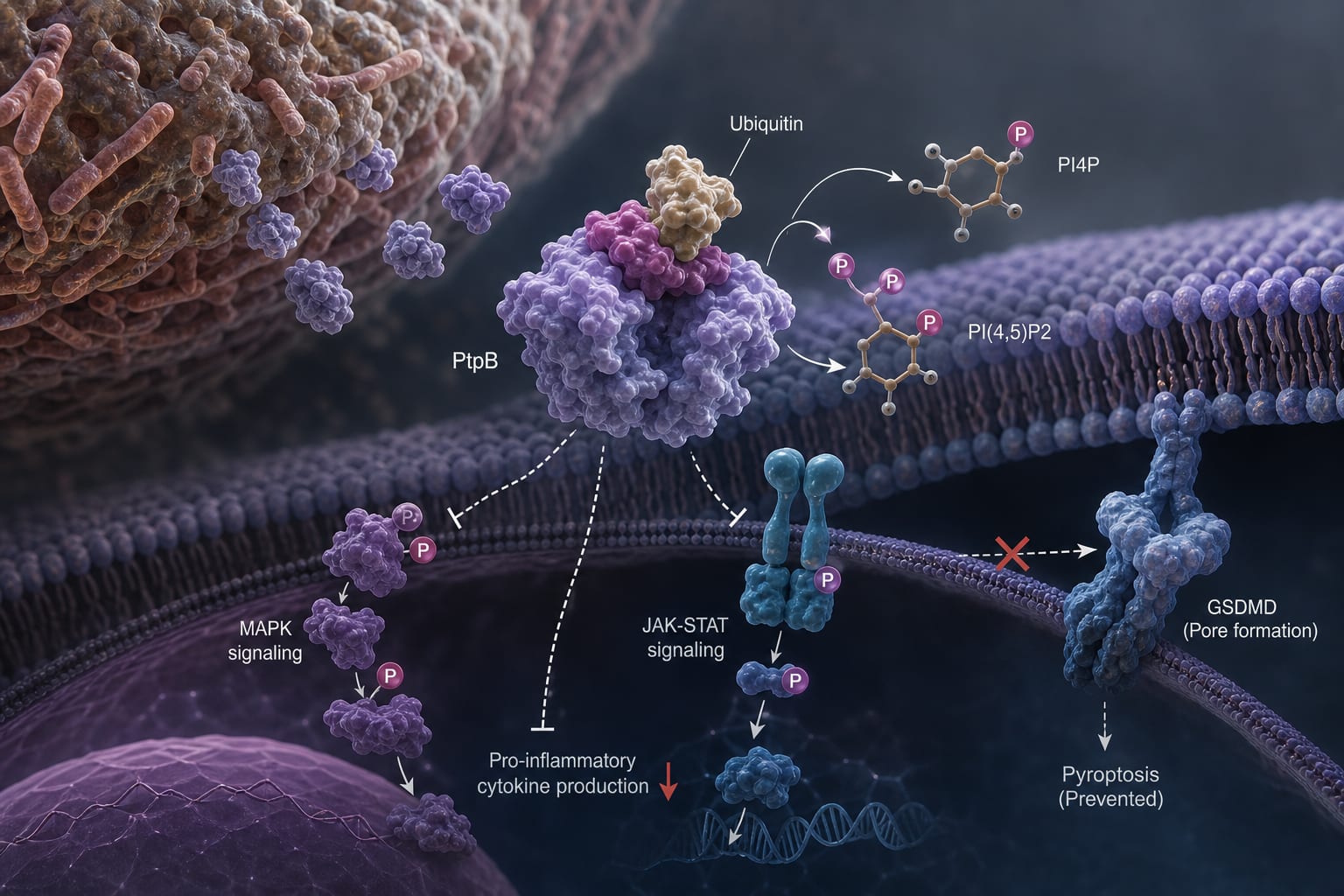
PtpB dephosphorylates key components of MAPK and JAK-STAT signaling pathways, suppressing pro-inflammatory cytokine production.
Upon activation by host ubiquitin, PtpB dephosphorylates phosphoinositides, inhibiting gasdermin D-mediated pyroptosis.
Genetic deletion of PtpB in Mtb leads to reduced bacterial survival in macrophages and decreased virulence in animal models.
Potent inhibitors of PtpB, such as Kuwanol E and OMTS, have been identified, demonstrating effective inhibition of its phosphatase activity in vitro.
The structural characterization of PtpB has provided insights into its unique catalytic mechanisms and potential for inhibitor development.
Clinical Implications
Understanding the mechanisms by which PtpB disrupts host immune responses can inform the development of targeted therapies for tuberculosis. The identification of selective inhibitors presents a potential strategy to enhance host defenses against Mtb, particularly in drug-resistant cases.
Conclusion
PtpB represents a promising target for novel therapeutic strategies against tuberculosis, highlighting the need for continued research into its inhibitors and mechanisms of action.