Clinical Report: Results for Critically Ill Children Following Haploidentical Stem Cell Transplantation
Overview
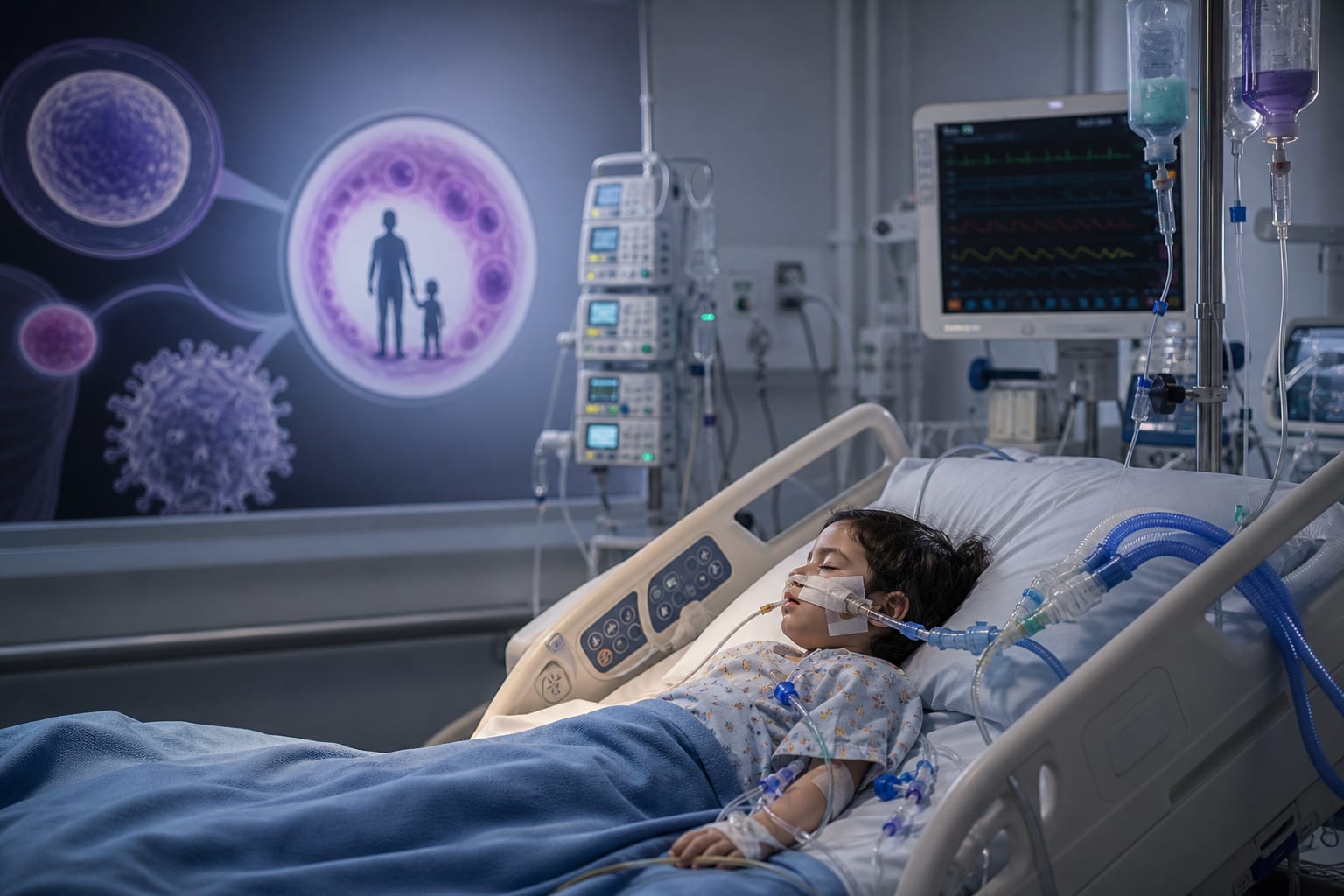
This study evaluates the outcomes of critically ill pediatric patients after haploidentical peripheral blood stem cell transplantation (haploPBSCT), revealing significant mortality rates and highlighting respiratory complications as a primary concern. Chronic graft-vs.-host disease and ventilator use were identified as independent predictors of mortality.
Background
Haploidentical stem cell transplantation is increasingly utilized for pediatric patients lacking matched donors, expanding treatment options for various hematologic disorders. Understanding the outcomes and complications associated with haploPBSCT is crucial, especially for critically ill patients who may experience severe post-transplant complications. This study provides insights into the mortality rates and risk factors affecting this vulnerable population.
Data Highlights
Outcome
Rate
30-day mortality
33.3%
In-hospital mortality
50.8%
Key Findings
The 30-day mortality rate for patients after haploPBSCT was 33.3%.
The in-hospital mortality rate was 50.8%.
Respiratory complications were the most common reason for PICU admission.
Chronic graft-vs.-host disease was associated with increased 30-day mortality (OR 4.515).
Ventilator use independently predicted in-hospital mortality (OR 5.15).
Pneumonia was the leading cause of death among patients who survived beyond 30 days.
Clinical Implications
Clinicians should closely monitor critically ill pediatric patients post-haploPBSCT for respiratory complications, as these significantly impact mortality. Early detection and intervention strategies for chronic graft-vs.-host disease and respiratory failure are essential to improve patient outcomes.
Conclusion
The findings underscore the high mortality rates associated with haploPBSCT in critically ill children, emphasizing the need for vigilant management of respiratory complications and chronic graft-vs.-host disease.