Radiological response of primary central nervous system lymphoma after corticosteroid therapy and its predictive value on overall survival: a multicenter study - Report - MDSpire
Coming Soon: Introducing MDSpire News. Learn more
Conexiant’s news site is now MDSpire News. Learn more

Assessment of Radiological Changes in Primary Central Nervous System Lymphoma Following Corticosteroid Treatment and Its Prognostic Implications for Overall Survival: A Multicenter Analysis

  • By

  • Florian Scheichel

  • D. Pinggera

  • T. Rossmann

  • B. Popadic

  • S. Aspalter

  • V. Schön

  • A. Woehrer

  • M. M. Dorostkar

  • C. Dorfer

  • C. F. Freyschlag

  • F. Marhold

  • August 29, 2026

Share

Clinical Report: Assessment of Radiological Changes in PCNS Lymphoma

Overview

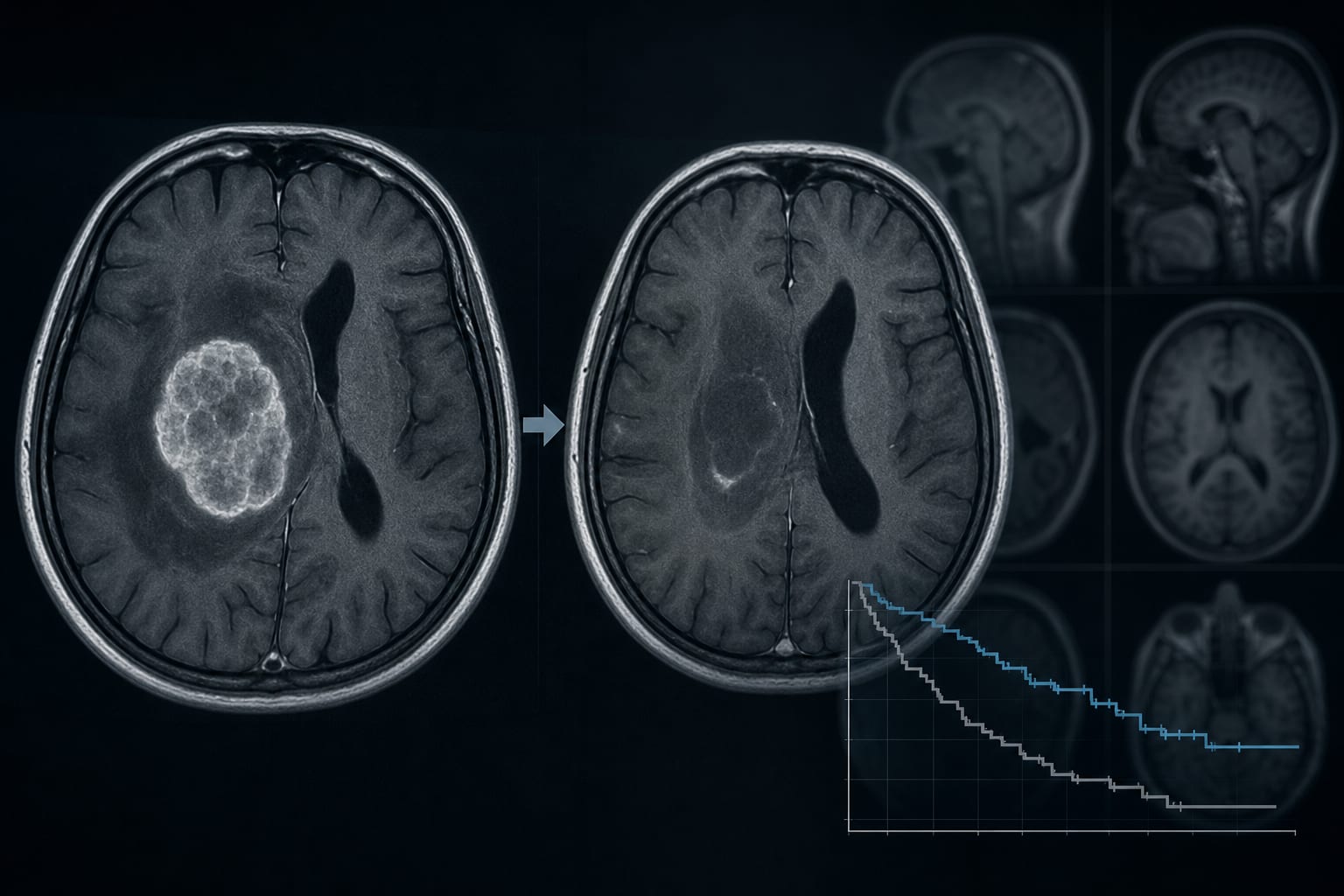
This multicenter study evaluates the radiological changes in primary central nervous system lymphoma (PCNS-LBCL) following corticosteroid treatment.

Background

Primary central nervous system lymphoma (PCNS-LBCL) is a rare form of lymphoma that constitutes about 3% of intracranial tumors. The sensitivity of PCNS-LBCL to corticosteroid therapy can lead to significant radiological changes, complicating the diagnostic process.

Data Highlights

No numerical data available in the source material.

Key Findings

  • PCNS-LBCL shows marked sensitivity to corticosteroid therapy, leading to significant radiological changes.
  • Radiological response patterns to corticosteroids vary widely among patients, from complete tumor disappearance to progression.
  • Histopathological confirmation of PCNS-LBCL is essential before initiating corticosteroid treatment to avoid diagnostic complications.
  • Most tumors relapse shortly after initial regression with corticosteroid therapy.
  • Long-lasting remissions have been observed in a small number of cases following corticosteroid treatment.

Clinical Implications

Clinicians should be cautious when administering corticosteroids prior to obtaining biopsy tissue, as this may alter imaging results and affect diagnosis.

Conclusion

This study highlights the complexity of managing PCNS-LBCL regarding the timing and use of corticosteroids in relation to diagnostic procedures.

Related Resources & Content

  1. Radiological response of primary central nervous system lymphoma after corticosteroid therapy and its predictive value on overall survival: a multicenter study | Journal of Neuro-Oncology | Springer Nature Link, 2026
  2. The ASCO Post — Answers: Primary Diffuse Large B-Cell Lymphoma of the Central Nervous System
  3. Understanding Delays in Diagnosis and Treatment of Primary Central Nervous System Lymphoma: Insights for Neurosurgeons
  4. Blood Cancer Journal — Outcomes of Treatment and Risk of CNS Relapse in Primary Cutaneous Diffuse Large B-Cell Lymphoma, Leg Type During the Rituximab Era
  5. The ASCO Post — Selected Abstracts From the 2016 ASH Annual Meeting
  6. EHA/ESMO Primary Central Nervous System Lymphomas Guideline Summary - Guideline Central
  7. High-dose chemotherapy followed by autologous stem-cell transplantation versus non-myeloablative consolidation in primary CNS lymphoma (MATRix/IELSG43): a randomised phase 3 trial - PubMed
  8. Radiological response of primary central nervous system lymphoma after corticosteroid therapy and its predictive value on overall survival: a multicenter study | Journal of Neuro-Oncology | Springer Nature Link

Original Source(s)

Related Content