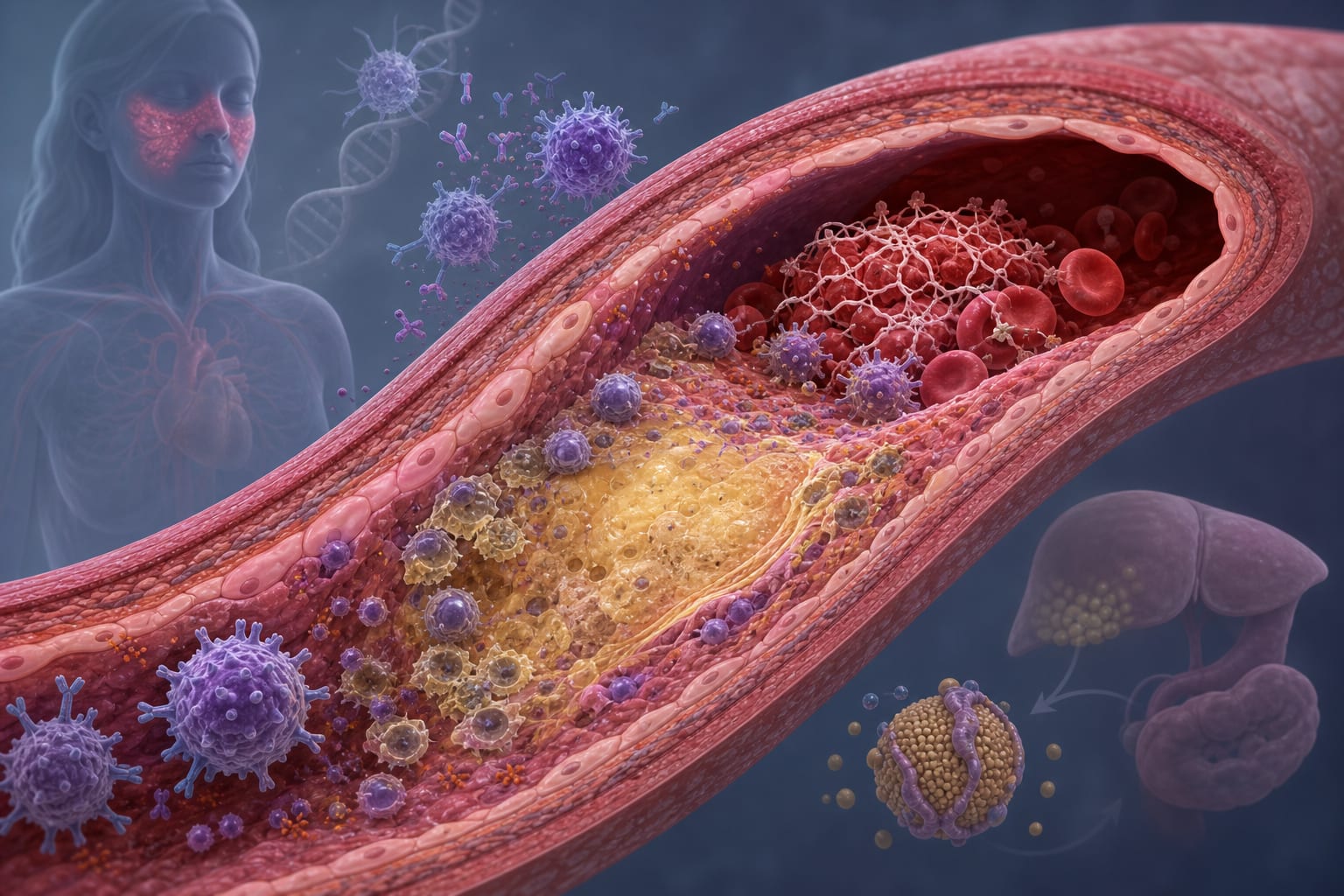
Transcriptional Analysis of Dendritic Cell Tolerance Impairment in SLE
Overview
This study investigates the transcriptional profiles of dendritic cells (DCs) from women with systemic lupus erythematosus (SLE) and healthy controls, revealing significant disruptions in tolerance pathways.
Background
Systemic lupus erythematosus (SLE) is an autoimmune disease characterized by immune dysregulation and increased autoantibody production, affecting millions globally, particularly women of reproductive age. Dendritic cells play a crucial role in maintaining immune tolerance, and their dysfunction is implicated in the pathogenesis of SLE.
Data Highlights
No numerical data or trial data presented in the article.
Key Findings
Interferon-stimulated genes (ISGs) are dominant markers in DCs from SLE patients.
Monocytes from SLE patients show substantial enrichment of key ISGs like IFI27 and IFI44L.
Diminished IL10RA expression and dysregulated IRF4 activity indicate defects in IL-10 mediated tolerogenic differentiation in SLE moDCs.
Clinical Implications
The study highlights the importance of targeting interferon-driven transcriptional changes and lipid metabolism in dendritic cells to restore immune tolerance in SLE. Understanding these pathways may inform future therapeutic strategies aimed at mitigating chronic inflammation in affected patients.
Conclusion
The findings underscore the complex interplay of transcriptional changes and metabolic alterations in dendritic cells that contribute to immune tolerance impairment in SLE. Targeting these pathways may offer new avenues for therapeutic intervention.
by Ana Laura Hernández-Ledesma, Evelia Lorena Coss-Navarrete, Sofia Salazar-Magaña, Diego Ramírez-Espinosa, Lizbet Tinajero-Nieto, Estefania Torres-Valdez, Angélica H. Peña-Ayala, Guillermo Félix-Rodriguez, Gabriel Frontana-Vázquez, Jair Santiago García Sotelo, Morgane Thomas-Chollier, Gosia Trynka, Florencia Rosetti, Selene L. Fernandez-Valverde, María Gutiérrez-Arcelus, Deshiré Alpízar-Rodríguez, Alejandra Medina-Rivera
The procedure was performed under a HOPE Act research protocol at an NYU Langone Health center the institution said is among the limited number of US transplant centers equipped and approved to perform HOPE lung transplants.