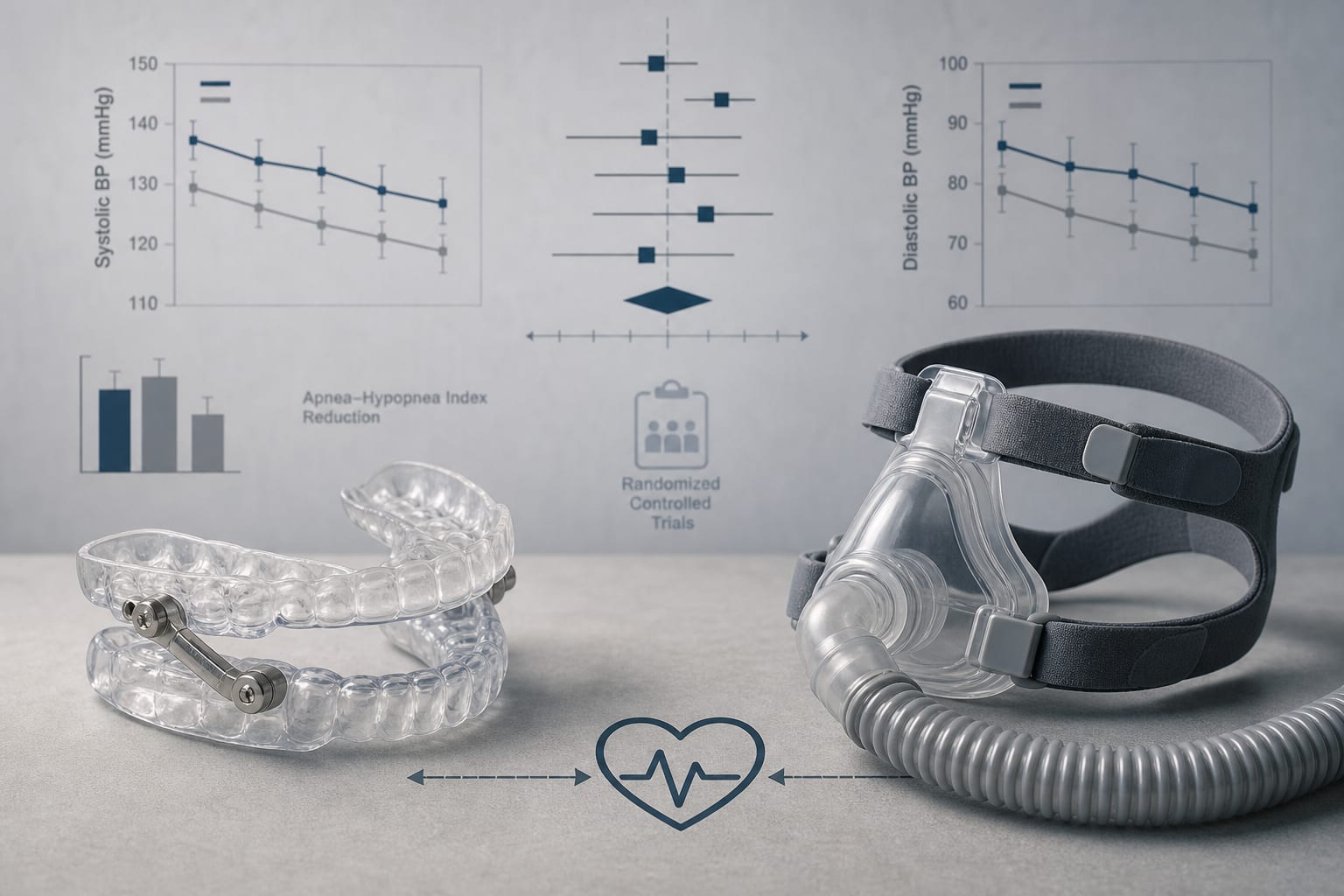
Effects of mandibular advancement devices vs. CPAP on blood pressure in obstructive sleep apnea: a systematic review and meta-analysis of randomized controlled trials - Report - MDSpire
Advertisement
Effects of mandibular advancement devices vs. CPAP on blood pressure in obstructive sleep apnea: a systematic review and meta-analysis of randomized controlled trials
Clinical Report: Comparative Analysis of Blood Pressure Outcomes in OSA
Overview
This systematic review and meta-analysis evaluates the effects of mandibular advancement devices (MAD) versus continuous positive airway pressure (CPAP) on blood pressure in patients with obstructive sleep apnea (OSA). Findings indicate that MAD provides comparable cardiovascular benefits to CPAP, with a significant reduction in daytime systolic blood pressure and superior adherence rates.
Background
Obstructive sleep apnea (OSA) is a prevalent condition associated with hypertension and increased cardiovascular risk. CPAP is the standard treatment; however, adherence issues limit its effectiveness. MADs have emerged as a viable alternative, particularly for patients who cannot tolerate CPAP, warranting a comparative analysis of their effects on blood pressure outcomes.
Data Highlights
{'AHI Reduction': 'MD = -8.45 events/h (CPAP), p < 0.001'}
Key Findings
{'AHI Reduction': 'CPAP was more effective in reducing the apnea-hypopnea index (MD = -8.45 events/h, p < 0.001).'}
Clinical Implications
For patients with OSA who struggle with CPAP adherence, MAD may be a suitable alternative that provides similar cardiovascular benefits. Clinicians should consider patient preferences and adherence potential when recommending treatment options for OSA.
Conclusion
MAD offers cardiovascular benefits comparable to CPAP while achieving better adherence rates, making it a viable option for managing blood pressure in OSA patients who cannot tolerate CPAP.
These 10 states make it more practical for physicians to participate in hospital ownership by aligning statutory structure, corporate practice of medicine rules, and population trends.