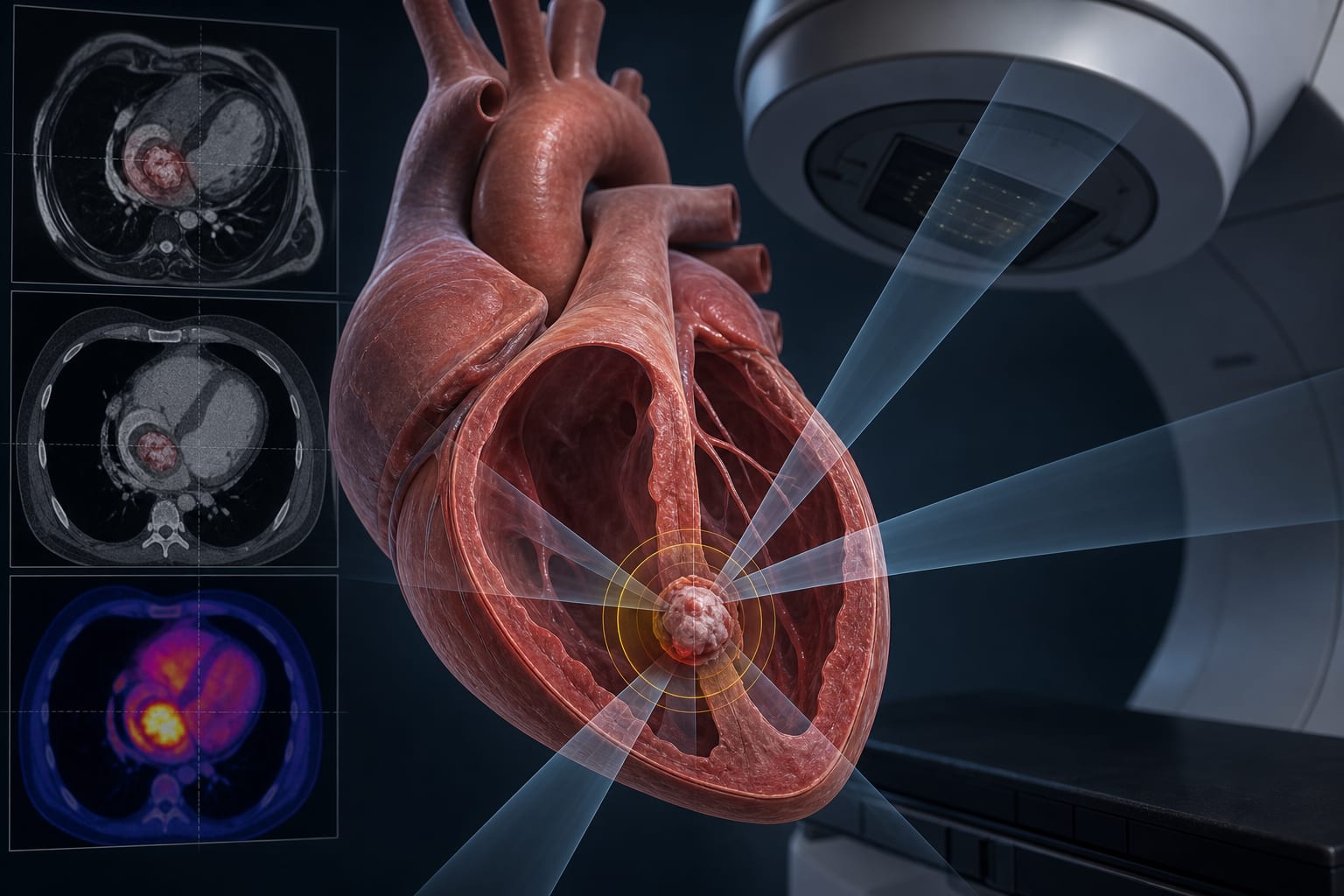
Clinical Report: Non-fluoroscopic Ablation Techniques for Right-Sided SVT
Background
Supraventricular tachycardia (SVT) encompasses various arrhythmias, with a significant prevalence of 332.9 per 100,000 individuals and an incidence of 57.8 per 100,000 person-years. The European Society of Cardiology recommends catheter ablation as the first-line treatment for symptomatic and recurrent reentrant arrhythmias. The shift towards zero-fluoroscopy techniques is crucial in minimizing radiation exposure risks for both patients and healthcare providers.
Data Highlights
Data highlights should reflect the findings from the source material directly.
Key Findings
The study involved 86 consecutive patients undergoing fluoroless catheter ablation for right-sided SVT.
Zero-fluoroscopy techniques significantly reduce radiation exposure risks associated with traditional methods.
Electroanatomic mapping systems and intracardiac echocardiography facilitate the fluoroless approach.
The approach is supported by existing evidence demonstrating its feasibility, efficiency, and safety.
In Switzerland, the number of catheter ablations has increased almost tenfold over the past 20 years.
Clinical Implications
The adoption of zero-fluoroscopy techniques in catheter ablation for SVT can enhance patient safety by reducing radiation exposure. Clinicians should consider integrating advanced mapping technologies to improve procedural outcomes.
Conclusion
The findings support the viability of fluoroless catheter ablation for right-sided SVT.