The role of Astragalus membranaceus and its derivatives in digestive system diseases: reconstruction of immune tolerance - Report - MDSpire

The role of Astragalus membranaceus and its derivatives in digestive system diseases: reconstruction of immune tolerance

  • By

  • Xinyue Chang

  • Xin Zhang

  • Hanqing Guo

  • Xinqi Yao

  • Jun Zhang

  • Kun Zhuang

  • Lin Li

  • June 17, 2026

  • 0 min

Share

Clinical Report: The Impact of Astragalus membranaceus on Immune Tolerance

Overview

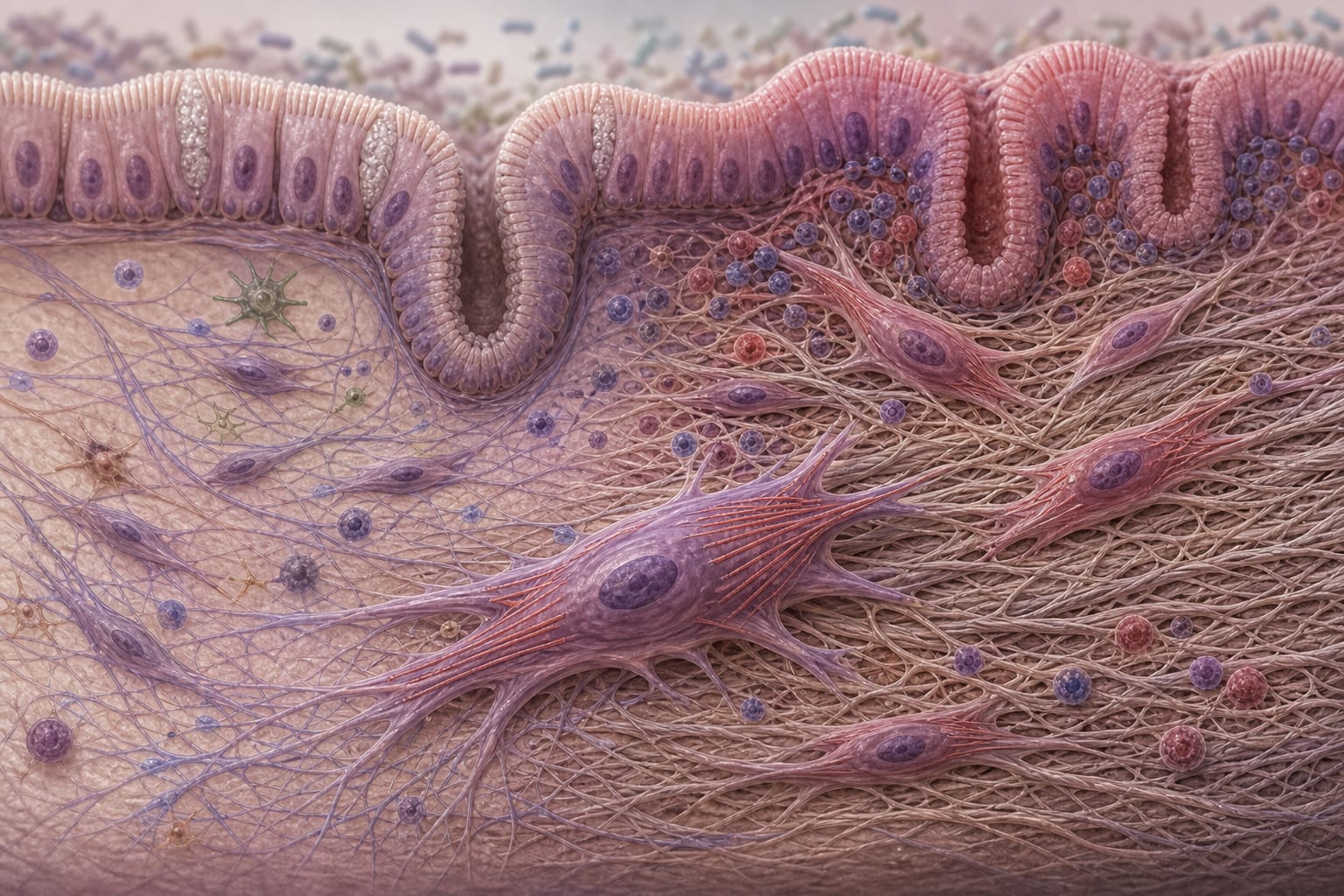
This review highlights the role of Astragalus membranaceus and its derivatives in restoring immune tolerance, particularly in gastrointestinal disorders. It summarizes findings from 112 studies, emphasizing the multi-target regulatory effects of these agents on immune function and gut microbiota.

Background

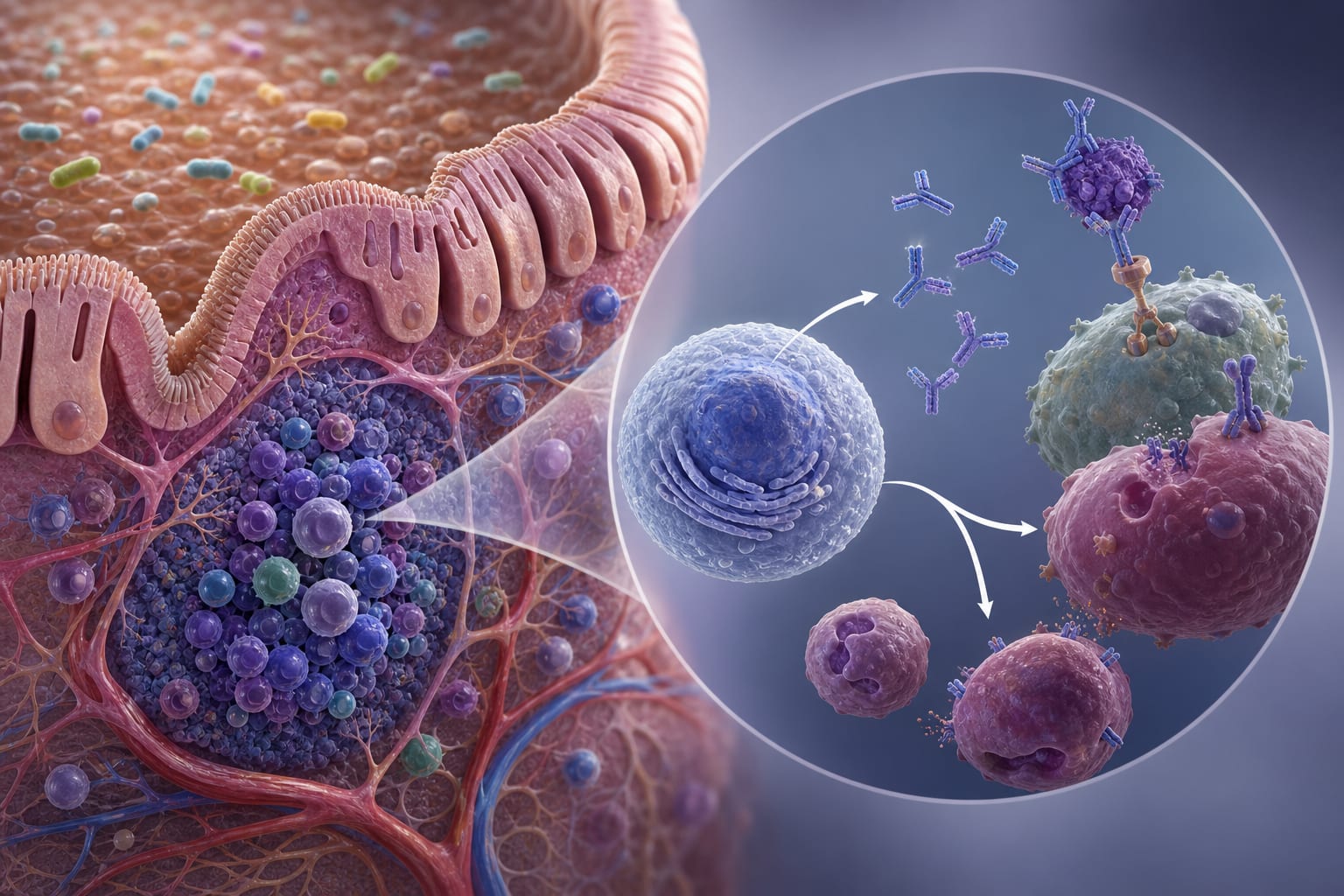
The gastrointestinal tract is a crucial immune organ that maintains immune tolerance to prevent autoimmune diseases and tumors. Traditional Chinese medicine, particularly Astragalus membranaceus, has gained attention for its potential to regulate immune function and restore balance in immune tolerance. Understanding these mechanisms is vital for developing effective treatments for digestive diseases linked to immune dysregulation.

Data Highlights

No numerical data or trial data provided in the source material.

Key Findings

  • Astragalus membranaceus (AM) exhibits efficacy in restoring immune tolerance in gastrointestinal disorders.
  • AM modulates core signaling pathways and immune cell function to achieve immune homeostasis.
  • It rebalances immune axes such as Th1/Th2 and Treg/Th17.
  • The review summarizes findings from 112 studies published between December 2020 and December 2025.
  • AM's mechanisms include multi-target and multi-pathway regulatory effects rather than isolated modulations.

Clinical Implications

The findings suggest that Astragalus membranaceus could be considered in the therapeutic framework for managing gastrointestinal disorders associated with immune tolerance issues. Further research may elucidate its potential as an adjunct therapy in clinical practice.

Conclusion

Astragalus membranaceus presents a promising avenue for restoring immune tolerance in gastrointestinal disorders, warranting further investigation into its therapeutic applications.

Related Resources & Content

  1. The ASCO Post, Active Hexose Correlated Compound Guest Editor OF NOTE, 2020 -- Active Hexose Correlated Compound
  2. Journal of Gastroenterology, The Role of Immunoglobulin A in Hepatic Disorders, 2017 -- The Role of Immunoglobulin A in Hepatic Disorders
  3. Frontiers in Immunology, Editorial: Exploring immunological tolerance in allergy treatment through AIT, 2026 -- Exploring immunological tolerance in allergy treatment through AIT
  4. Official journal of the American College of Gastroenterology | ACG, 2025 -- ACG Clinical Guideline Update: Ulcerative Colitis
  5. Natural antioxidant substances improve oxidative stress and alleviate ulcerative colitis: a meta-analysis of randomized controlled trials, 2025 -- Natural antioxidant substances improve oxidative stress and alleviate ulcerative colitis
  6. New EASL Clinical Practice Guidelines on the management of Autoimmune Hepatitis, 2025 -- EASL Clinical Practice Guidelines
  7. Archives of Toxicology (Springer) — Immunomodulatory potential of Alternaria mycotoxins on immune and intestinal cells: a comparative systematic in vitro study
  8. FDA approves nivolumab with ipilimumab for unresectable or metastatic MSI-H or dMMR colorectal cancer
  9. Official journal of the American College of Gastroenterology | ACG
  10. Natural antioxidant substances improve oxidative stress and alleviate ulcerative colitis: a meta-analysis of randomized controlled trials | Scientific Reports
  11. New EASL Clinical Practice Guidelines on the management of Autoimmune Hepatitis - EASL-The Home of Hepatology.
  12. Dietary Management of Inflammatory Bowel Disease: an ECCO Consensus - ECCO - European Crohn’s and Colitis Organisation
  13. Comparative efficacy of pharmacologic interventions in ulcerative colitis: a network meta analysis | Inflammopharmacology | Springer Nature Link
  14. Efficacy and safety of astragalus polysaccharides in patients with malignant tumors: A systematic review and meta-analysis - PubMed
  15. Blockade of PI3K/AKT signaling pathway by Astragaloside IV attenuates ulcerative colitis via improving the intestinal epithelial barrier | Journal of Translational Medicine | Springer Nature Link
  16. Astragalus | Memorial Sloan Kettering Cancer Center

Original Source(s)

Related Content