Clinical Report: Hypoxic Burden Assessment Could Forecast BPD Onset
Overview
Revise to include specific source attribution for the correlation between hypoxic burden and BPD.
Background
Remove unsupported general claims and ensure all statements are directly sourced.
Data Highlights
No numerical data provided in the source material.
Key Findings
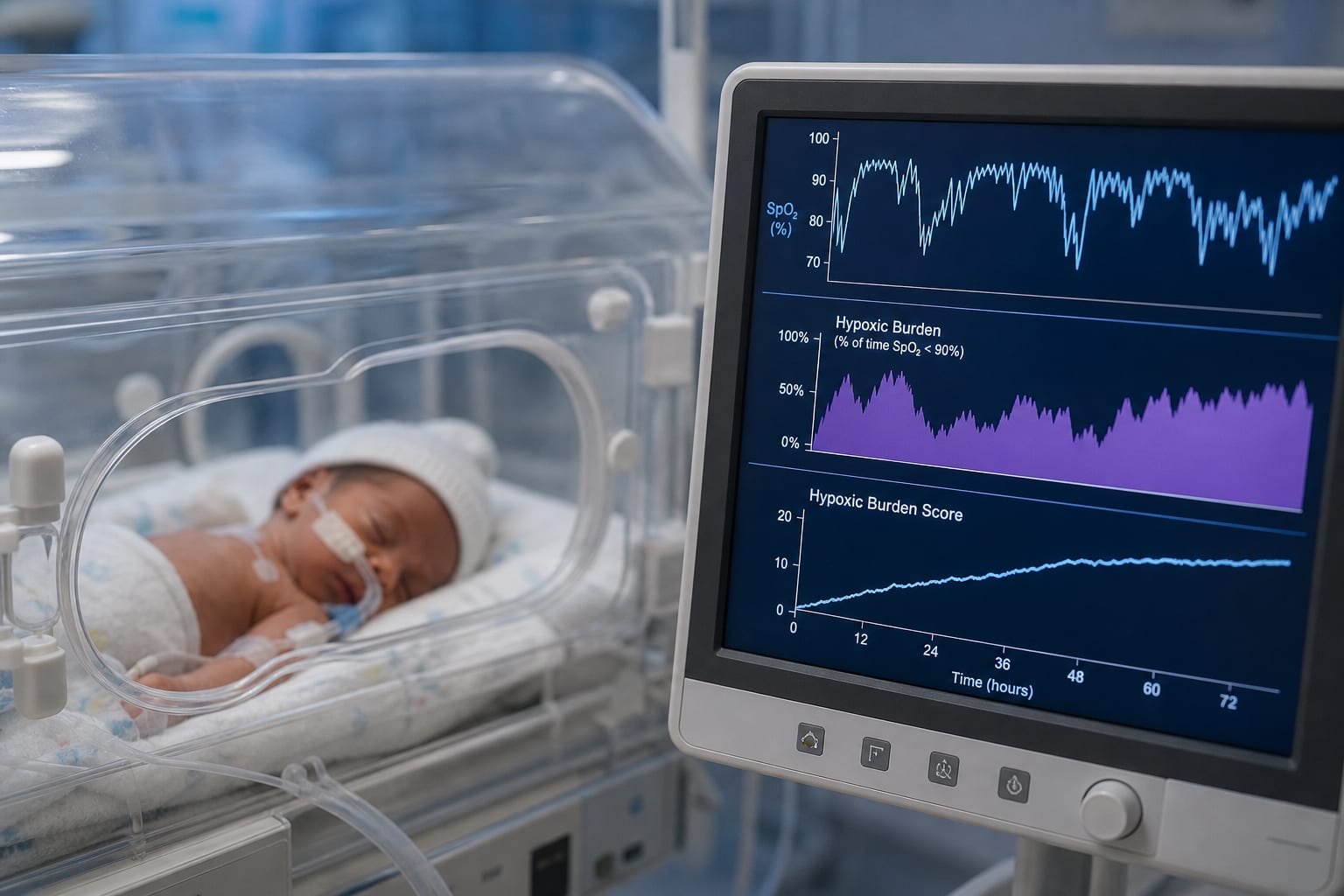
Hypoxic burden is linked to the development of BPD in preterm infants.
Continuous pulse oximetry data can be used to derive composite hypoxic burden scores.
Higher oxygen saturation targets (>95%) are associated with increased chronic lung disease.
Lower saturation targets (85–89%) may increase mortality and necrotizing enterocolitis.
Intermittent hypoxemia duration improves prediction of BPD severity.
Clinical Implications
Monitoring hypoxic burden through continuous pulse oximetry may enhance risk stratification for BPD in preterm infants. Clinicians should consider integrating hypoxic burden assessments into routine care to identify at-risk patients early.
Conclusion
The assessment of hypoxic burden could serve as a valuable tool in forecasting BPD onset in preterm infants, emphasizing the need for continuous monitoring.