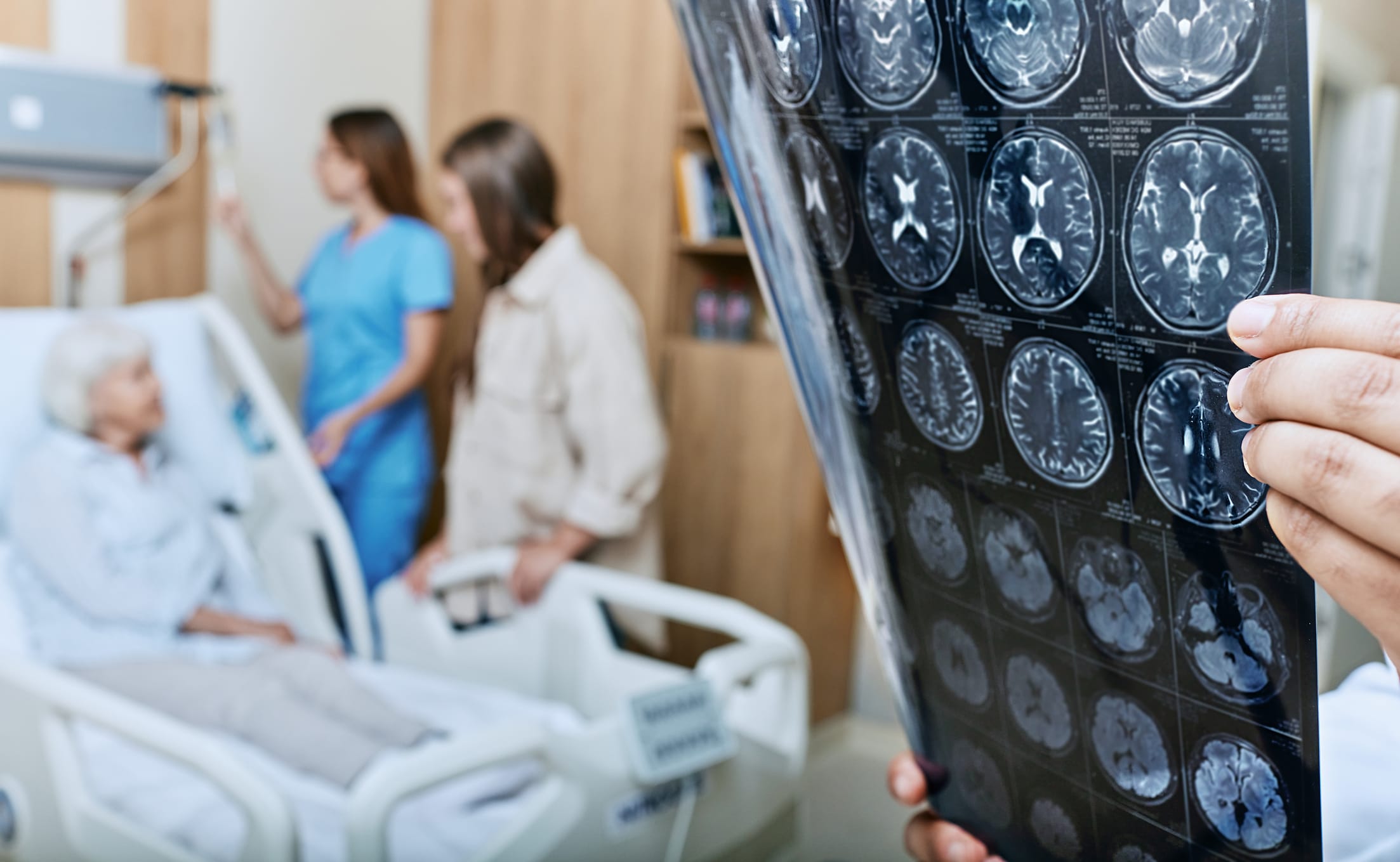
Peanuts may improve regional brain insulin response
-
By
-
Andrea Surnit
-
October 16, 2026
-
4 min
Clinical Report: Peanuts and Regional Brain Insulin Response
Overview
In a randomized, single-blind crossover trial of 31 adults aged 60–75 years, 60 g of unsalted, skin-roasted peanuts daily for 16 weeks was associated with a lower insulin-induced cerebral blood flow response in one right-hemisphere cluster involving memory-related regions. No significant differences were found in global or broader brain measures, and the regional change was not significantly associated with previously reported improvement in verbal recognition memory.
Background
Brain insulin responsiveness is studied in relation to cognitive processes, including memory, and can be assessed indirectly through cerebral blood flow responses after intranasal insulin. The trial examined whether sustained peanut consumption affected this response in older adults, alongside metabolic and inflammatory measures. Its findings concern a regional imaging outcome and do not establish direct changes in neuronal insulin signaling. Related research has examined intranasal insulin delivery to the brain and insulin-related hippocampal responses, but those studies address different questions.
Data Highlights
| Measure | Finding |
|---|---|
| Participants and design | 31 adults aged 60–75 years completed a randomized, single-blind crossover trial; mean age 67 years, 15 women. Each completed 16 weeks of 60 g/day unsalted, skin-roasted peanuts and a 16-week control period, separated by an 8-week washout. |
| Regional insulin-induced cerebral blood flow | One right-hemisphere cluster showed a significant reduction after peanut consumption versus control: mean difference −5.4 mL/100 g brain tissue/min; cluster volume 552 mm³. It included portions of the lingual gyrus, hippocampus, parahippocampal gyrus, thalamus, and posterior cingulate gyrus. |
| Broader brain measures | No significant differences in insulin-induced cerebral blood flow responses at global, gray matter, cortical, or subcortical levels. |
| Memory association | Regional response changes were not significantly associated with previously reported improvements in verbal recognition memory in the same study population. |
| Metabolic and inflammatory measures | No significant effects on liver fat (5.3% after peanuts vs 5.0% during control), fasting glucose, insulin, HOMA-IR, total cholesterol, LDL cholesterol, HDL cholesterol, or high-sensitivity C-reactive protein. Triglycerides were lower after 8 weeks (mean difference −0.20 mmol/L), but this difference was not evident at week 16. |
| Adherence and safety | Median adherence was 100%. One participant withdrew because of gastrointestinal discomfort; no study-related serious adverse events were reported. |
Key Findings
- Participants received 60 g of unsalted, skin-roasted peanuts daily for 16 weeks and completed a control period without nuts, with an 8-week washout.
- Whole-brain analysis identified one right-sided cluster with a statistically significant reduction in insulin-induced cerebral blood flow after the peanut intervention compared with control.
- The cluster included portions of several regions associated with memory-related processes; the highest average localization probabilities were in the lingual gyrus (20%), hippocampus (14%), and parahippocampal gyrus (11%).
- No significant differences were detected in global, gray matter, cortical, or subcortical cerebral blood flow responses, and regional changes were not significantly associated with verbal recognition memory improvement previously reported in this cohort.
- Fasting glucose, insulin, HOMA-IR, liver fat, cholesterol measures, and high-sensitivity C-reactive protein did not differ significantly between intervention and control periods. The triglyceride difference observed at week 8 was no longer evident at week 16.
- The authors noted that cerebral blood flow responses are an indirect measure of insulin-related neuronal activity; the small sample and absence of an energy- and macronutrient-matched control limit interpretation.
Clinical Implications
The study reports a region-specific imaging change, not a demonstrated improvement in cognition or direct evidence of altered neuronal insulin signaling. The authors state that the relationship between the regional response and previously reported verbal recognition memory improvement could not be determined; the small sample and lack of an energy- and macronutrient-matched control are relevant limitations.
Conclusion
Sixteen weeks of daily peanut consumption was associated with a lower insulin-induced cerebral blood flow response in a right-hemisphere cluster involving memory-related regions, without significant changes in broader brain measures or a significant association with verbal recognition memory. The findings do not establish the mechanism or cognitive significance of this regional response.
Related Resources & Content
- Study authors, PubMed, 2026 -- Daily consumption of unsalted, skin-roasted peanuts beneficially affects regional brain insulin responsiveness in older adults: results of a longer-term randomized controlled trial
- Study authors, Clinical Nutrition, 2025 -- Longer-term skin-roasted peanut consumption improves brain vascular function and memory: A randomized, single-blind, controlled crossover trial in healthy older adults
- MDSpire News, n.d. -- Intranasal Insulin Reaches Brain in First Human PET Study
- The Journal of Clinical Endocrinology & Metabolism, 2025 -- Gender-Based Variations in Hippocampal Functional Connectivity Induced by Insulin During Visual Presentation of Food Cues
- Frontiers in Endocrinology — Zinc oxide nanoparticles mitigate insulin resistance in a D-galactose-induced C57BL/6 mouse model
- Frontiers in Neurology — Evaluating the Safety and Tolerability of Intranasal Insulin in Patients with Parkinson's Disease
- Daily consumption of unsalted, skin-roasted peanuts beneficially affects regional brain insulin responsiveness in older adults: results of a longer-term randomized controlled trial
- Longer-term skin-roasted peanut consumption improves brain vascular function and memory: A randomized, single-blind, controlled crossover trial in healthy older adults
- Intranasal Insulin Reaches Brain in First Human PET Study
- Gender-Based Variations in Hippocampal Functional Connectivity Induced by Insulin During Visual Presentation of Food Cues
- Risk reduction of cognitive decline and dementia: WHO guidelines, second edition
- 13. Older Adults: Standards of Care in Diabetes—2026 | Diabetes Care | American Diabetes Association
- Longer-term skin-roasted peanut consumption improves brain vascular function and memory: A randomized, single-blind, controlled crossover trial in healthy older adults - Clinical Nutrition
- Effects of peanut consumption on task-related brain activation, cognition and neuroinflammation in older adults with memory complaints: a randomized controlled trial - PubMed
- Safety, Efficacy, and Feasibility of Intranasal Insulin for the Treatment of Mild Cognitive Impairment and Alzheimer Disease Dementia: A Randomized Clinical Trial | Dementia and Cognitive Impairment | JAMA Neurology | JAMA Network
Based on findings from:
Peanuts may improve regional brain insulin response
Andrea Surnit. MDSpire News, 2026.
https://news.mdspire.com/neurology/articles/peanuts-may-improve-regional-brain-insulin-response/
This content is an AI-generated, fully rewritten summary based on a published scholarly article. It does not reproduce the original text and is not a substitute for the original publication. Readers are encouraged to consult the source for full context, data, and methodology.