Acetylcholine receptor antibody-positive myasthenia gravis and Kennedy’s disease overlap syndrome: a case report and literature review - Report - MDSpire
Advertisement
Acetylcholine receptor antibody-positive myasthenia gravis and Kennedy’s disease overlap syndrome: a case report and literature review
Clinical Report: Overlap Syndrome of AChR Antibody-Positive MG and KD
Overview
This report presents a unique case of overlap syndrome involving acetylcholine receptor antibody-positive myasthenia gravis and Kennedy’s disease. The findings highlight the importance of recognizing this rare condition to improve diagnosis and management.
Background
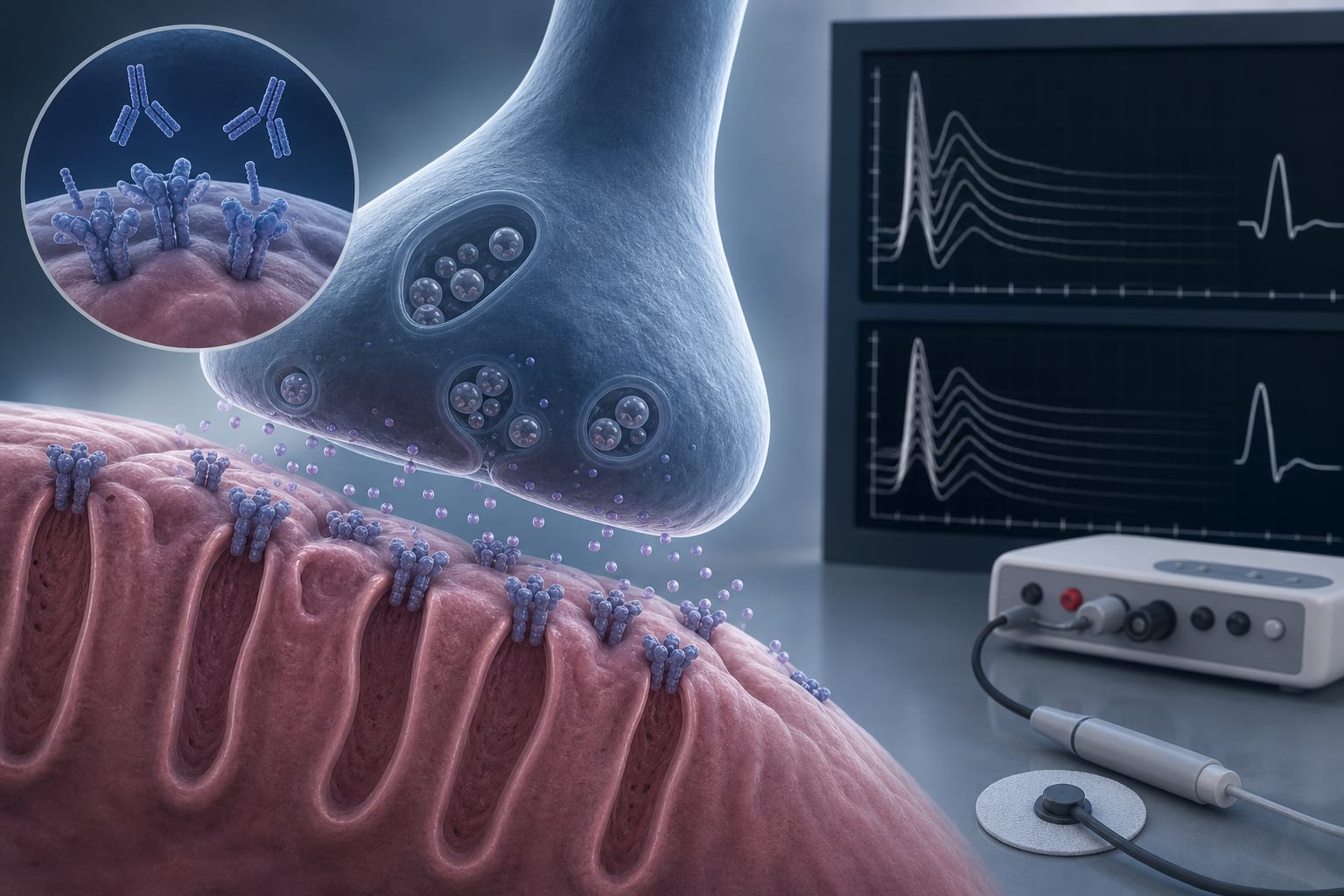
Myasthenia gravis (MG) is an autoimmune disorder characterized by fluctuating muscle weakness due to autoantibodies against the neuromuscular junction. Kennedy’s disease (KD) is a rare motor neuron disorder caused by mutations in the androgen receptor gene. The coexistence of these two conditions is exceptionally rare, making this case significant for clinical awareness and understanding of potential comorbid mechanisms.
Data Highlights
The patient exhibited clinical features of both MG and KD, with neurophysiological findings consistent with KD. Genetic testing confirmed the diagnosis of KD, with a notable CAG repeat expansion in the androgen receptor gene.
Key Findings
The patient was a 60-year-old male with diplopia and bilateral ptosis, symptoms that worsened with fatigue.
Neurophysiological assessments revealed significant neurogenic changes consistent with Kennedy’s disease.
Genetic testing showed an abnormal CAG repeat length in the androgen receptor gene, confirming the diagnosis of KD.
Literature review identified only four previous cases of KD with myasthenic features, all of which were AChR antibody-negative.
This case represents the first genetically confirmed instance of AChR antibody-positive MG coexisting with KD.
Clinical Implications
Clinicians should be aware of the potential for overlap syndromes in patients presenting with symptoms of MG and KD. Early recognition and appropriate diagnostic testing can facilitate better management strategies for affected individuals.
Conclusion
The overlap syndrome of AChR antibody-positive MG and Kennedy’s disease underscores the need for heightened clinical awareness and further research into the mechanisms underlying these rare coexisting conditions.