Inflammatory CADASIL: the cross-link between CADASIL and multiple sclerosis: a report of two cases and systematic review of the literature - Report - MDSpire
Clinical Report: Inflammatory CADASIL and Its Link to Multiple Sclerosis
Overview
This report presents two cases of patients initially diagnosed with multiple sclerosis (MS) who were later found to have CADASIL. The findings highlight the potential for misdiagnosis and the need for careful evaluation of atypical MS presentations.
Background
Multiple sclerosis is a complex autoimmune disease with symptoms that can overlap with other conditions, including CADASIL, a genetic disorder affecting blood vessels in the brain. Misdiagnosis can lead to inappropriate treatment, making it crucial for clinicians to recognize the distinguishing features of these conditions. Understanding the relationship between CADASIL and MS is essential for accurate diagnosis and management.
Data Highlights
No numerical data or trial data presented in the article.
Key Findings
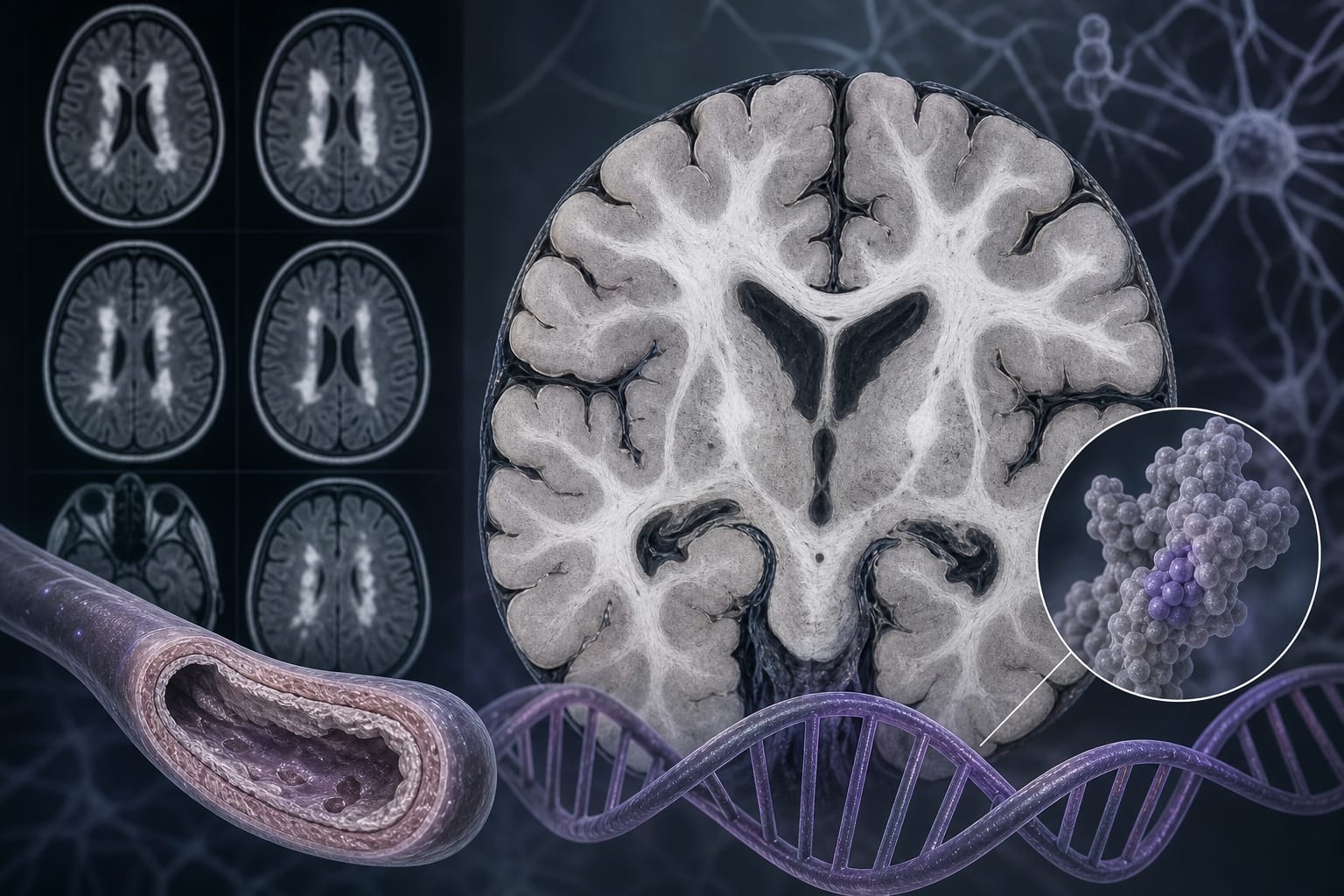
CADASIL is caused by mutations in the NOTCH3 gene, leading to vascular dysfunction.
Patients with CADASIL can present with symptoms and MRI findings similar to those of MS.
CSF biomarkers like oligoclonal bands can be present in both CADASIL and MS, complicating diagnosis.
Two cases were reported where patients diagnosed with MS were later found to have CADASIL after genetic testing.
Atypical clinical features may serve as red flags for considering genetic testing in suspected MS cases.
Clinical Implications
Clinicians should be aware of the potential for CADASIL to mimic MS, particularly in patients with atypical presentations. Genetic testing may be warranted in cases where MS diagnosis is uncertain, especially when patients exhibit features that do not fully align with typical MS pathology.
Conclusion
The overlap between CADASIL and MS necessitates a careful diagnostic approach to avoid misdiagnosis and ensure appropriate treatment. Further research is needed to clarify the relationship between these two conditions.