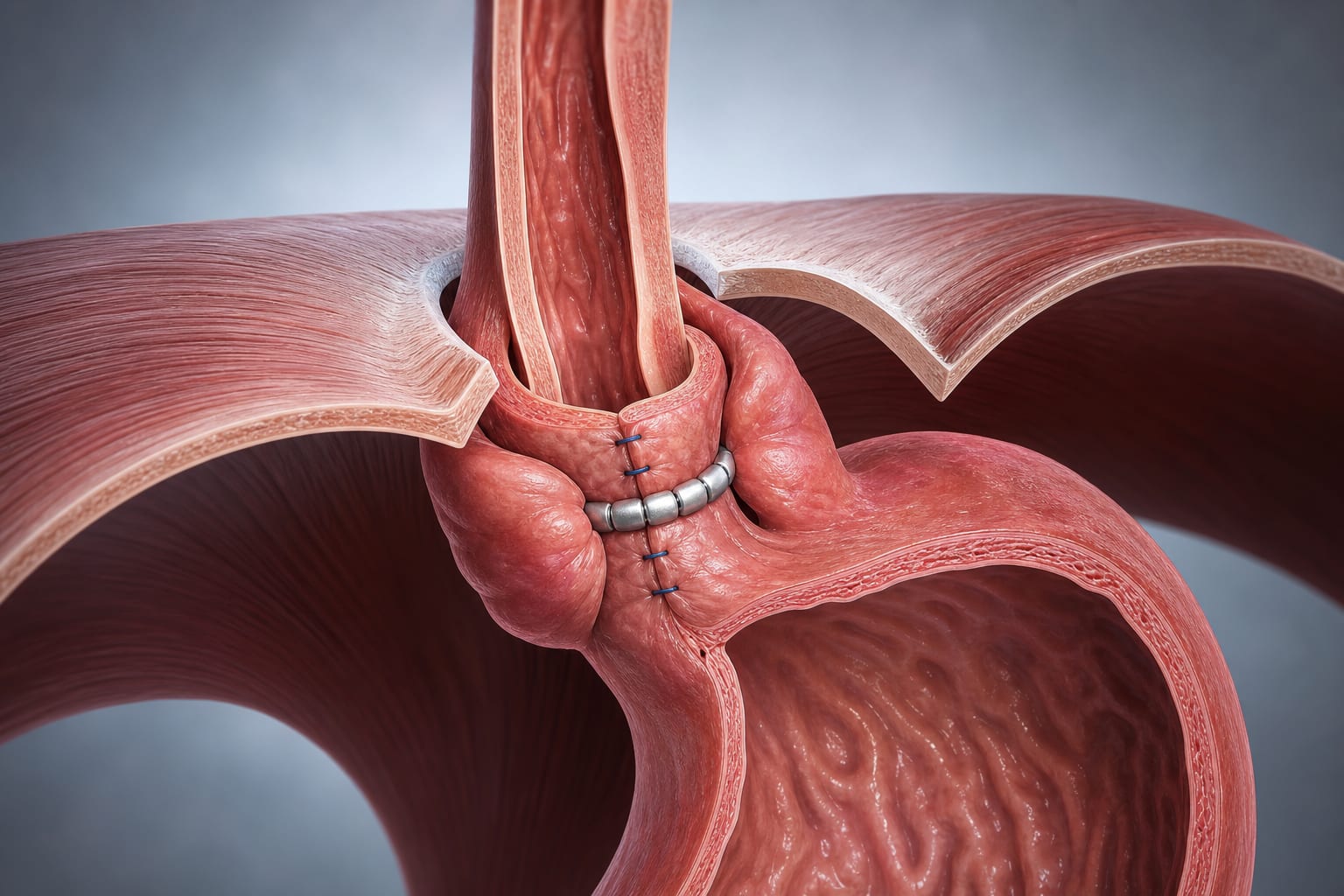
Outcomes of One-Step Revisional Bariatric Surgery After Failed LAGB: 2-Year Analysis
Overview
This retrospective cohort study evaluated one-step revisional bariatric surgeries—rOAGB, rRYGB, and rLSG—after failed laparoscopic adjustable gastric banding (LAGB). Over a two-year follow-up, rOAGB and rRYGB showed superior weight loss compared to rLSG, with varying complication profiles and improvements in associated medical conditions.
Background
Laparoscopic adjustable gastric banding (LAGB) was once a popular bariatric procedure but has declined due to poor long-term weight loss and high complication rates, including band-related issues requiring removal. Revisional surgeries such as Roux-en-Y gastric bypass (rRYGB), laparoscopic sleeve gastrectomy (rLSG), and one anastomosis gastric bypass (rOAGB) are commonly performed to address unsuccessful weight loss or complications. However, there is no consensus on the optimal revisional procedure, and comparative data on safety and efficacy remain limited. This study aims to assess the technical feasibility, safety, weight loss outcomes, and resolution of comorbidities following these one-step revisional surgeries.
Data Highlights
Parameter
rOAGB
rRYGB
rLSG
Mean %TWL at 2 years
32.7%
31.1%
22.3%
Mean %EWL at 2 years
73.6%
70.5%
51.2%
Early complication rate (Clavien-Dindo ≥ III)
4.5%
6.8%
3.2%
30-day readmission rate
3.0%
5.5%
2.7%
GERD remission/improvement rate
81.7%
65.4%
40.2%
Food tolerance score at 2 years
Good
Moderate
Good
Key Findings
rOAGB and rRYGB achieved significantly greater weight loss (%TWL and %EWL) at 2 years compared to rLSG.
rRYGB was associated with higher rates of early complications and 30-day readmissions than rOAGB and rLSG.
rOAGB showed the highest rates of GERD remission or improvement postoperatively.
Food tolerance was generally good after rOAGB and rLSG, with slightly lower scores after rRYGB.
All revisional procedures were technically feasible as one-step surgeries with acceptable safety profiles.
Resolution or improvement of obesity-related medical problems was observed across all groups, with no significant differences.
Clinical Implications
One-step revisional bariatric surgery after failed LAGB is a safe and effective approach, with rOAGB and rRYGB providing superior weight loss outcomes compared to rLSG. However, rRYGB carries a higher risk of early postoperative complications and readmissions. The choice of revisional procedure should be individualized, considering patient-specific factors such as GERD symptoms, complication risks, and food tolerance. Surgeons should counsel patients on the benefits and risks of each revisional option to optimize outcomes.
Conclusion
One-step revisional surgeries after failed LAGB are effective for weight loss and comorbidity improvement, with rOAGB offering a favorable balance of efficacy and safety. Further prospective studies are warranted to refine patient selection and long-term outcomes.
References
Author/Source/Year -- One-Step Bariatric Surgical Approaches Following Failed Laparoscopic Gastric Banding: A Retrospective Cohort Analysis with Two-Year Outcomes
FOXC1 duplications were the second most common monogenic finding among genetically solved juvenile open-angle glaucoma cases in one registry, supporting the use of copy-number variant analysis in early-onset glaucoma testing.