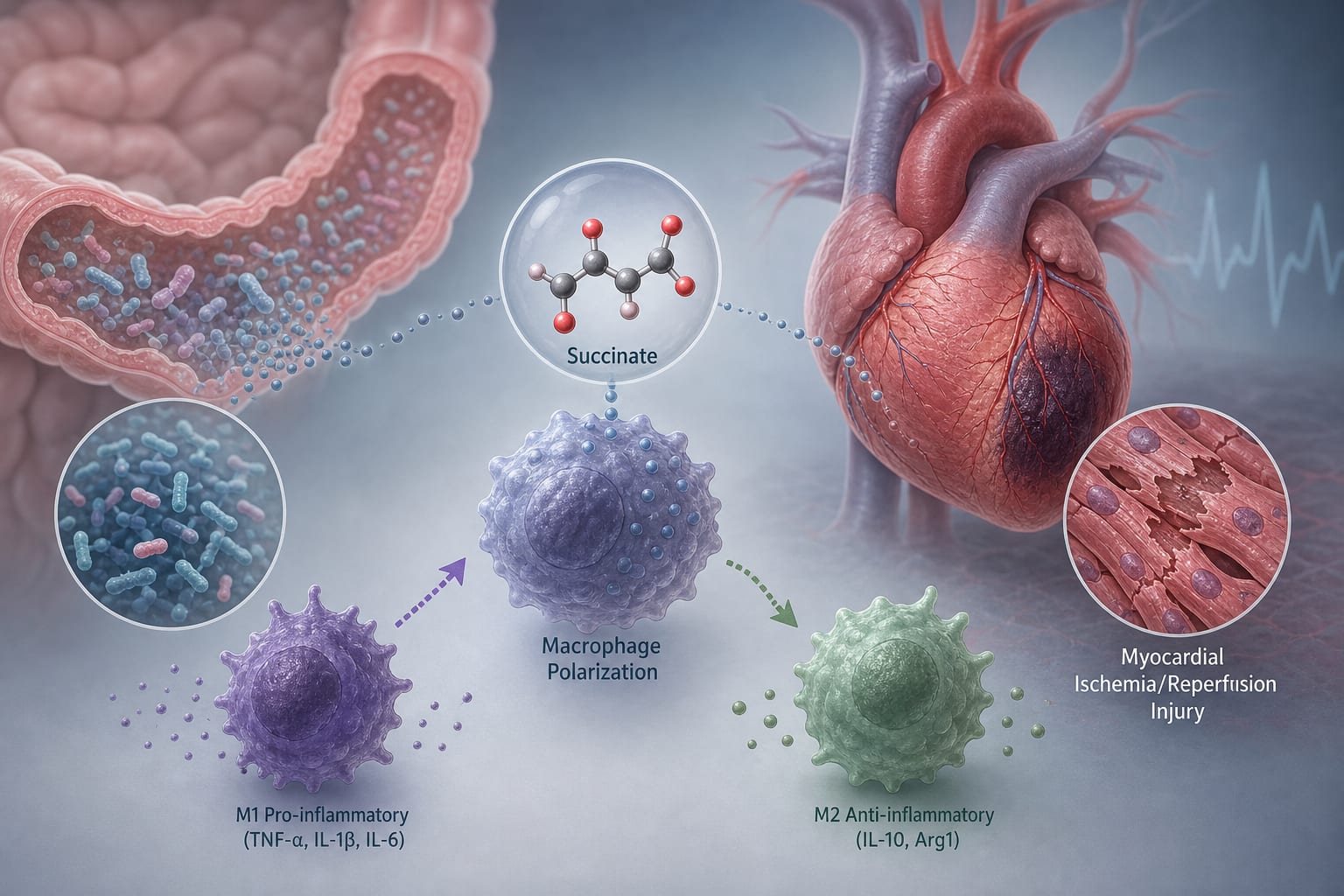
This study identifies the role of succinate, a microbiota-derived metabolite, in exacerbating myocardial ischemia/reperfusion injury in diabetic models. It highlights the link between gut microbiota dysbiosis and increased succinate levels, leading to macrophage polarization and worsened cardiac outcomes.
Background
Diabetes significantly increases the risk of myocardial ischemia/reperfusion (IR) injury, contributing to high morbidity and mortality rates. Understanding the mechanisms behind this susceptibility is crucial for developing targeted therapies. Recent insights into the gut-heart axis suggest that microbial metabolites, particularly succinate, may play a pivotal role in mediating cardiac injury in diabetic patients.
Data Highlights
No numerical data available in the article.
Key Findings
Diabetic mice exhibit increased cardiac succinate levels linked to gut microbial dysbiosis.
Antibiotic-induced depletion of gut microbiota reverses succinate accumulation.
Succinate promotes macrophage polarization, exacerbating myocardial IR injury.
Genetic ablation of Sucnr1 mitigates the harmful effects of succinate in both in vitro and in vivo models.
Macrophage polarization is critical in regulating post-injury outcomes during myocardial IR injury.
Clinical Implications
The findings suggest that targeting gut microbiota and succinate metabolism may offer new therapeutic strategies for reducing myocardial IR injury in diabetic patients. Clinicians should consider the potential role of microbiota-derived metabolites in managing cardiovascular risks associated with diabetes.
Conclusion
This study underscores the importance of the gut microbiota in cardiac health, particularly in diabetic patients, and highlights succinate as a potential therapeutic target to mitigate myocardial IR injury.