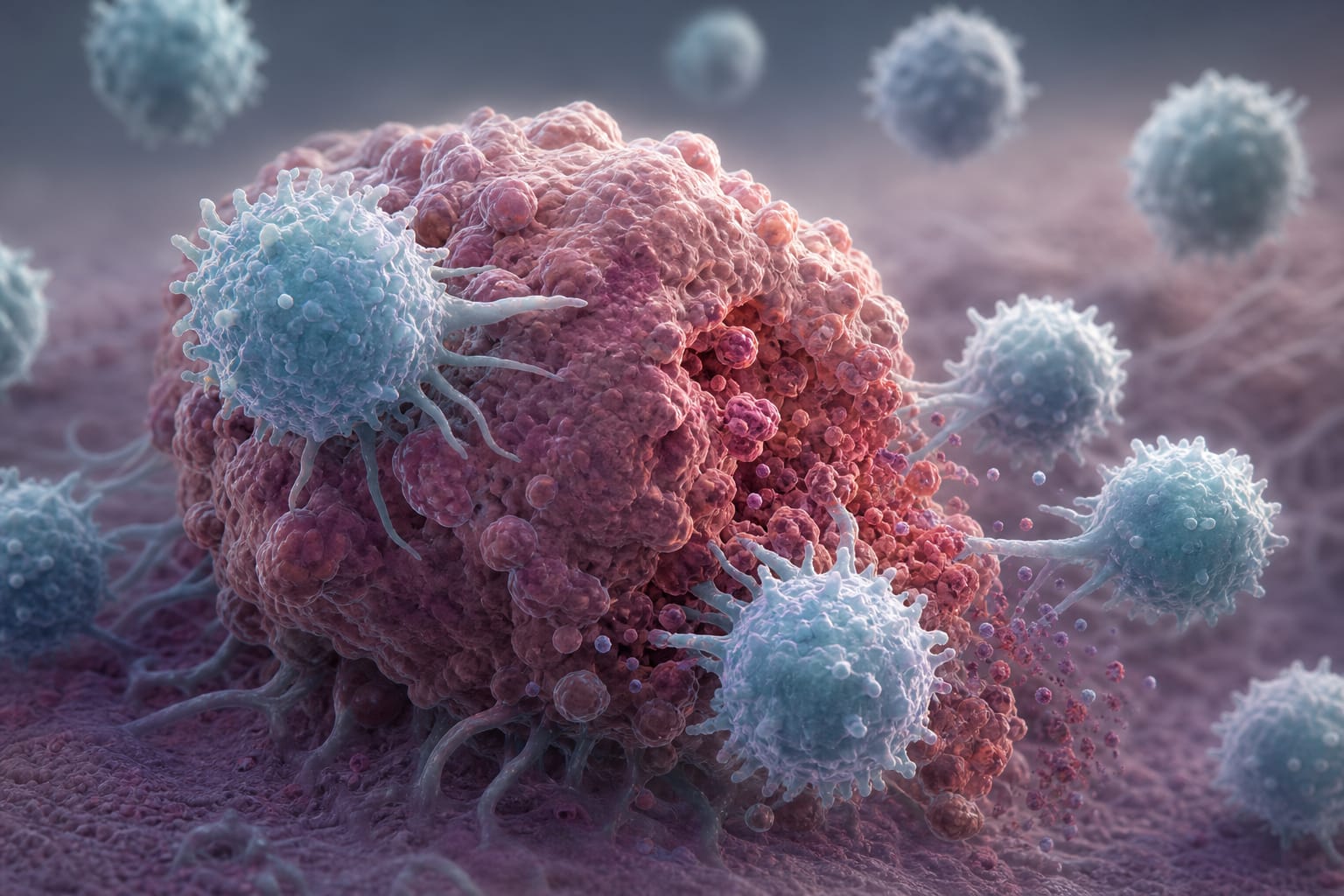
Origins of CD8 tissue resident memory
-
By
-
David J. Topham
-
June 11, 2026
-
0 min
Developmental Pathways of CD8+ Tissue-Resident Memory T Cells
Overview
This report reviews the development and function of CD8+ tissue-resident memory T (TRM) cells, highlighting their critical role in protective immune responses. It discusses the heterogeneity of TRM cells and the factors influencing their establishment in peripheral tissues.
Background
Understanding the development of TRM cells is essential as they provide localized immune protection at barrier sites against pathogens and tumors. The presence of CD8+ TRM cells in solid tumors correlates with patient prognosis, making them a significant focus in immunology and oncology. Despite advancements, many aspects of TRM cell biology remain unclear, necessitating further research.
Data Highlights
No specific numerical data or trial results are presented in the source material.
Key Findings
- CD8+ TRM cells exhibit specific surface receptors and transcription factors that are common across various tissues.
- TRM cells are crucial for protective immune responses against reinfections and variants of pathogens.
- Studies have shown that TRM cells can be found in solid tumors and are associated with prognosis.
- There is substantial heterogeneity among TRM cells influenced by immune responses and tissue environments.
- Understanding TRM cell development may lead to strategies for preventive or therapeutic interventions.
Clinical Implications
The identification and characterization of CD8+ TRM cells can inform therapeutic strategies in immuno-oncology, particularly in enhancing responses to checkpoint inhibitors. Clinicians should consider the role of TRM cells in both protective immunity and tumor microenvironments.
Conclusion
The development of CD8+ TRM cells is a complex process that plays a vital role in immune memory and response. Continued research is necessary to fully elucidate their mechanisms and potential therapeutic applications.
Related Resources & Content
- Frontiers in Immunology, 2026 -- Exercise and tissue-resident memory T cells: from circulating numbers to spatial immune remodeling
- Frontiers in Immunology, 2026 -- Limited adaptability of virtual memory CD8 T cells to chronic viral infection
- Frontiers in Immunology, 2026 -- Clinical-scale 10-day TCR-T cell manufacturing using IL-2/7/15 and TGF-β promotes early memory and tissue-resident-like phenotypes and robust antitumor activity in vitro
- Guidelines for T cell nomenclature | Nature Reviews Immunology, 2025
- Different tumour-resident memory T-cell subsets regulate responses to anti-PD-1 and anti-CTLA-4 cancer immunotherapies | Nature Communications, 2025
- Frontiers in Immunology — α-Galactosylceramide-expanded virtual memory CD8+ T cells confer protection against a broad range of pathogens
- Guidelines for T cell nomenclature | Nature Reviews Immunology
- Different tumour-resident memory T-cell subsets regulate responses to anti-PD-1 and anti-CTLA-4 cancer immunotherapies | Nature Communications
- Advances and prospects of respiratory mucosal vaccines: mechanisms, technologies, and clinical applications | npj Vaccines
This content is an AI-generated, fully rewritten summary based on a published scholarly article. It does not reproduce the original text and is not a substitute for the original publication. Readers are encouraged to consult the source for full context, data, and methodology.