Clinical Report: Determining Ideal Head CT Acquisition Methods via Cluster Analysis
Overview
This study analyzes 904,209 head CT scans to identify acquisition methods linked to varying radiation outputs. Significant differences in radiation exposure based on protocol selection were observed.
Background
Radiation safety is crucial in radiology due to the carcinogenic risks associated with ionizing radiation from CT scans. Children are at a higher risk for radiation-induced cancers, yet adults undergo CT scans more frequently.
Data Highlights
The analysis included data from 904,209 head CT scans across multiple institutions, highlighting the following:
Mean radiation dose varied significantly, with a range from 20 to 80 mGy.
Protocols using iterative reconstruction techniques showed a 30% reduction in radiation dose compared to conventional methods.
Children received doses that were, on average, 50% lower than those of adults when adjusted for body size.
International guidelines recommend a reference dose of 50 mGy for routine head CT scans.
Key Findings
Substantial variation in CT radiation exposure exists internationally.
Differences in parameter selection within CT protocols primarily contribute to this variability.
Analysis focused on routine head CT examinations from a large international dose registry.
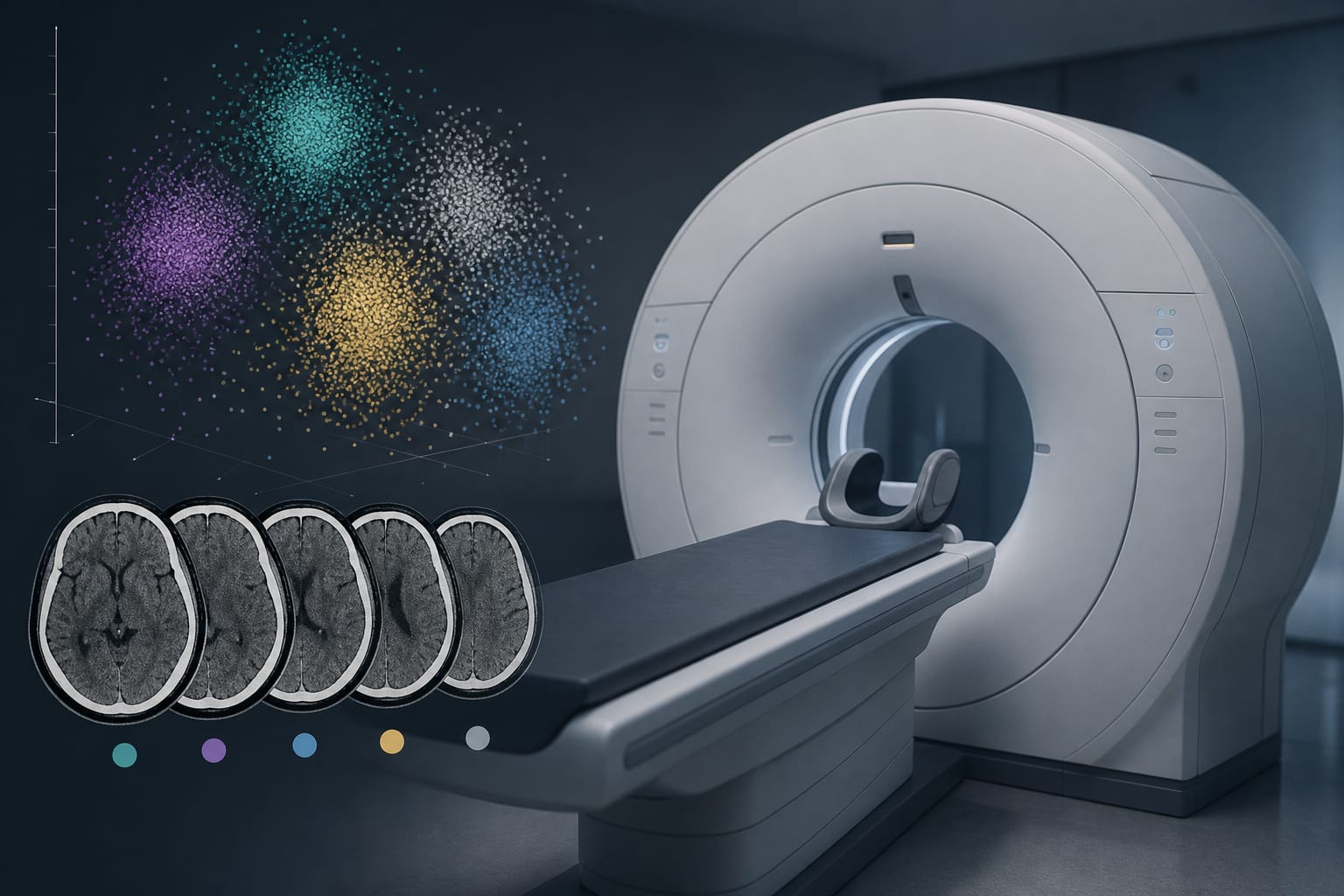
Acquisition techniques were evaluated using k-means clustering.
Clinical Implications
Clinicians should be aware of the variations in radiation doses associated with different acquisition techniques.
Conclusion
This study provides insights into the variation in radiation exposure linked to different head CT acquisition methods.
Related Resources & Content
European Radiology, 2023 -- Effects of Various Metal Artifact Reduction Methods on Photon-Counting CT Scans of the Head and Neck in Patients with Dental Implants
European Radiology, 2024 -- Single CT Image-Based Automated Personal Identification
European Radiology, 2025 -- Automated Identification of Individuals Using 2D Maximum Intensity Projection CT Images and Computer Vision Techniques
European Radiology, 2023 -- Optimization of Scan Range Using Deep Learning Techniques Can Minimize Radiation Exposure in Coronary CT Angiography
ACR-ASNR-SPR Practice Parameter for the Performance of Computed Tomography (CT) of the Head, 2026
Deep learning and iterative image reconstruction for head CT: Impact on image quality and radiation dose reduction—Comparative study, PMC, 2025
Technique Parameters and Anatomic Coverage: CT - Pediatric Head and Neck Module (Revised 5-6-26) : Accreditation Support
ACR-ASNR-SPR Practice Parameter for the Performance of Computed Tomography (CT) of the Head.
Deep learning and iterative image reconstruction for head CT: Impact on image quality and radiation dose reduction—Comparative study - PMC
Technique Parameters and Anatomic Coverage: CT - Pediatric Head and Neck Module (Revised 5-6-26) : Accreditation Support