Clinical Report: The Impact of Treatment on Host Dynamics and SPCs
Background
As cancer survival rates improve, the incidence of second primary cancers (SPCs) among survivors is rising. SPCs arise from various factors, including genetic predisposition, environmental influences, and treatment history, complicating risk assessment and management.
Data Highlights
No specific numerical data or trial data provided in the source material.
Key Findings
SPCs represent a significant concern in cancer survivorship, with a cumulative incidence increasing from 6.3% at 5 years to 13.5% at 15 years.
SPCs arise through diverse biological pathways, influenced by treatment exposure and genetic factors.
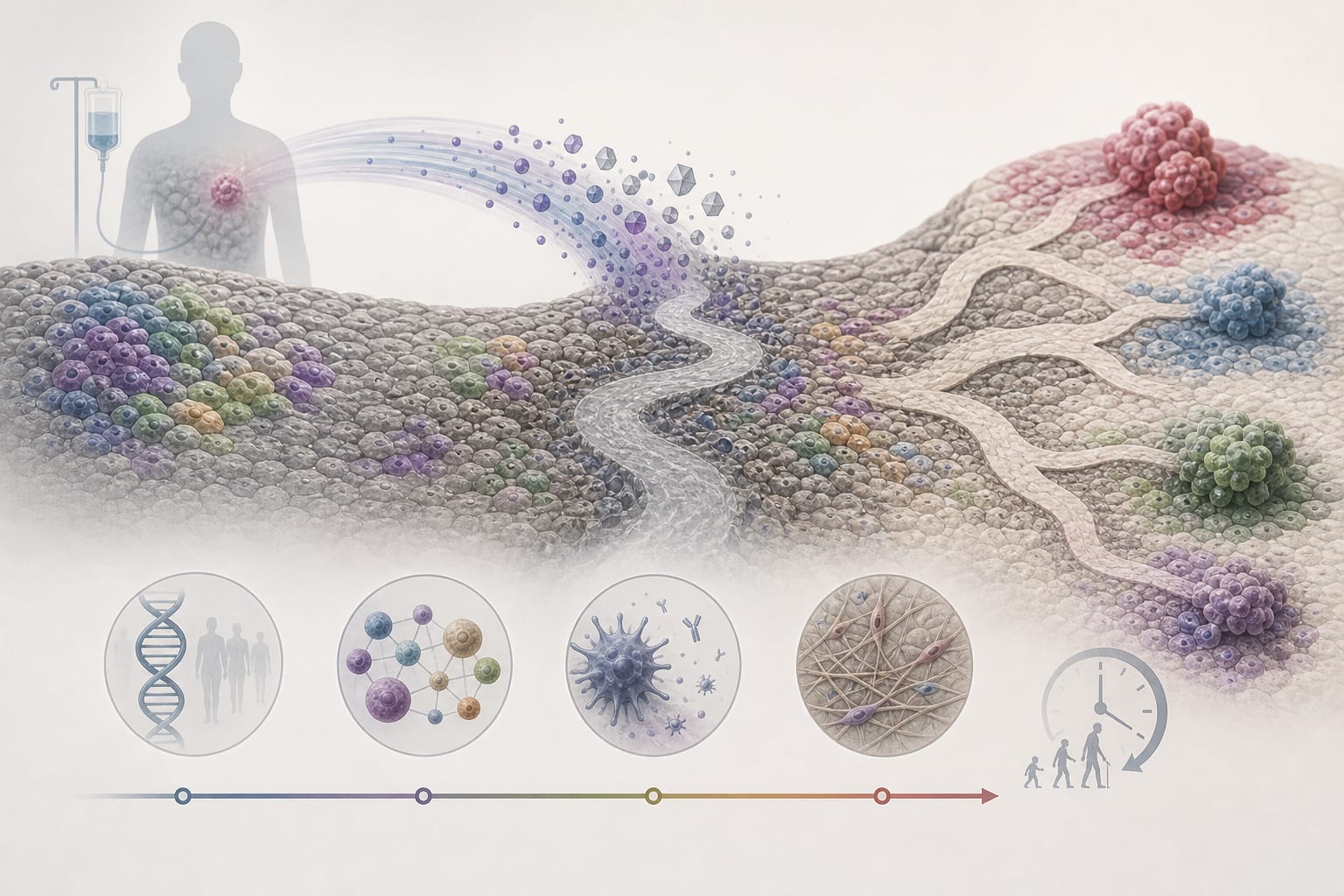
The therapy-conditioned host framework suggests that treatment alters the biological state of tissues, impacting future cancer risk.
High-resolution analyses indicate that therapy can reshape somatic selection and clonal organization in normal tissues.
Longitudinal studies are needed to validate the proposed framework.
Clinical Implications
Clinicians should consider both treatment history and the biological state of patients when evaluating cancer risk.
Conclusion
The therapy-conditioned host framework offers a new perspective on the biological changes following cancer treatment.