Prospective randomised controlled trial to compare tissue reactions and scarring with polypropylene versus polyglactin 910 sutures in periocular skin - Report - MDSpire

Prospective randomised controlled trial to compare tissue reactions and scarring with polypropylene versus polyglactin 910 sutures in periocular skin

  • By

  • Tessa Fayers

  • John S Vekinis

  • Laura Ah-Kye

  • David Parham

  • Priscilla Anketell

  • Justin Weir

  • Roger A’Hern

  • Ben Parkin

  • July 1, 2026

  • 0 min

Share

Clinical Report: Evaluating Tissue Responses in Periocular Skin Sutures

Overview

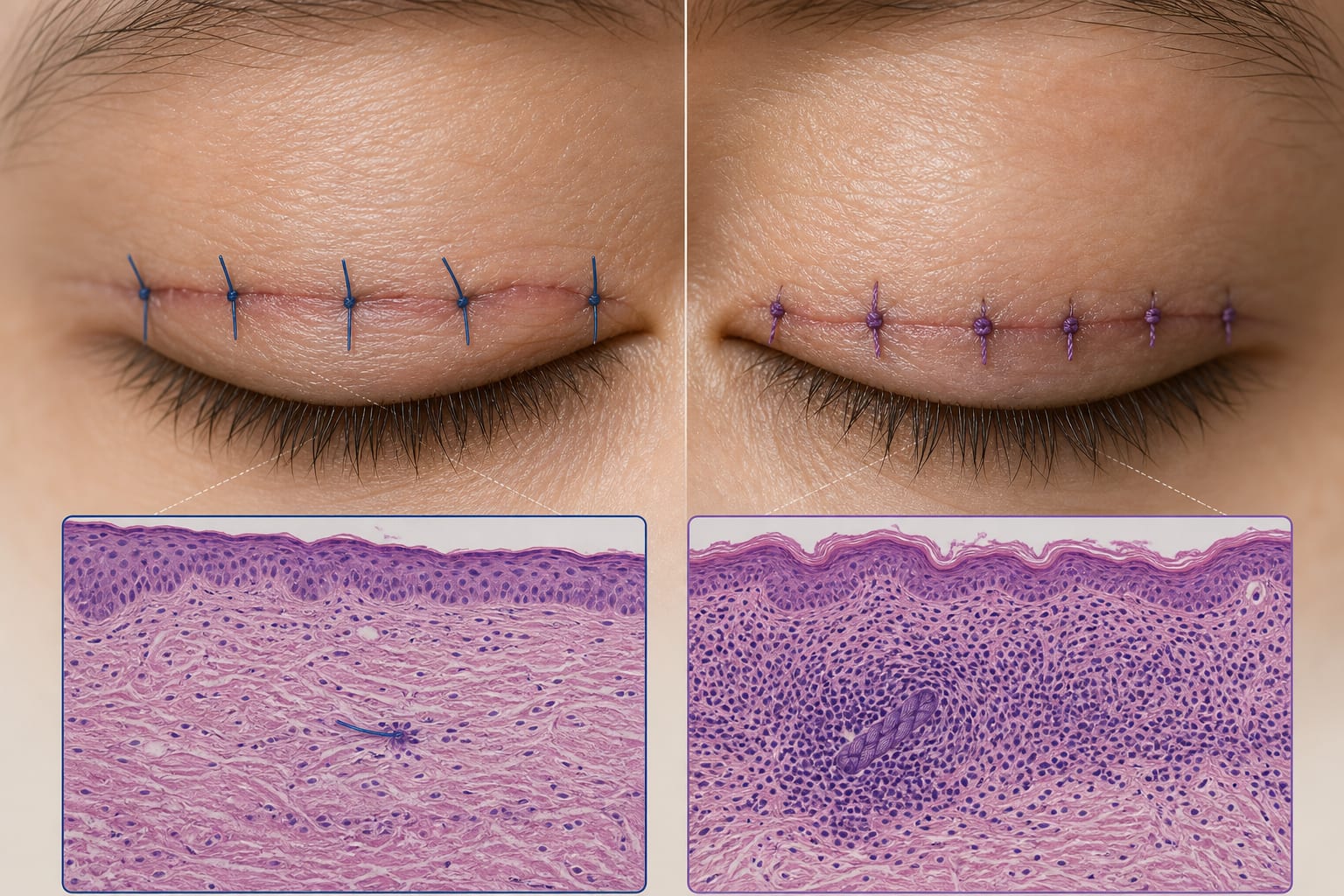
This study compares the histological tissue inflammatory reactions and clinical scarring associated with polypropylene (Prolene) and polyglactin 910 (Vicryl) sutures in periocular skin.

Background

The choice of suture material in oculoplastic surgery is critical due to its potential impact on tissue healing and cosmetic outcomes. Different suture materials can provoke varying inflammatory responses, which may affect recovery and long-term scarring. Understanding these differences is essential for optimizing surgical outcomes in eyelid procedures.

Data Highlights

No numerical data or trial results were provided in the source material.

Key Findings

  • Prolene sutures may result in less short-term histological inflammatory reaction compared to Vicryl.
  • Long-term clinical scarring is reported as very good for both Prolene and Vicryl sutures.
  • Some patients using Vicryl developed clinical granulomas, potentially necessitating further surgical intervention.
  • In patients prone to significant scarring, Prolene may pose a lower risk of inflammatory response than Vicryl.
  • The study was conducted across two sites and adhered to ethical standards.

Clinical Implications

The choice of suture should consider the characteristics of the material and the patient's specific needs.

Conclusion

The study highlights the importance of suture material selection in oculoplastic surgery, particularly regarding inflammatory responses and scarring outcomes. Both Prolene and Vicryl have their advantages, but Prolene may be preferable in certain patient populations.

Related Resources & Content

  1. British Journal of Ophthalmology, 2025 -- Prospective randomised controlled trial to compare tissue reactions and scarring with polypropylene versus polyglactin 910 sutures in periocular skin
  2. New Retinal Physician — Addressing an Exposed Gore-Tex Suture After Scleral Fixation of an IOL
  3. Hernia — Outcomes at One Year Following Repair of Giant Incisional Hernia with Synthetic Mesh Versus Full-Thickness Skin Graft: A Randomized Controlled Study
  4. Hernia — Comparison of Crosslinked and Non-Crosslinked Biological Meshes for Repairing Abdominal Hernias
  5. Hernia — Evaluation of Mechanical Characteristics and Tissue Reactions to OviTex™ and Strattice™ Surgical Meshes
  6. Eyelid Contusions and Lacerations - Injuries; Poisoning - MSD Manual Professional Edition
  7. Prospective randomised controlled trial to compare tissue reactions and scarring with polypropylene versus polyglactin 910 sutures in periocular skin | British Journal of Ophthalmology
  8. https://www.nature.com/articles/s41598-025-20311-3.pdf

Original Source(s)

Related Content