Clinical Report: Evaluation of Cerebral Hemodynamics in Acute Brain Injury Patients
Overview
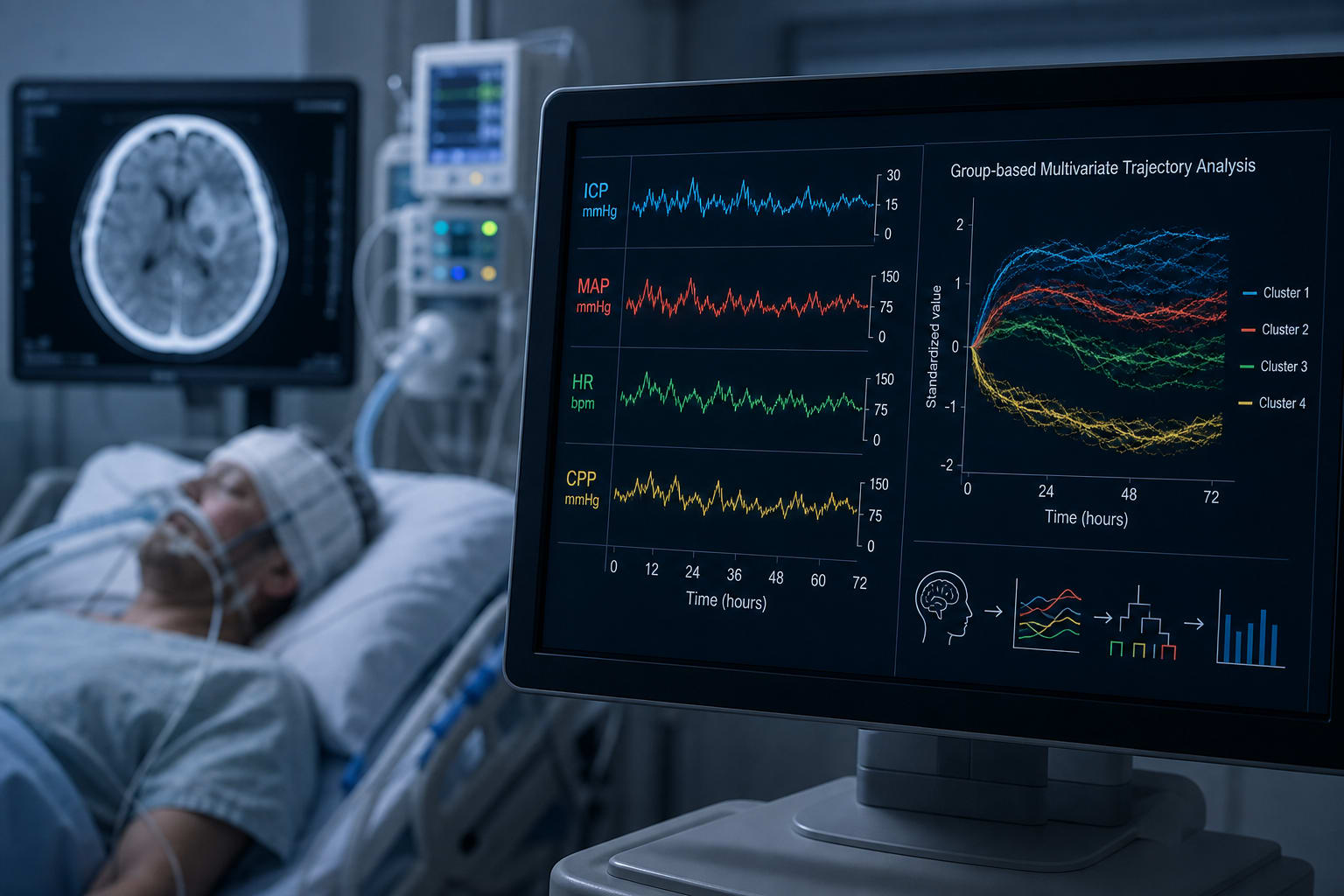
This study identifies distinct patterns of cerebral hemodynamics in acute brain injury (ABI) patients. Five clusters of hemodynamic evolution were identified.
Background
Acute brain injury (ABI) encompasses conditions such as traumatic brain injury (TBI) and intracerebral hemorrhage, which are associated with high mortality and disability rates. Understanding cerebral hemodynamics is crucial for optimizing patient management. This study employs group-based multivariate trajectory modeling to analyze hemodynamic patterns in ABI patients.
Data Highlights
Cluster
Outcome Association
Cluster 1
Favorable
Cluster 5
Unfavorable
Key Findings
Five distinct clusters of cerebral hemodynamics were identified in ABI patients.
Data from 477 patients were analyzed from MIMIC-IV and eICU-CRD databases.
External validation included data from 519 patients from Longquan Hospital.
Longitudinal analysis of hemodynamic indicators was performed.
Clinical Implications
The identification of hemodynamic clusters can aid in understanding patient outcomes.
Conclusion
This study emphasizes the importance of understanding cerebral hemodynamics in ABI patients.