Revealing the pathogenesis of autoimmune hepatitis and research progress in drug discovery from hepatic immune cells and intercellular communication signaling mechanisms - Report - MDSpire
Conexiant’s news site is now MDSpire News. Learn more
Advertisement
Understanding the Mechanisms Behind Autoimmune Hepatitis Pathogenesis and Advances in Drug Development Targeting Hepatic Immune Cells and Intercellular Communication Pathways
Clinical Report: Understanding Mechanisms and Advances in Autoimmune Hepatitis
Overview
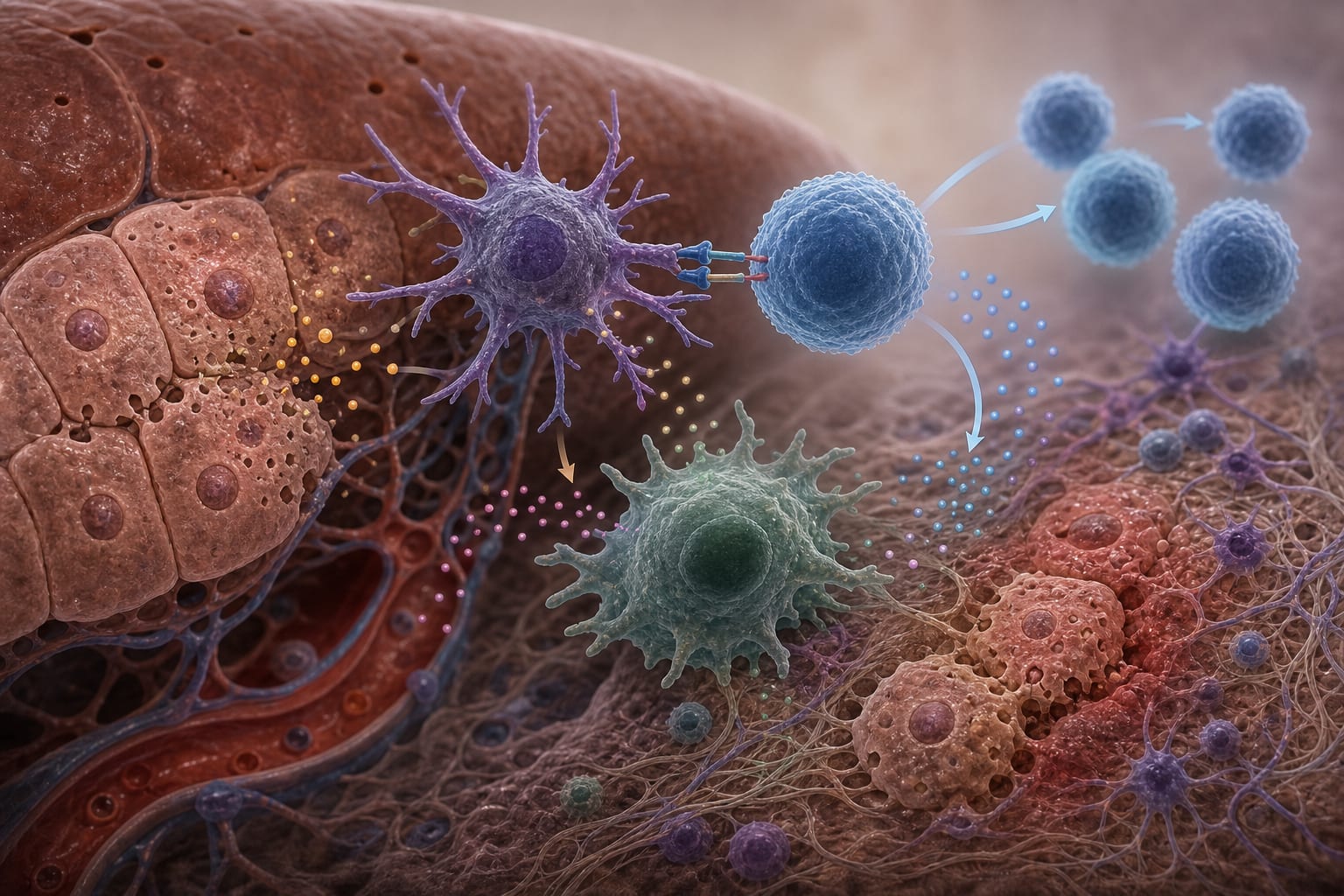
This report summarizes the complex pathogenesis of autoimmune hepatitis (AIH) and highlights recent advances in drug development targeting hepatic immune cells and intercellular communication pathways. The review emphasizes the shift towards a systematic analysis of regulatory networks, providing insights into potential therapeutic targets and current treatment limitations.
Background
Autoimmune hepatitis is a chronic liver disease characterized by immune-mediated liver damage, leading to significant morbidity and potential progression to cirrhosis. The heterogeneous clinical presentation complicates diagnosis and treatment, necessitating a deeper understanding of its pathogenesis. Recent research has shifted focus from single-molecular mechanisms to a broader analysis of intercellular communication and immune cell interactions.
Data Highlights
No numerical data available in the source material.
Key Findings
AIH is driven by an imbalance between effector T cells and regulatory T cells, disrupting immune tolerance.
Current treatments primarily involve corticosteroids and immunosuppressants, but many patients experience side effects or inadequate response.
Recent advances in understanding immune-metabolic interplay may lead to novel therapeutic targets for AIH.
Research indicates that a significant proportion of AIH patients may develop refractory disease, highlighting the need for alternative therapies.
New compounds are being evaluated for their potential in AIH treatment, offering hope for improved management strategies.
Clinical Implications
Clinicians should be aware of the diverse clinical presentations of AIH and the limitations of current treatment options. Ongoing research into the molecular mechanisms of AIH may inform future therapeutic strategies and improve patient outcomes. Monitoring for treatment response and side effects remains critical in managing AIH effectively.
Conclusion
A comprehensive understanding of AIH pathogenesis and the exploration of new therapeutic avenues are essential for improving patient care. Continued research is necessary to develop targeted therapies that address the complexities of this autoimmune condition.