An investigation into the simulation sickness with head-mounted displays in people with aphasia - Report - MDSpire
Coming Soon: Introducing MDSpire News. Learn more
Conexiant’s news site is now MDSpire News. Learn more

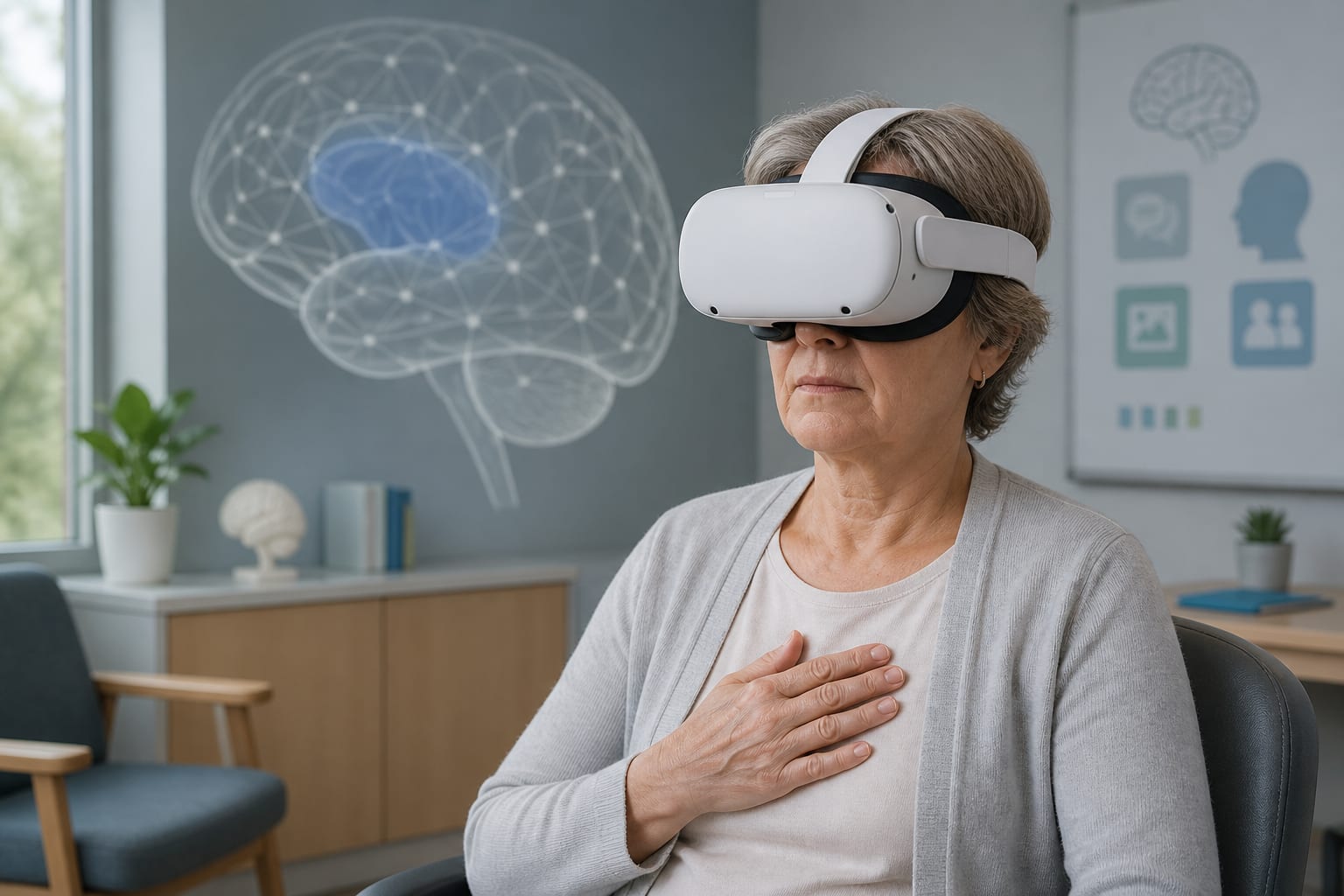
Exploring Motion Sickness Induced by Head-Mounted Displays in Individuals with Aphasia

  • By

  • Muhammed Intiaz

  • Rajath Shenoy

  • Apoorva Pauranik

  • Girish Menon

  • Shivani Tiwari

  • Aparna Pai

  • Gopee Krishnan

  • August 22, 2026

Share

Clinical Report: Exploring Motion Sickness Induced by Head-Mounted Displays in Individuals with Aphasia

Background

Aphasia, a language disorder affecting many post-stroke individuals, significantly impacts communication and quality of life. Recent advancements in technology, particularly Extended Realities (XR), have opened new avenues for rehabilitation. However, the use of HMDs in these settings raises concerns about potential adverse effects, including motion sickness.

Data Highlights

No numerical or trial data was provided in the source material.

Key Findings

  • Aphasia affects one-third of individuals with stroke or brain damage, necessitating effective rehabilitation.
  • XR technologies, including VR, AR, and MR, are being integrated into aphasia therapy to enhance communication skills.
  • Simulation sickness is a potential adverse effect of using HMDs in XR applications.
  • Preliminary evidence suggests MR may improve functional communication in individuals with aphasia.
  • Current guidelines support the use of digital therapies alongside traditional speech-language therapy.

Clinical Implications

Healthcare professionals should be aware of the risk of motion sickness when using HMDs for aphasia rehabilitation.

Conclusion

Understanding the safety profile of XR technologies, particularly regarding motion sickness, is crucial.

Related Resources & Content

  1. European Stroke Organisation (ESO) guideline on aphasia rehabilitation - PubMed, 2023 -- Aphasia Rehabilitation Guidelines
  2. Rehabilitation and recovery - communication and language - National Clinical Guideline for Stroke, 2023 -- Stroke Communication Guidelines
  3. VA DoD CPG for Management of Stroke Rehabilitation, 2024 -- Stroke Rehabilitation Guidelines
  4. Cybersickness and discomfort from head-mounted displays delivering fully immersive virtual reality: A systematic review - PubMed, 2023 -- Cybersickness Review
  5. MDSpire News — Can Balance Predict Motion Sickness?
  6. Frontiers in Neurology — Is Video Head Impulse Testing Useful for Differentiating Suspected Vestibular Migraine Episodes?
  7. Frontiers in Neurology — Eye Movement Compensation in Response to Voluntary Head and Neck Rotations
  8. Frontiers in Neurology — Altered spontaneous brain activity and functional connectivity in persistent postural-perceptual dizziness
  9. Can Balance Predict Motion Sickness?
  10. Is Video Head Impulse Testing Useful for Differentiating Suspected Vestibular Migraine Episodes?
  11. Eye Movement Compensation in Response to Voluntary Head and Neck Rotations
  12. European Stroke Organisation (ESO) guideline on aphasia rehabilitation - PubMed
  13. Rehabilitation and recovery - communication and language - National Clinical Guideline for Stroke
  14. VA DoD CPG for Management of Stroke Rehabilitation
  15. Cybersickness and discomfort from head-mounted displays delivering fully immersive virtual reality: A systematic review - PubMed
  16. Exposure duration and cybersickness in head-mounted displays: A meta-analysis of threshold effects across virtual and extended reality - ScienceDirect
  17. Cybersickness Evaluation in Immersive Virtual Environments: A Systematic Review with Implications for Neurological Rehabilitation - PMC
  18. The impact of virtual reality (VR) on pain management in the emergency department: a systematic review and meta-analysis | BMC Emergency Medicine | Springer Nature Link
  19. Evaluating the Benefits of Aphasia Intervention Delivered in Virtual Reality: Results of a Quasi-Randomised Study - PMC

Original Source(s)

Related Content