Association between aspirin use and decline in intrinsic capacity among community-dwelling elderly: a study based on the Lianyungang ICOPE pilot project - Report - MDSpire
Advertisement
Association between aspirin use and decline in intrinsic capacity among community-dwelling elderly: a study based on the Lianyungang ICOPE pilot project
Link Between Aspirin Consumption and Deterioration of Intrinsic Capacity in Elderly
Overview
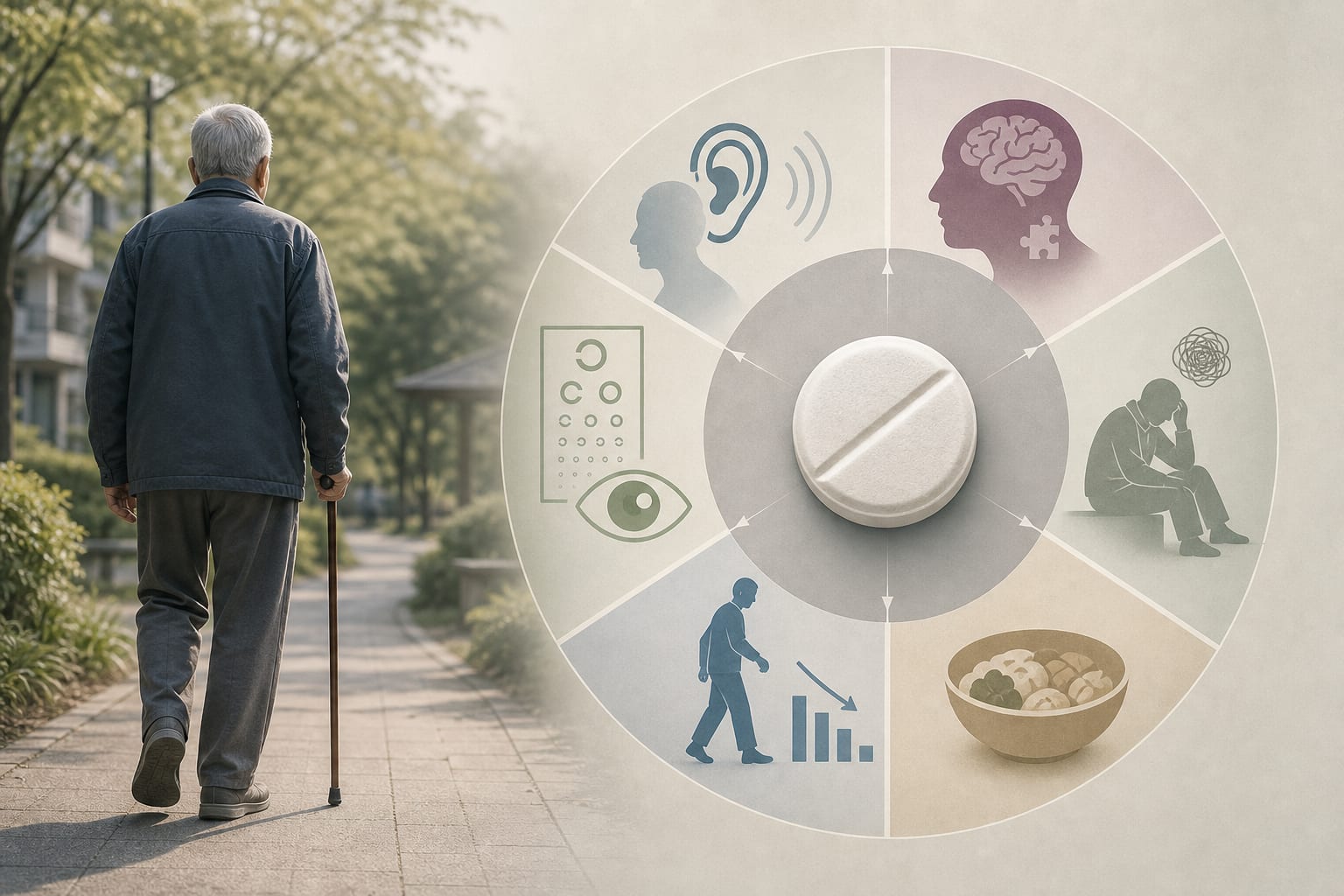
This study investigates the relationship between aspirin use and intrinsic capacity deterioration in older adults. Findings indicate that aspirin use is associated with negative sensory outcomes.
Background
The aging global population presents significant public health challenges, particularly regarding the health of older adults. Intrinsic capacity (IC) is a critical measure of health in this demographic, encompassing various functional domains. Understanding the impact of medications like aspirin on IC is essential for optimizing health outcomes in elderly populations.
Data Highlights
Outcome
Adjusted OR (95% CI)
p-value
Severe loss of intrinsic capacity
1.54 (0.88–2.71)
0.134
Very poor vision
2.95 (1.10–7.94)
0.032
Poor hearing
3.21 (1.29–7.97)
0.012
Very poor hearing
2.08 (1.02–4.24)
0.045
Key Findings
Aspirin use alone was not significantly correlated with severe loss of intrinsic capacity.
Aspirin was linked to negative outcomes in sensory function, particularly vision and hearing.
The combination of aspirin with ACEI or ARBs was associated with a significant reduction in the incidence of severe loss of intrinsic capacity.
There was variability in the relationship between aspirin use and sensory function outcomes based on sex.
41.2% of older adults in the community exhibit impaired intrinsic capacity.
Clinical Implications
Clinicians should be aware of the potential sensory side effects associated with aspirin use in older adults.
Conclusion
The study examines the relationship between aspirin use and intrinsic capacity in older adults, focusing on its effects on sensory functions.