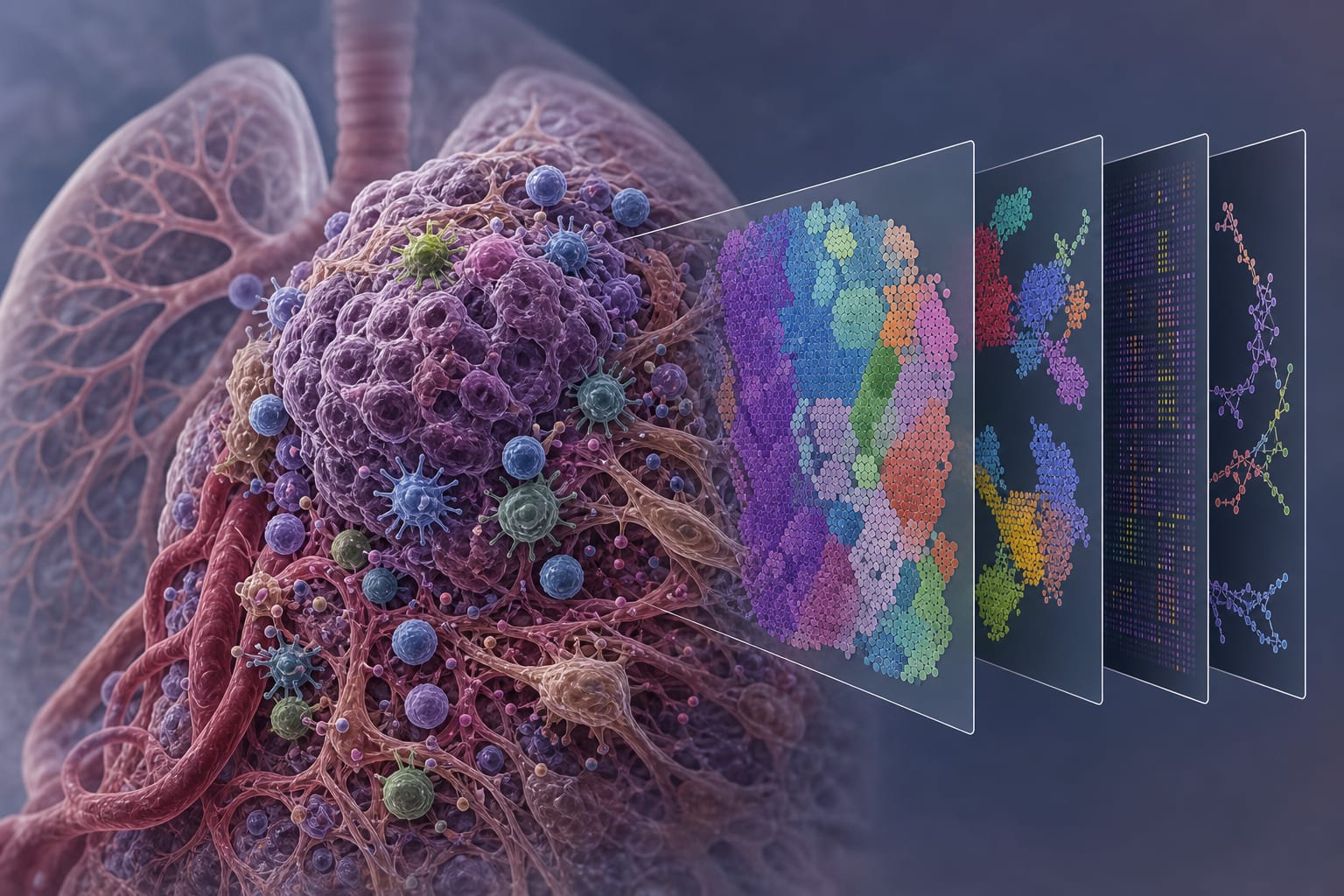
Clinical Report: Exploring Single-Cell and Spatial Omics in NSCLC
Background
Non-small cell lung cancer (NSCLC) is a leading cause of cancer-related mortality, and despite advancements in targeted therapies and immune checkpoint inhibitors, many patients experience relapse. The complexity of tumor biology, including heterogeneity and adaptive resistance, necessitates improved methodologies for understanding tumor behavior and treatment response. Single-cell and spatial omics offer a promising approach to dissect these complexities at a cellular level.
Data Highlights
No numerical data or trial data were provided in the source material.
Key Findings
Single-cell omics reveal significant cellular heterogeneity in NSCLC, identifying diverse malignant cell states.
Metabolic reprogramming in NSCLC is linked to tumor progression, immune evasion, and therapeutic resistance.
Single-cell RNA sequencing can identify rare subpopulations of cells that may contribute to metastasis and relapse.
Spatial transcriptomics and multiplex imaging help map tumor-immune interactions and metabolic niches.
These advanced techniques may inform biomarker discovery and rational combination therapies in NSCLC.
Clinical Implications
The integration of single-cell and spatial omics in NSCLC research may enhance the understanding of tumor biology and inform more personalized treatment strategies. Clinicians may consider these findings when evaluating therapeutic options and monitoring resistance mechanisms in patients.
Conclusion
Single-cell and spatial omics represent a significant advancement in the study of NSCLC, providing critical insights into the tumor microenvironment and potential therapeutic targets. Continued exploration in this area may lead to improved patient stratification and treatment outcomes.