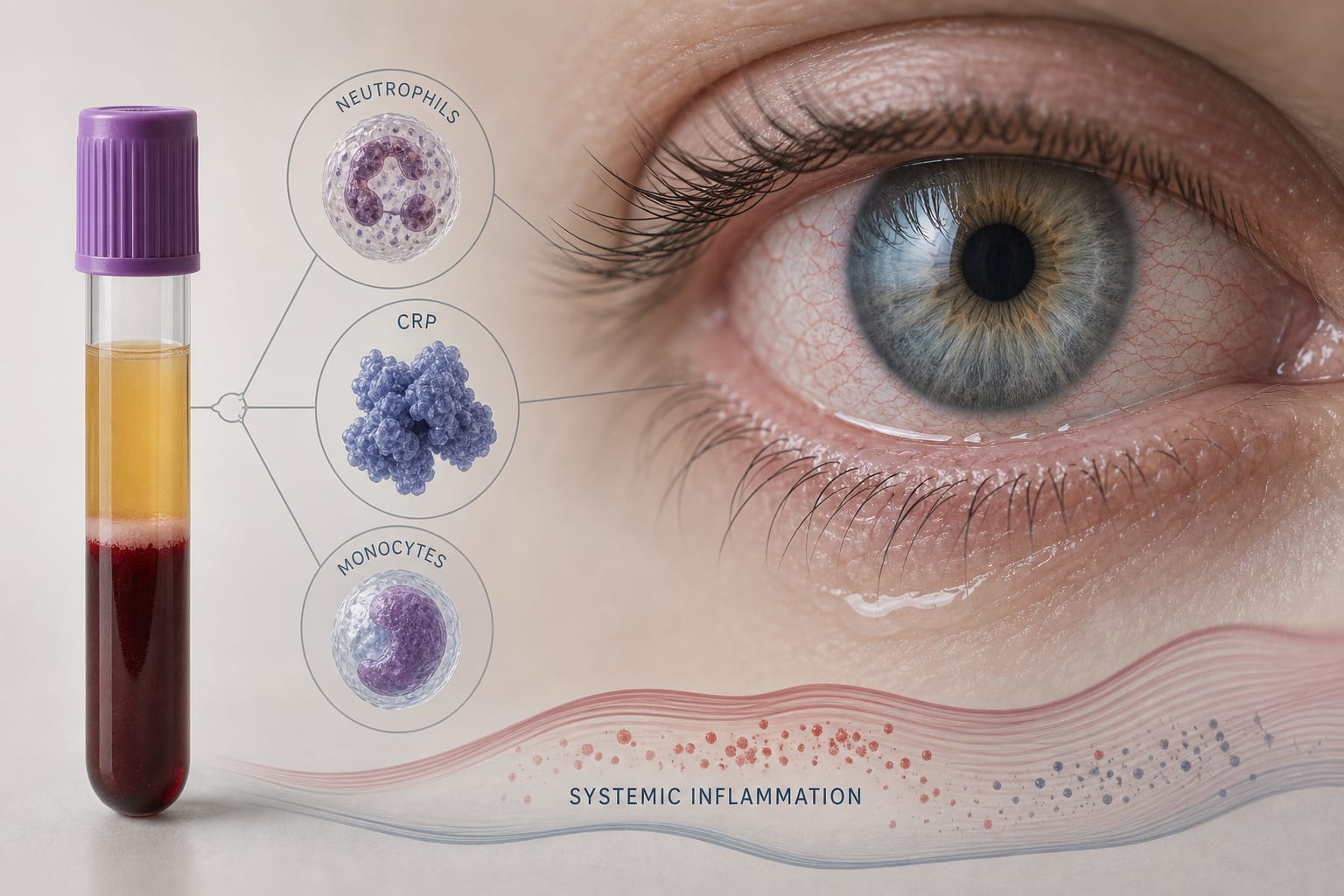
Clinical Report: Evaluation of Systemic Inflammation Index in Patients with Dyslipidemia and Dry Eye Disease
Overview
This study evaluates the systemic inflammation index (AISI) in patients with dyslipidemia (DLP) and dry eye disease (DED). Findings indicate that while AISI correlates with certain inflammatory markers, it does not show a significant association with DED after adjusting for confounding factors.
Background
Dyslipidemia is prevalent in Saudi Arabia, affecting 43% of the population, and is associated with increased inflammation. Dry eye disease is a common condition that can significantly impact quality of life, and its relationship with dyslipidemia highlights the importance of managing lipid levels to potentially mitigate ocular surface disorders.
Data Highlights
Group
Neutrophil Count
Monocyte Count
CRP Correlation
HDL Correlation
Total Cholesterol Correlation
DLP-DED
Higher
Higher
Positive
Weak Negative
Weak Negative
DLP Only
Lower
Lower
N/A
N/A
N/A
Key Findings
The DLP-DED group had higher neutrophil and monocyte counts compared to the DLP-only group.
AISI showed a positive correlation with C-reactive protein (CRP) in the DLP-DED group.
AISI demonstrated a weak negative correlation with high-density lipoprotein (HDL) and total cholesterol.
After adjusting for age, gender, and BMI, AISI was not significantly associated with DED.
Understanding the inflammatory markers in DLP patients may inform future therapeutic strategies for DED.
Clinical Implications
Clinicians should consider the role of systemic inflammation in managing patients with dyslipidemia and dry eye disease. Monitoring inflammatory biomarkers may provide insights into the pathogenesis of DED and guide treatment approaches.
Conclusion
The study suggests that while AISI may reflect systemic inflammation in dyslipidemia, its lack of association with dry eye disease indicates the need for further research to clarify these relationships.