Comparison of subxiphoid and lateral intercostal approaches for video-assisted thoracoscopic extended thymectomy: a retrospective cohort study - Report - MDSpire
Advertisement
Comparison of subxiphoid and lateral intercostal approaches for video-assisted thoracoscopic extended thymectomy: a retrospective cohort study
Clinical Report: Evaluation of Subxiphoid Versus Lateral Intercostal Techniques in VATET
Overview
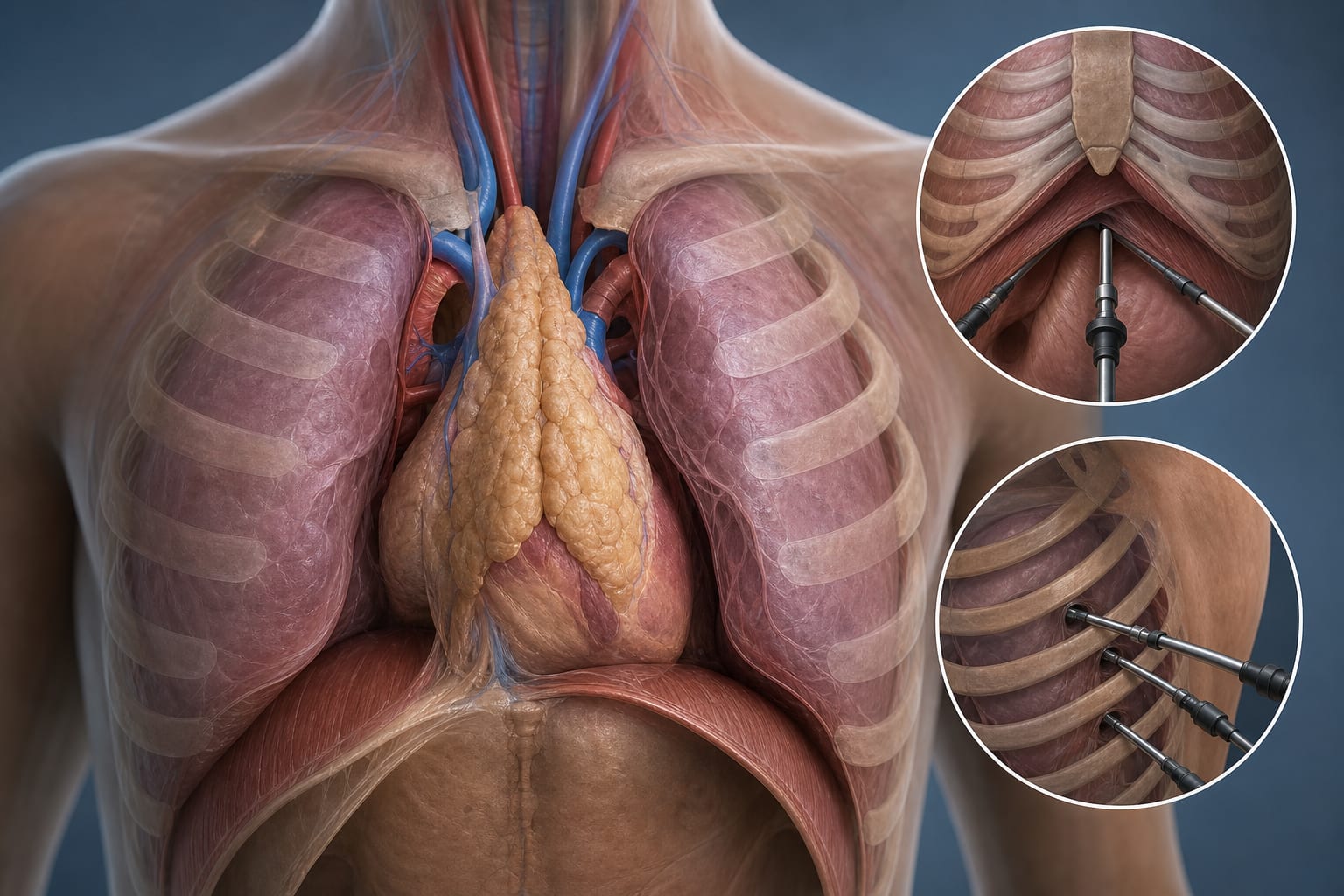
This study compares the perioperative, neurological, and short-term oncologic outcomes of subxiphoid and lateral intercostal approaches in video-assisted thoracoscopic extended thymectomy (VATET).
Background
Thymoma is the most common primary tumor of the anterior mediastinum, and surgical resection is critical for effective treatment. Video-assisted thoracoscopic surgery (VATS) has emerged as a minimally invasive alternative to traditional sternotomy, offering potential benefits such as reduced blood loss and shorter recovery times. The choice of surgical approach remains a topic of debate, with the subxiphoid and lateral intercostal techniques being the most commonly utilized.
Data Highlights
Outcome
Subxiphoid Approach (SA)
Lateral Intercostal Approach (ICA)
Intraoperative Blood Loss
Higher
Lower
Postoperative Stay
Longer
Shorter
Drainage Duration
Longer
Shorter
Hospitalization Costs
Higher
Lower
Postoperative Pain (VAS)
Higher
Lower
Complication Rates
8.24%
6.02%
Thymoma Recurrence
2 patients
2 patients
Key Findings
Both subxiphoid and lateral intercostal approaches are safe for VATET.
The ICA group exhibited lower intraoperative blood loss compared to the SA group.
Postoperative hospital stay and drainage duration were shorter in the ICA group.
VAS scores for postoperative pain were significantly lower in the ICA group.
Complication rates were comparable between both approaches.
Neurological outcomes in myasthenia gravis were similar across both groups.
Clinical Implications
Surgeons may consider the lateral intercostal approach for improved operative efficiency, while the subxiphoid approach may be preferred for minimizing early postoperative pain. Both techniques maintain similar safety profiles and oncologic outcomes.
Conclusion
In conclusion, both the subxiphoid and lateral intercostal approaches are viable for VATET, with distinct advantages that may guide surgical decision-making based on patient needs.