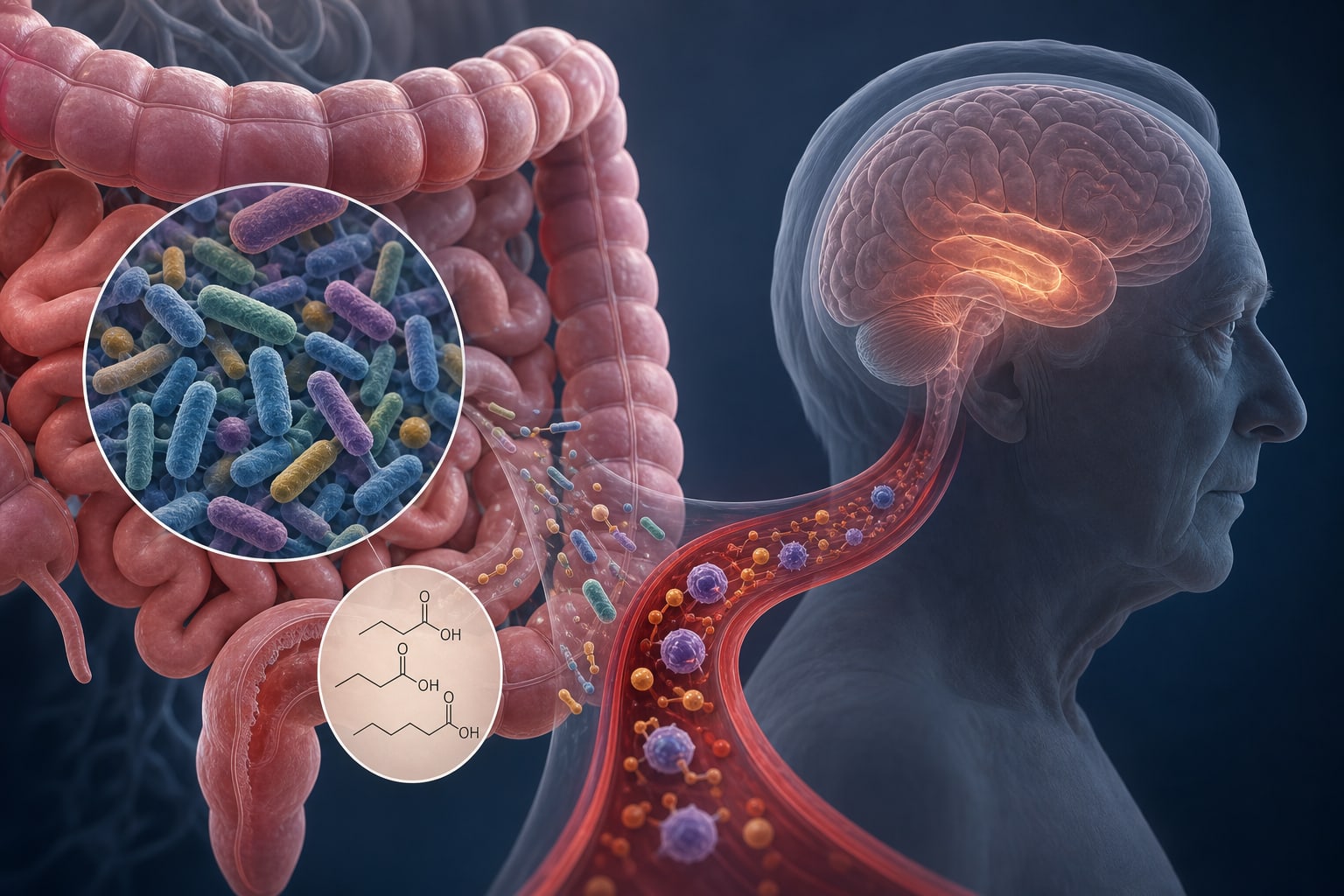
Alterations in Gut Microbiota and Systemic Inflammation Among Elderly Hypertensive Individuals with Amnestic Mild Cognitive Impairment
Overview
This study investigates the gut microbiota composition and systemic inflammation in elderly hypertensive individuals with amnestic mild cognitive impairment (aMCI). Findings reveal significant microbial dysbiosis associated with increased inflammation and cognitive decline in this population.
Background
Amnestic mild cognitive impairment (aMCI) is a precursor to Alzheimer's disease and is increasingly prevalent among the aging population. Hypertension is a common condition in older adults and is recognized as a risk factor for cognitive decline. Understanding the interplay between gut microbiota, hypertension, and cognitive impairment is crucial for developing potential therapeutic strategies.
Data Highlights
Group
Microbial Richness
Inflammatory Markers
HTN-aMCI
Increased
Elevated IL-1β, IL-6, IL-8, IL-17, IP-10, RANTES
HTN-CN
Normal
Normal
Controls
Normal
Normal
Key Findings
HTN-aMCI group exhibited greater richness of gut microbes compared to HTN-CN and controls.
Significant depletion of SCFA-producing genera (e.g., Roseburia, Blautia) in HTN-aMCI.
Enrichment of opportunistic pathogens (e.g., Streptococcus, Clostridium_sensu_stricto_1) in HTN-aMCI.
Co-occurrence network analysis showed disrupted microbial interactions in HTN-aMCI.
Blautia abundance negatively correlated with inflammatory markers and positively with cognitive scores.
Clinical Implications
These findings suggest that targeting gut microbiota may offer a novel therapeutic approach for managing hypertension-related cognitive impairment. Clinicians should consider the role of gut health in the overall management of elderly patients with hypertension and cognitive decline.
Conclusion
The study highlights the significant association between gut microbiota dysbiosis, systemic inflammation, and cognitive impairment in hypertensive elderly individuals. Further research is warranted to explore therapeutic interventions targeting gut microbiota.
Population-based cohort shows higher rates of cardiac arrhythmias and coronary artery disease following nonhospitalized infections, with sex-specific differences.