Comparative discriminative ability of CVAI and traditional insulin resistance indices for MAFLD in Chinese adults with type 2 diabetes - Report - MDSpire
Advertisement
Comparative discriminative ability of CVAI and traditional insulin resistance indices for MAFLD in Chinese adults with type 2 diabetes
Clinical Report: Evaluating the Discriminative Efficacy of CVAI for MAFLD
Overview
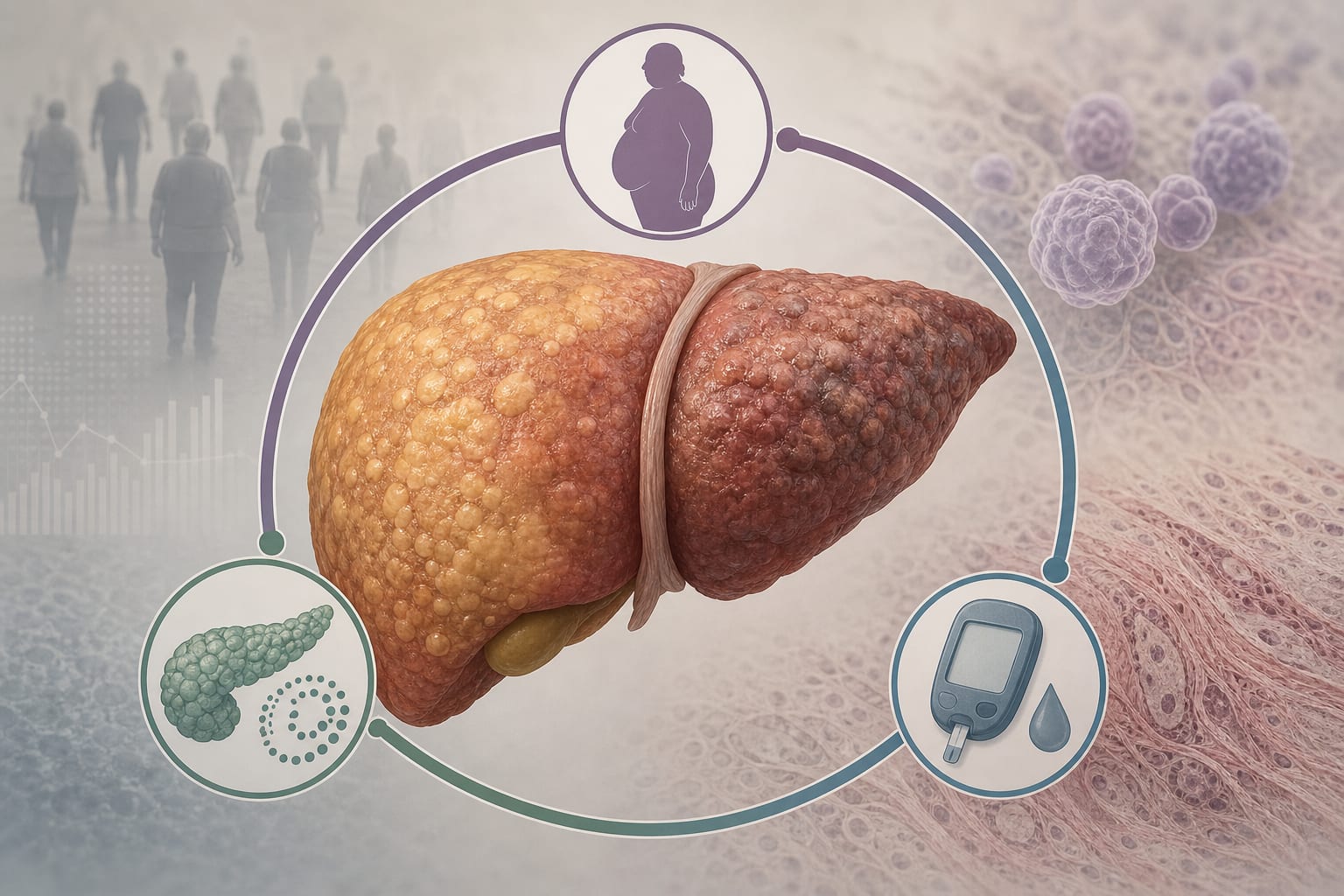
This study evaluates the discriminative performance of the Chinese Visceral Adiposity Index (CVAI) compared to traditional insulin resistance metrics for identifying metabolic dysfunction-associated fatty liver disease (MAFLD) in Chinese adults with type 2 diabetes mellitus (T2DM).
Background
Metabolic dysfunction-associated fatty liver disease (MAFLD) is prevalent among patients with type 2 diabetes mellitus (T2DM). The need for reliable, non-invasive screening tools is critical, as traditional diagnostic methods like liver biopsy are not suitable for widespread use. The CVAI has been developed to assess visceral adipose dysfunction, but its efficacy compared to other insulin resistance indices requires further investigation.
Data Highlights
Metric
AUC
NRI
IDI
CVAI
0.754
0.598
0.081
Key Findings
1,313 out of 2,945 participants (44.6%) were diagnosed with MAFLD.
All insulin resistance indices were independently associated with MAFLD (P < 0.001).
CVAI had the highest discriminative ability (AUC = 0.754).
Adding CVAI to the baseline model significantly improved risk reclassification (NRI = 0.598, IDI = 0.081).
The association between CVAI and MAFLD was stronger in females and older adults (P for interaction < 0.05).
RCS analysis indicated a predominantly linear relationship (non-linear P = 0.0581).
Clinical Implications
Further studies are needed to validate the diagnostic utility of CVAI for identifying MAFLD in T2DM patients.
Conclusion
Further prospective studies are needed to validate the diagnostic utility of CVAI.