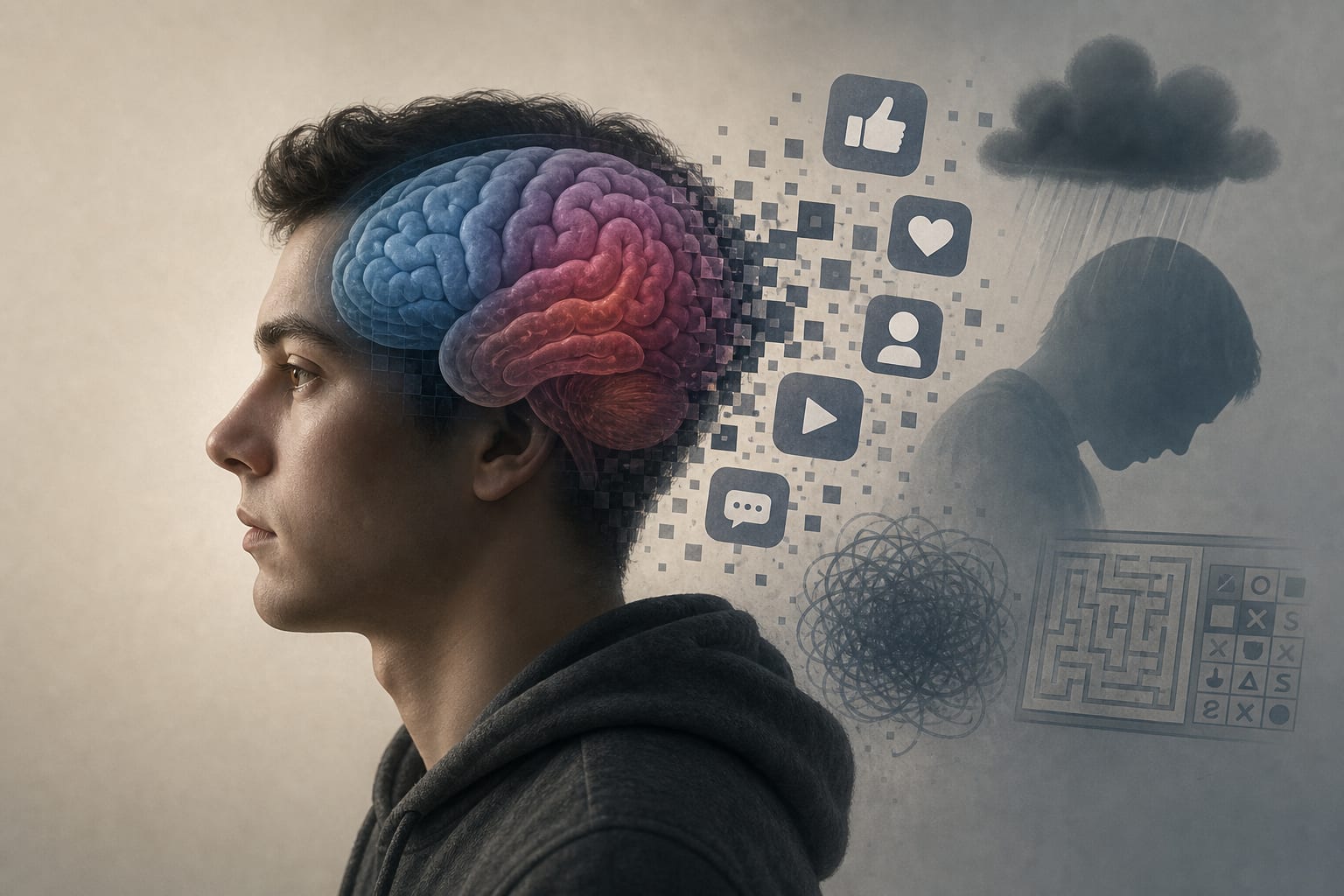
Cognitive Function in Individuals Experiencing Issues with Social Media Usage
Overview
Revise to clarify the distinction between impulsivity and compulsivity in findings.
Background
The rise of social media has led to concerns regarding problematic use, which can disrupt daily functioning and mental health. Excessive social media use is associated with various psychiatric symptoms, including anxiety and depression, and may impact cognitive functions. Understanding these effects is crucial for addressing potential behavioral addictions and their implications for mental health.
Excessive social media users showed lower ability to delay gratification, indicating impulsivity.
They made fewer non-perseverative errors on the Wisconsin Card Sorting Test, suggesting high cognitive flexibility.
On the GO/NO-GO task, excessive users made more omission errors to Facebook signs, indicating impaired selective attention.
Higher subjective ratings of anxiety, depression, impulsivity, and compulsivity were reported among excessive users.
Findings support the behavioral addiction model rather than compulsivity in excessive social media use.
Clinical Implications
Clinicians should be aware of the cognitive and emotional challenges faced by individuals with excessive social media use. Screening for impulsivity and related psychiatric symptoms may be beneficial in managing these patients. Interventions should focus on improving cognitive functions and addressing underlying mental health issues.
Conclusion
The study highlights the need for further research on cognitive functions in excessive social media users to clarify the nature of their behavioral patterns. Understanding these dynamics is essential for developing effective treatment strategies.