Roux-en-Y Gastric Bypass Compared to Glucagon-Like Peptide-1 Receptor Agonists is Associated with Lower Out-of-Pocket Costs in Insured Patients with Type 2 Diabetes and Obesity: A Matched Analysis Over Two Years - Report - MDSpire
Advertisement
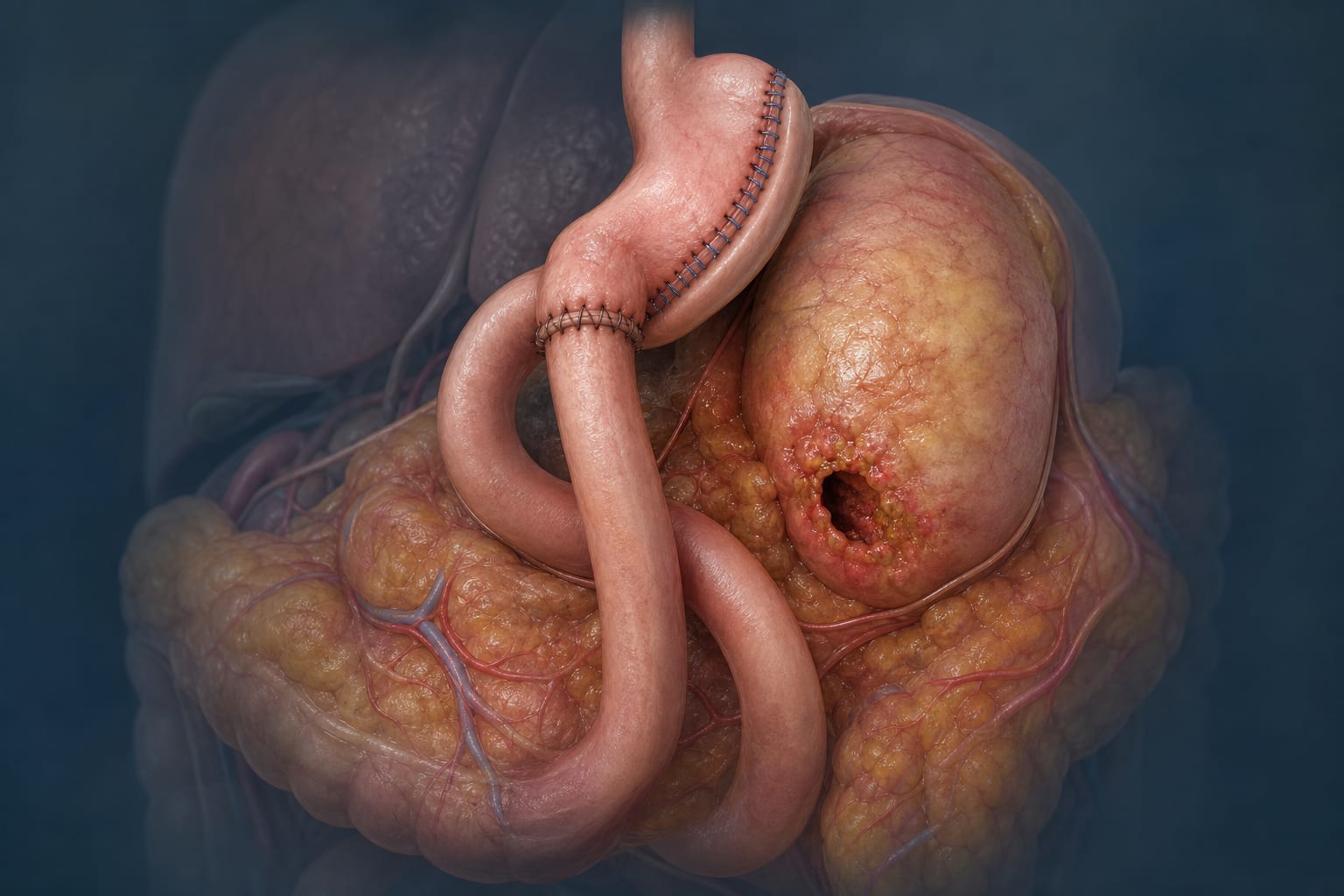
Roux-en-Y Gastric Bypass Compared to Glucagon-Like Peptide-1 Receptor Agonists is Associated with Lower Out-of-Pocket Costs in Insured Patients with Type 2 Diabetes and Obesity: A Matched Analysis Over Two Years
Lower Out-of-Pocket Costs for RYGB vs GLP-1 RAs in T2D and Obesity Over 2 Years
Overview
This study compared out-of-pocket (OOP) healthcare costs over two years for insured patients with type 2 diabetes (T2D) and class 2 or 3 obesity treated with Roux-en-Y gastric bypass (RYGB) versus GLP-1 receptor agonists (GLP-1 RAs). Findings revealed that patients undergoing RYGB incurred lower OOP expenses compared to those treated with GLP-1 RAs, despite RYGB being a surgical intervention. These real-world data provide important financial insights to guide treatment decisions.
Background
Severe obesity and type 2 diabetes are major public health challenges with significant morbidity and economic burden. Both GLP-1 receptor agonists and Roux-en-Y gastric bypass are effective treatments for weight loss and glycemic control in this population. However, treatment choice involves considerations of efficacy, side effects, compliance, and importantly, patient financial burden. Prior studies have not directly compared OOP costs between RYGB and GLP-1 RAs over a multi-year period. This study addresses this gap using retrospective claims data from insured adults with obesity and T2D.
Data Highlights
Parameter
RYGB Cohort (n=1,350)
GLP-1 RAs Cohort (n=2,908)
Inclusion Criteria
Class 2/3 obesity, T2D, no GLP-1 RA use
Class 2/3 obesity, T2D, continuous GLP-1 RA use ≥2 years
Age Range
21-65 years
21-65 years
Follow-up Duration
2 years post-treatment initiation
2 years post-treatment initiation
OOP Costs Assessed
Inpatient, outpatient, pharmaceutical including surgery
Inpatient, outpatient, pharmaceutical including GLP-1 RAs
Key Findings
RYGB patients had significantly lower out-of-pocket healthcare costs over two years compared to GLP-1 RA patients.
RYGB-related surgical costs were included in the first-year OOP expenses but did not result in higher total OOP costs at two years.
GLP-1 RA cohort required continuous medication adherence with at least 80% days covered over two years.
RYGB patients had no documented GLP-1 RA prescriptions, ensuring distinct treatment groups.
The study utilized a large, commercially insured population with continuous coverage to ensure data completeness.
Clinical Implications
Clinicians should consider that despite the upfront surgical costs, RYGB may offer patients lower long-term out-of-pocket expenses compared to ongoing GLP-1 RA therapy. This financial aspect is critical in shared decision-making for patients with obesity and T2D, especially those with private insurance facing cost-sharing burdens. Understanding real-world cost differences can help tailor treatment plans balancing efficacy, safety, and affordability.
Conclusion
In insured adults with class 2 or 3 obesity and type 2 diabetes, Roux-en-Y gastric bypass is associated with lower out-of-pocket healthcare costs over two years compared to GLP-1 receptor agonist therapy. These findings support incorporating financial considerations into treatment discussions to optimize patient-centered care.
References
Merative MarketScan Research Databases 2017-2023 -- Data Source
ICD-10 and CPT-4 Codes -- Identification of T2D, Obesity, and RYGB
GLP-1 RA Medication Codes and Adherence Criteria -- Prescription Claims
Prior Studies on Sleeve Gastrectomy vs Ozempic OOP Costs -- Comparative Analysis
A four-factor staging system stratified response rates from 90.9% to 37.5% in a retrospective cohort study, although the model showed only moderate discrimination (C statistic, 0.68) and requires external validation