Lower preoperative vitamin D levels are associated with poor clinical outcomes in elderly patients with osteoporotic vertebral compression fractures after percutaneous vertebroplasty - Report - MDSpire
Advertisement
Lower preoperative vitamin D levels are associated with poor clinical outcomes in elderly patients with osteoporotic vertebral compression fractures after percutaneous vertebroplasty
Clinical Report: Preoperative Vitamin D Deficiency and Outcomes in PVP
Overview
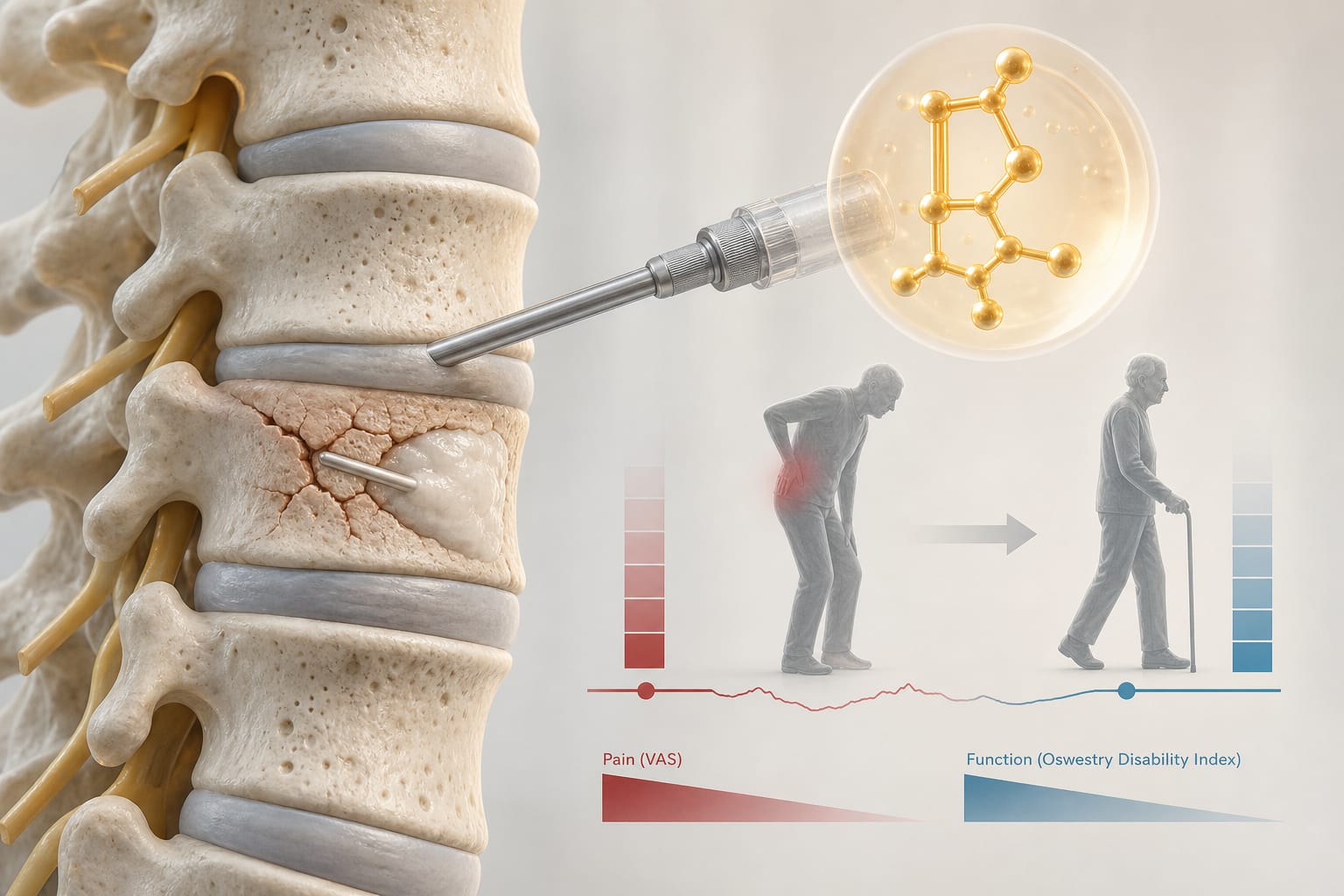
This study investigates the impact of preoperative vitamin D levels on postoperative outcomes in elderly patients undergoing percutaneous vertebroplasty (PVP) for osteoporotic vertebral compression fractures (OVCFs). Findings indicate that lower vitamin D levels are associated with higher pain and disability scores postoperatively.
Background
Osteoporotic vertebral compression fractures (OVCFs) are prevalent among the elderly, leading to significant pain and disability. As the aging population grows, understanding factors that influence recovery after interventions like PVP becomes crucial. Vitamin D deficiency is common in this demographic and may adversely affect postoperative outcomes.
Data Highlights
Vitamin D Status
1-Year VAS Score
1-Year ODI Score
Severe Deficiency (<10 ng/mL)
Higher
Higher
Deficiency (10–20 ng/mL)
Higher
Higher
Insufficiency (20–30 ng/mL)
Lower
Lower
Sufficiency (>30 ng/mL)
Lowest
Lowest
Key Findings
609 elderly patients with OVCFs were included in the study.
Lower preoperative vitamin D levels correlated with higher postoperative pain (VAS) and disability (ODI) scores.
Significant time × group interactions indicated that lower vitamin D levels consistently resulted in poorer outcomes over time.
After multivariable adjustment, lower vitamin D status was independently associated with worse outcomes (higher VAS and ODI scores).
Improvement in pain and function was observed in all vitamin D groups, but less pronounced in those with lower levels.
Clinical Implications
Clinicians should assess vitamin D levels in elderly patients undergoing PVP for OVCFs, as deficiency may predict poorer postoperative outcomes. Addressing vitamin D deficiency preoperatively could potentially enhance recovery and pain management in this vulnerable population.
Conclusion
Preoperative vitamin D deficiency is linked to worse postoperative pain relief and functional recovery in elderly patients undergoing PVP for OVCFs. Optimizing vitamin D status may improve clinical outcomes in this patient group.