Neuroprotection: Retina's Next Frontier? - Report - MDSpire
Advertisement
Neuroprotection: Retina's Next Frontier?
At OIS Retina in Montreal, Riad Sherif, MD, discussed Oculis’s optic neuritis program and why neuroprotection may represent the next frontier in retinal therapeutics.
Clinical Report: Neuroprotection: Retina's Next Frontier?
Overview
Neuroprotection is emerging as a significant focus in retinal therapeutics, particularly in the context of optic neuritis. Oculis's privosegtor is currently being evaluated in clinical trials.
Background
Neuroprotection in the retina is gaining attention due to its potential implications for broader neurological conditions, as the retina is closely linked to brain health. Optic neuritis, primarily affecting young adults, can lead to severe vision loss and is associated with the degeneration of retinal ganglion cells. Understanding and developing neuroprotective strategies may offer new avenues for treatment.
Data Highlights
No numerical data available in the provided source material.
Key Findings
Neuroprotection may represent the next wave of innovation in retinal therapeutics.
Privosegtor is currently being evaluated in the ongoing PIONEER-1 study for optic neuritis.
The ACUITY trial showed that privosegtor improved vision by approximately 18 letters at month 3 and 15 letters at month 6.
Privosegtor preserved retinal structure by maintaining the ganglion cell-inner plexiform layer (GCIPL) and reduced neurofilament levels.
Current guidelines emphasize pressure-lowering strategies over neuroprotective agents in glaucoma.
High-dose corticosteroids remain the standard treatment for acute optic neuritis.
Clinical Implications
Ongoing studies will be crucial in determining the efficacy and safety of neuroprotective therapies like privosegtor.
Conclusion
Neuroprotection is a promising area of research in retinal health, with ongoing studies like PIONEER-1 providing important data.
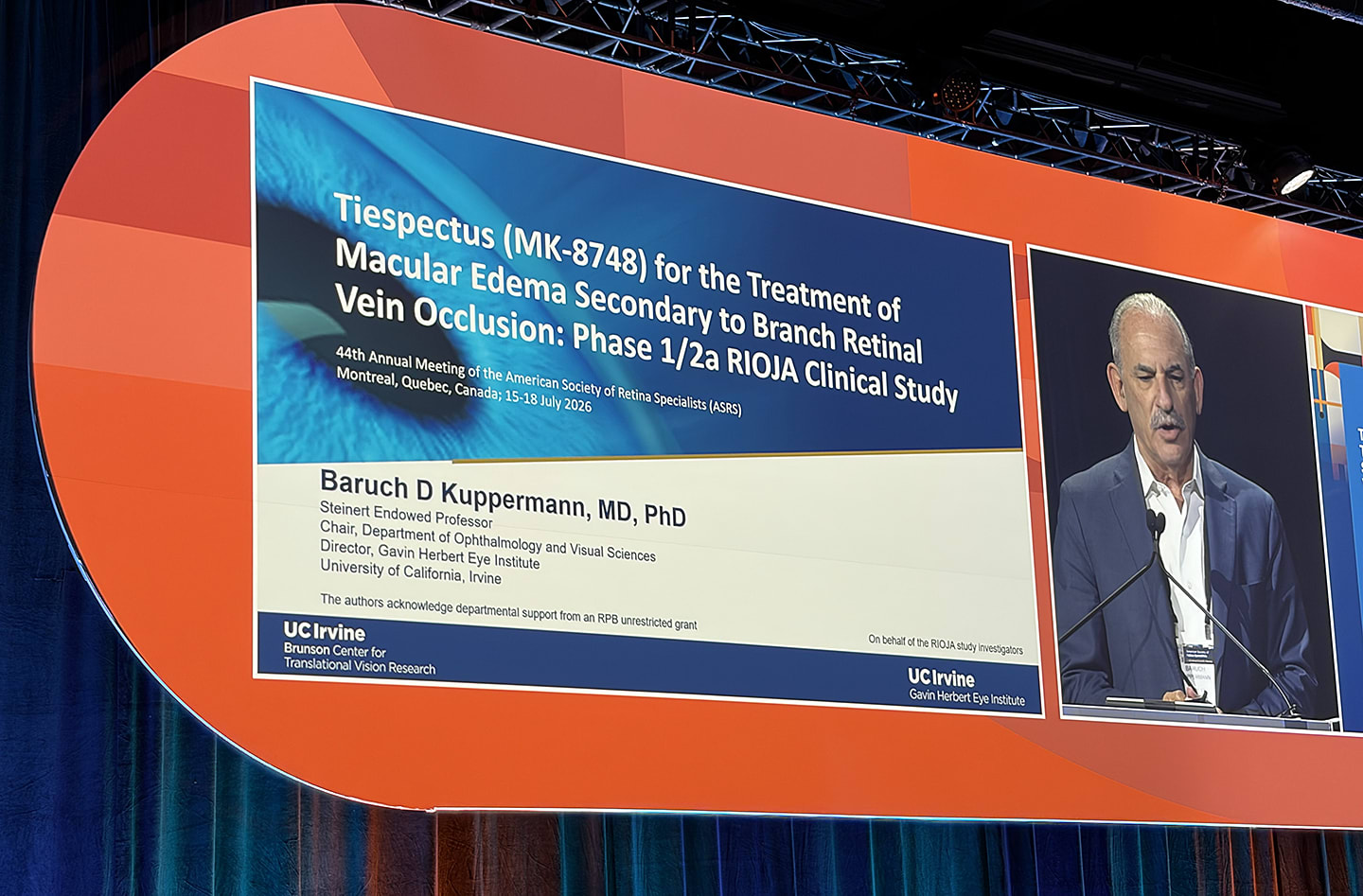
At the ASRS meeting in Montreal, Baruch D. Kuppermann, MD, PhD, presented BRVO findings from the phase 1/2a RIOJA program evaluating the investigational VEGF/Tie2 bispecific.