Opposing gastric and jejunal regulation of CELA2A in obesity and after Roux-en-Y gastric bypass suggests a role in gastrointestinal metabolic signaling - Report - MDSpire
Advertisement
Differential Regulation of CELA2A in the Stomach and Jejunum During Obesity and Post-Roux-en-Y Gastric Bypass Indicates Its Involvement in Gastrointestinal Metabolic Signaling
Differential Regulation of CELA2A in the Stomach and Jejunum During Obesity
Overview
Revise to specify the implications of CELA2A regulation in metabolic signaling related to obesity and RYGB.
Background
Obesity is a significant global health issue linked to various metabolic disorders, including type 2 diabetes (T2D). Roux-en-Y gastric bypass (RYGB) is an effective surgical intervention that not only promotes weight loss but also induces rapid improvements in glycemic control. Understanding the molecular mechanisms behind these changes, particularly the role of proteins like CELA2A, is crucial for enhancing therapeutic strategies.
Data Highlights
Finding
Details
CELA2A in Gastric Mucosa
Increased after RYGB
CELA2A in Jejunum
Decreased after RYGB
Association with HbA1c
Positive correlation before surgery
High-Fat Diet Effects
Increased jejunal CELA2A expression
Circulating CELA2A Levels
Not significantly altered in mice
Key Findings
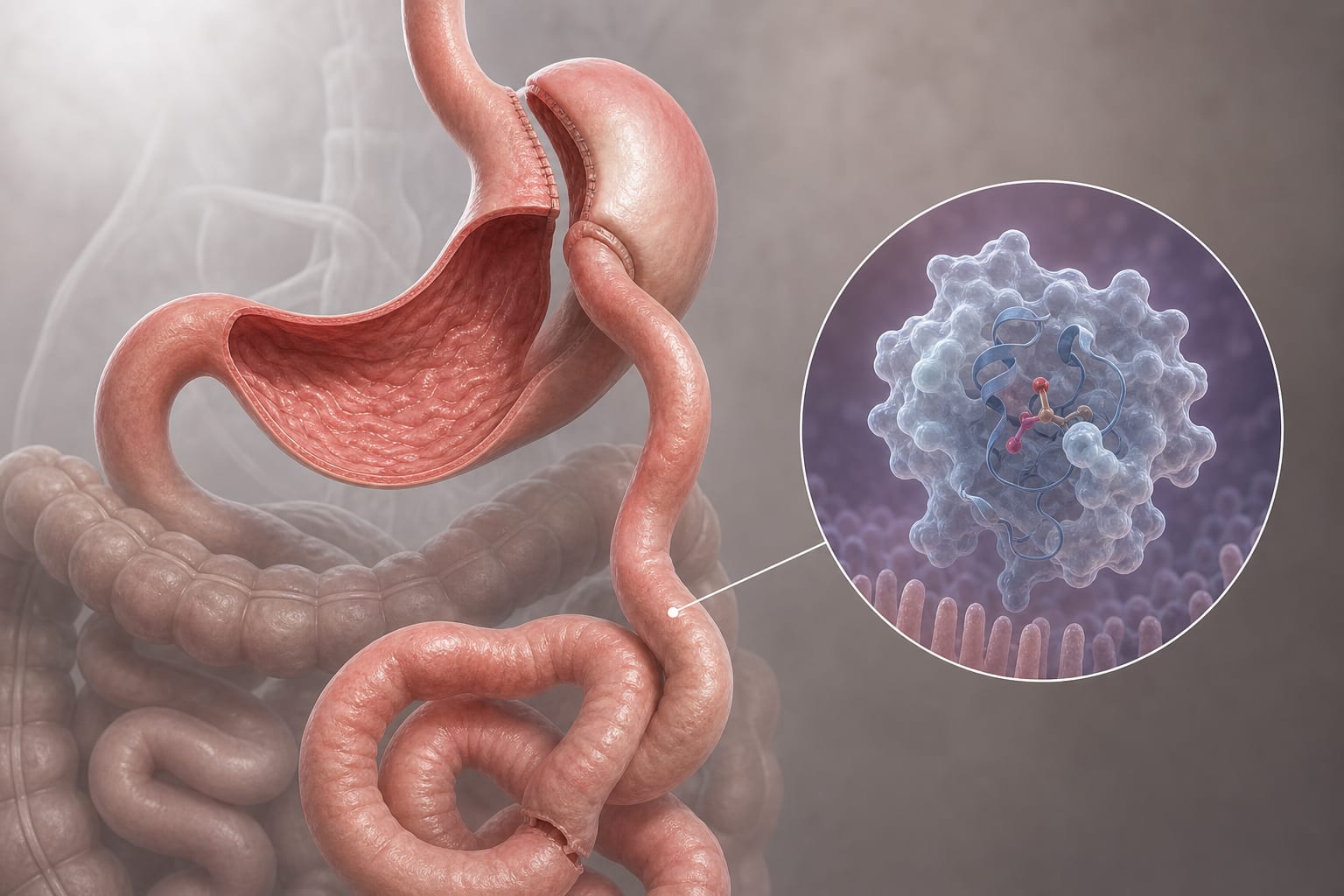
CELA2A expression increases in gastric mucosa post-RYGB.
Jejunal CELA2A levels decrease after RYGB.
Before surgery, jejunal CELA2A is positively associated with HbA1c levels.
In high-fat diet-fed mice, jejunal CELA2A expression is elevated.
CELA2A immunoreactivity is found in mucosal glandular structures of both stomach and jejunum.
Clinical Implications
The differential regulation of CELA2A in gastrointestinal tissues suggests its potential role in metabolic signaling pathways post-bariatric surgery. Clinicians should consider the implications of CELA2A levels when evaluating metabolic outcomes in patients undergoing RYGB.
Conclusion
Highlight the necessity for further research on CELA2A's role in glucose homeostasis.