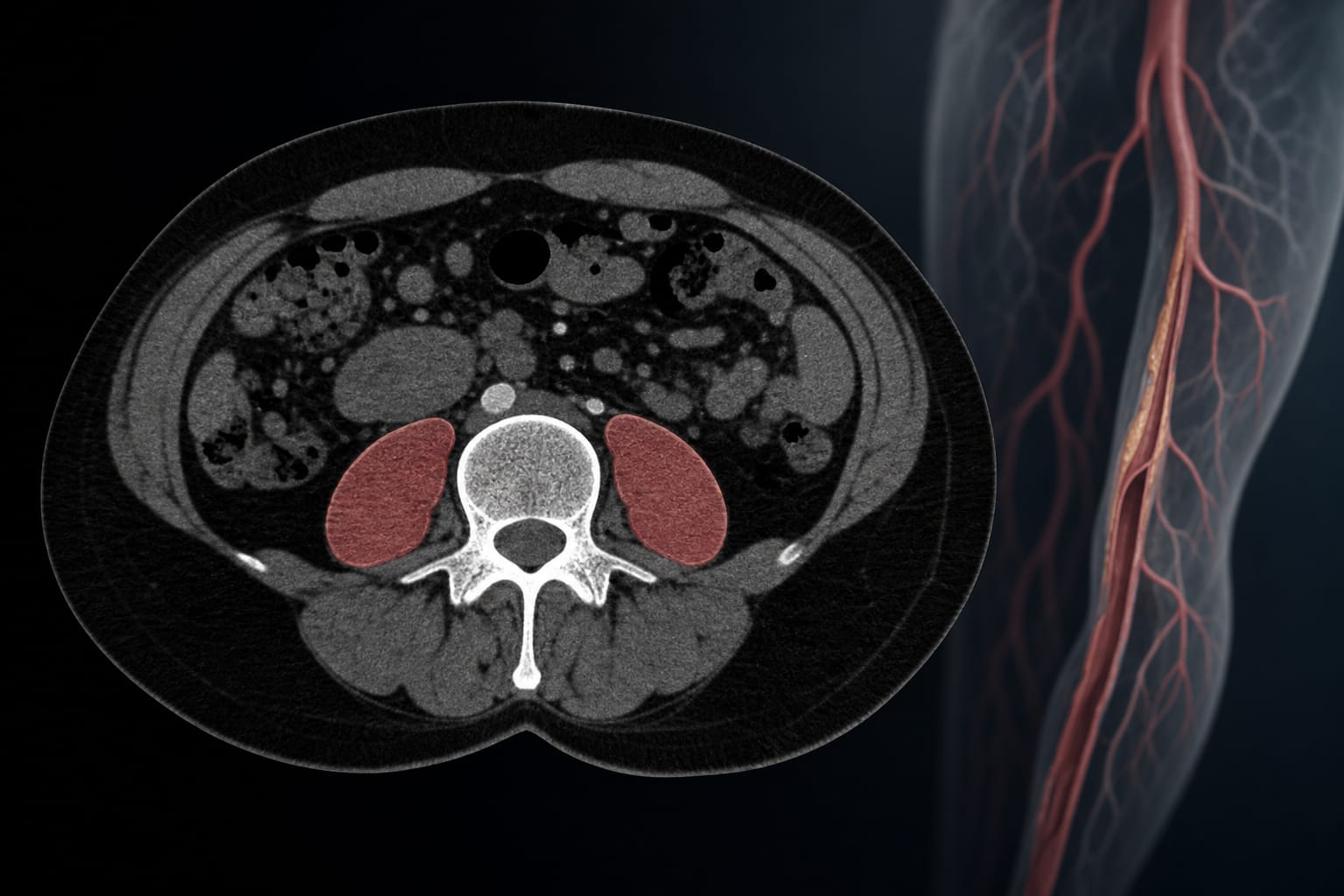
Clinical Report: The Role of Psoas Major Muscle Area as a Prognostic Indicator in PAD
Overview
This systematic review and meta-analysis evaluated the prognostic value of psoas major muscle area in patients with peripheral arterial disease (PAD) undergoing revascularization. Findings indicate that reduced psoas major muscle area is significantly associated with increased long-term mortality.
Background
Peripheral arterial disease (PAD) is characterized by atherosclerotic disease affecting noncoronary arterial beds, particularly in the lower extremities. Patients with PAD often present with advanced age and multiple cardiovascular comorbidities, leading to suboptimal surgical outcomes. The psoas major muscle area has emerged as a reliable biomarker for sarcopenia, which is linked to frailty and poorer clinical outcomes.
Data Highlights
Outcome
Risk Ratio (RR)
95% Confidence Interval (CI)
p-value
1-month mortality
2.45
0.58–10.36
0.22
1-year mortality
2.37
1.51–3.73
<0.001
Key Findings
Reduced psoas major muscle area is associated with increased 1-year mortality in PAD patients undergoing revascularization.
The pooled estimate for 1-month mortality suggested a possible increase among sarcopenic patients, but this was not statistically significant.
Five studies contributed to the 1-year mortality analysis, showing a significant association with reduced psoas major area.
Heterogeneity was noted across studies, with wide confidence intervals indicating uncertainty in the association's magnitude.
Standardized definitions and prospective studies are needed for routine clinical integration of psoas morphometry.
Clinical Implications
The findings indicate that psoas major muscle area is associated with long-term mortality risk in PAD patients.
Conclusion
Reduced psoas major muscle area is significantly associated with increased long-term mortality in patients with PAD.