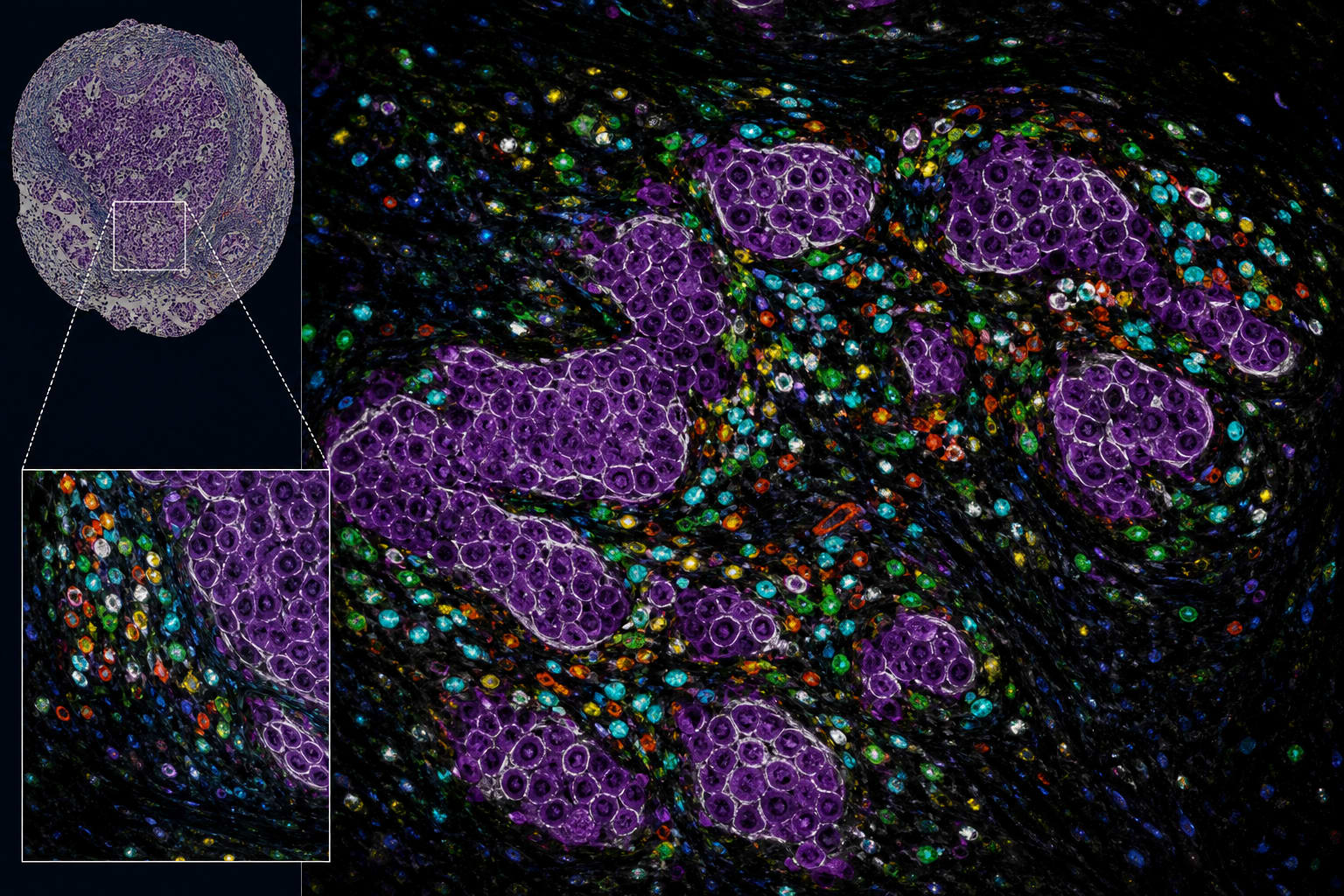
Clinical Report: Spatial Arrangement of the Immune Microenvironment in LAR+ TNBC
Overview
This exploratory study characterizes the immune microenvironment in luminal androgen receptor-positive (LAR+) triple-negative breast cancer (TNBC).
Background
Triple-negative breast cancer (TNBC) is a heterogeneous disease with limited treatment options and high mortality rates. The LAR+ subtype of TNBC is characterized by lower sensitivity to chemotherapy and distinct immune microenvironment features.
Data Highlights
No numerical data or trial data provided in the article.
Key Findings
Patients achieving pCR had higher pre-treatment densities of CD20+PD-1+, CD4+FOXP3+, and CD8+PD-1+TIM3+ immune cells.
Spatial analyses showed that tumor cells in responders were initially closer to PD-L1-expressing tumor cells, with proximity decreasing after neoadjuvant therapy (NAT).
In non-responders, immunosuppressive tumor cells moved closer to tumor cells post-treatment.
NAT in responders was associated with a spatial repositioning of CD4+ and CD8+ T cells toward tumor cells.
B cells and regulatory B cells exhibited differential spatial dynamics between responders and non-responders.
Clinical Implications
The findings suggest that specific immune enrichments and spatial dynamics may influence treatment outcomes in LAR+ TNBC. Understanding these patterns could inform future therapeutic strategies and patient stratification in clinical trials.
Conclusion
This study highlights the importance of the immune microenvironment's spatial arrangement in LAR+ TNBC and its potential role in treatment response. Further research with larger cohorts is needed to validate these observations.