Spontaneous empyema and brain abscess in an intensive care population: clinical presentation, microbiology, and factors associated with outcome - Report - MDSpire
Advertisement
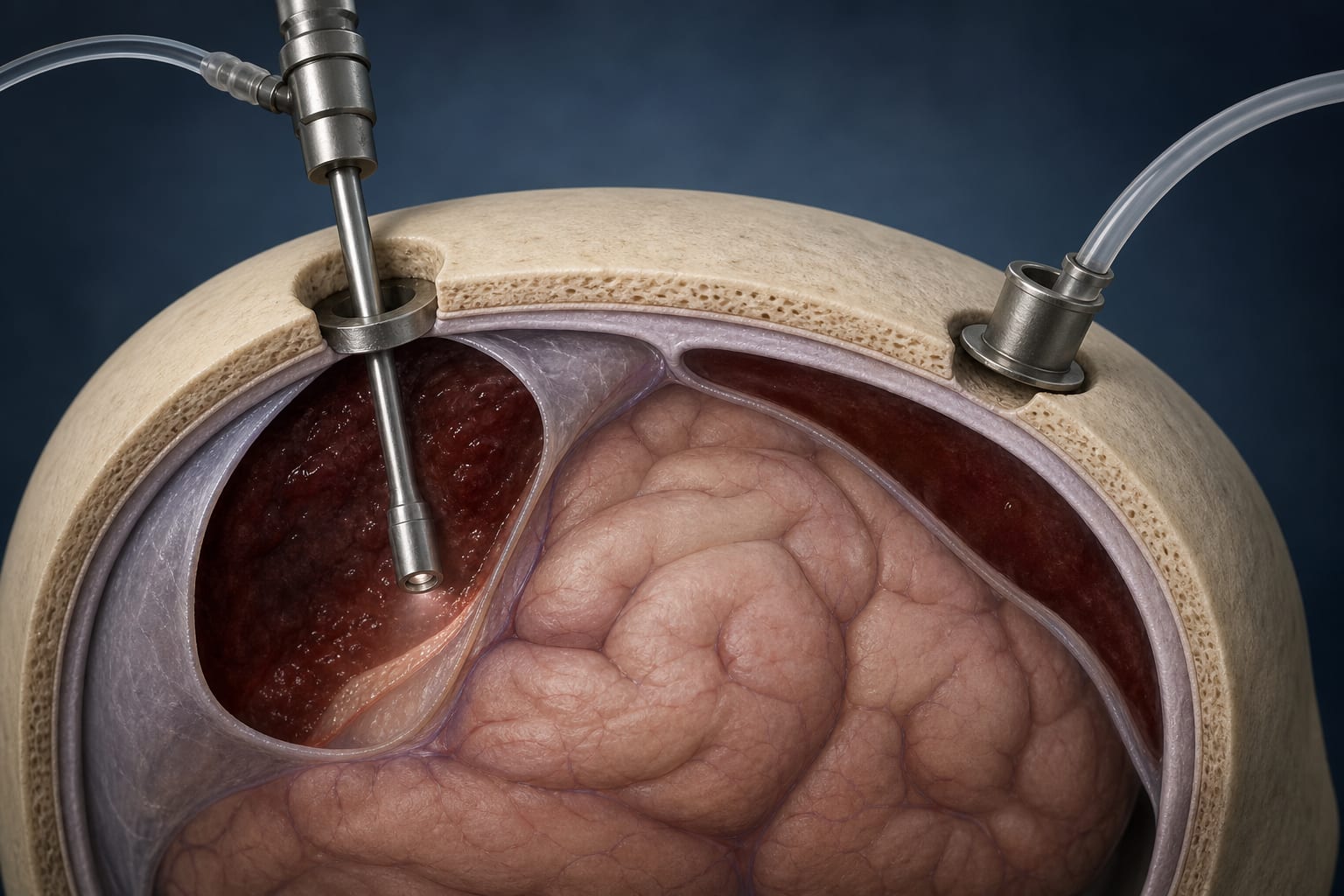
Spontaneous empyema and brain abscess in an intensive care population: clinical presentation, microbiology, and factors associated with outcome
Clinical Characteristics and Outcomes of Spontaneous Empyema and Brain Abscess in ICU
Overview
This retrospective study analyzed 45 critically ill patients with spontaneous intracranial empyema or brain abscess admitted to a Neurocritical Care Unit. The majority were male with a mean age of 49.7 years, and 84% survived with favorable outcomes. Older age, decreased consciousness, shorter symptom-to-admission time, and mechanical ventilation were associated with unfavorable outcomes.
Background
Severe intracranial infections such as epidural or subdural empyema and pyogenic brain abscess are rare but serious conditions with an incidence of 0.4 to 0.9 per 100,000 per year in developed countries. Despite advances in diagnosis and treatment, mortality remains high at 5–15%, with long-term increased risk of death. Prior studies have rarely focused on intensive care populations with these infections, highlighting the need to understand clinical features and outcome determinants in critically ill patients.
Data Highlights
Characteristic
Value
Number of patients analyzed
45
Mean age (years)
49.7 ± 18.3
Male patients
60%
Patients with relevant comorbidities
47%
Patients presenting with classical triad (fever, headache, focal deficits)
27%
Patients with normal inflammatory markers (CRP, PCT, leucocytes)
35%
Favorable outcome (GOSE 5–8)
84%
Unfavorable outcome (GOSE 1–4)
16%
Mortality rate
9%
Right-sided abscess/empyema
69%
Multifocal abscesses
20%
Positive abscess cultures
86%
Patients with prior antibiotic therapy
47%
Gram-positive bacteria detected
59%
Patients with anaerobic bacteria
30%
Key Findings
Older age (mean 65.1 years) was significantly associated with unfavorable outcome (p = 0.014).
Shorter time from symptom onset to ICU admission correlated with worse outcomes (5 ± 2.4 days; p = 0.013).
Decreased level of consciousness (GCS < 9) at admission was more frequent in patients with unfavorable outcome (43% vs 3%; p = 0.009).
Mechanical ventilation was more common in patients with unfavorable outcomes (29% vs 5%; p = 0.049).
Infection origin was identified in 60% of patients, with sinusitis being the most frequent source (24%).
Microbiological cultures from abscess material were positive in 86% of cases, with gram-positive bacteria predominating (59%) and anaerobes present in 30%.
Clinical Implications
Early recognition and prompt ICU admission are critical, especially in older patients and those with decreased consciousness, to improve outcomes in spontaneous intracranial empyema and brain abscess. Empiric antibiotic therapy should consider the predominance of gram-positive and anaerobic bacteria. Mechanical ventilation requirement may indicate more severe disease and poorer prognosis.
Conclusion
Spontaneous intracranial empyema and brain abscess in critically ill patients carry significant morbidity and mortality, with age, neurological status, and timing of ICU admission being key outcome determinants. Microbiological diagnosis remains essential despite prior antibiotic therapy to guide targeted treatment.
References
Epidemiology and mortality of brain abscesses [3, 5, 6, 12]
Outcome assessment using Glasgow Outcome Scale Extended [14, 20, 23]
Sepsis definition and criteria [17]
Previous intensive care study on intracranial infections [19]