Clinical Report: Assessment of 18F-FDG PET in Focal Epilepsy Variations
Overview
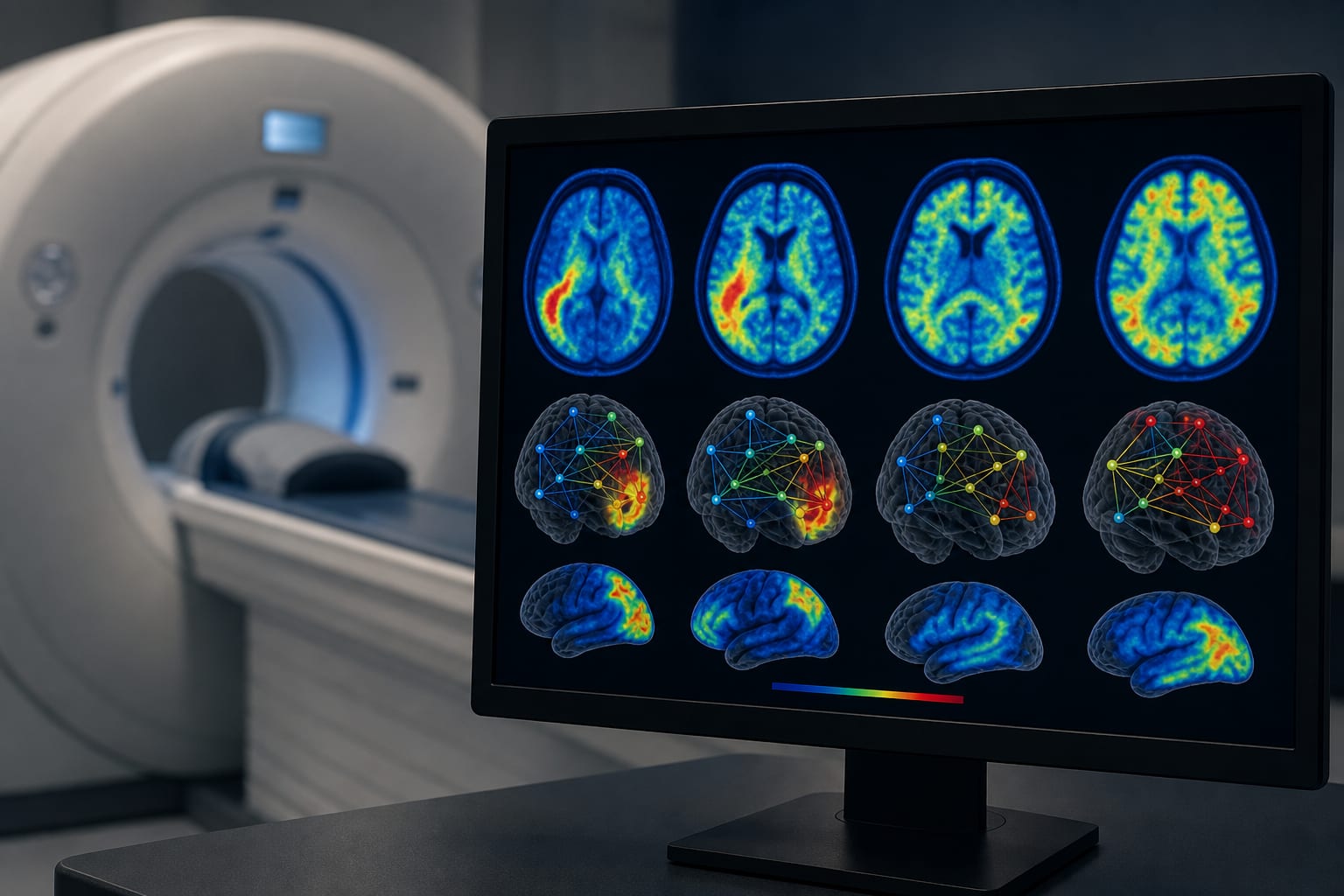
This study investigates the topological alterations in metabolic connectivity in patients with focal epilepsy, specifically right temporal lobe epilepsy (RTLE), left temporal lobe epilepsy (LTLE), and extra temporal lobe epilepsy (ETLE). Significant differences in metabolic network connectivity were observed compared to healthy controls, with implications for prognosis in ETLE patients.
Background
Focal epilepsy is a prevalent neurological condition affecting millions globally, often linked to structural brain lesions. Understanding the metabolic connectivity variations in different subtypes of focal epilepsy can enhance diagnostic accuracy and inform treatment strategies. The use of 18F-FDG PET as a biomarker for assessing these variations is crucial for improving patient outcomes.
Data Highlights
Group
Key Disparity Nodes
RTLE
Right Rolandic area, Bilateral cerebellum, Left superior parietal gyrus
LTLE
Left middle temporal gyrus, Right fusiform gyrus, Left thalamus, Right calcarine area
ETLE
Unilateral postcentral gyrus, Bilateral supramarginal gyrus, Right thalamus, Caudate
Key Findings
RTLE, LTLE, and ETLE patients showed significant alterations in metabolic network connectivity compared to healthy controls (p < 0.01, FDR-corrected).
Distinct nodes of disparity were identified for each epilepsy subtype, indicating unique metabolic connectivity patterns.
In ETLE patients, certain edge connectivity metrics correlated positively with prognosis classifications.
18F-FDG PET serves as an informative tool for identifying potential epileptic zones in conjunction with MRI findings.
The study highlights the importance of metabolic connectivity in understanding the clinical symptomatology of focal epilepsy.
Clinical Implications
The findings suggest that 18F-FDG PET can be utilized to assess metabolic connectivity variations in focal epilepsy, which may aid in prognosis and treatment planning. Clinicians should consider integrating metabolic connectivity data with structural imaging for comprehensive patient evaluations.
Conclusion
This research underscores the distinct metabolic network characteristics in focal epilepsy subtypes, providing a foundation for future studies on imaging-based biomarkers and their clinical relevance.