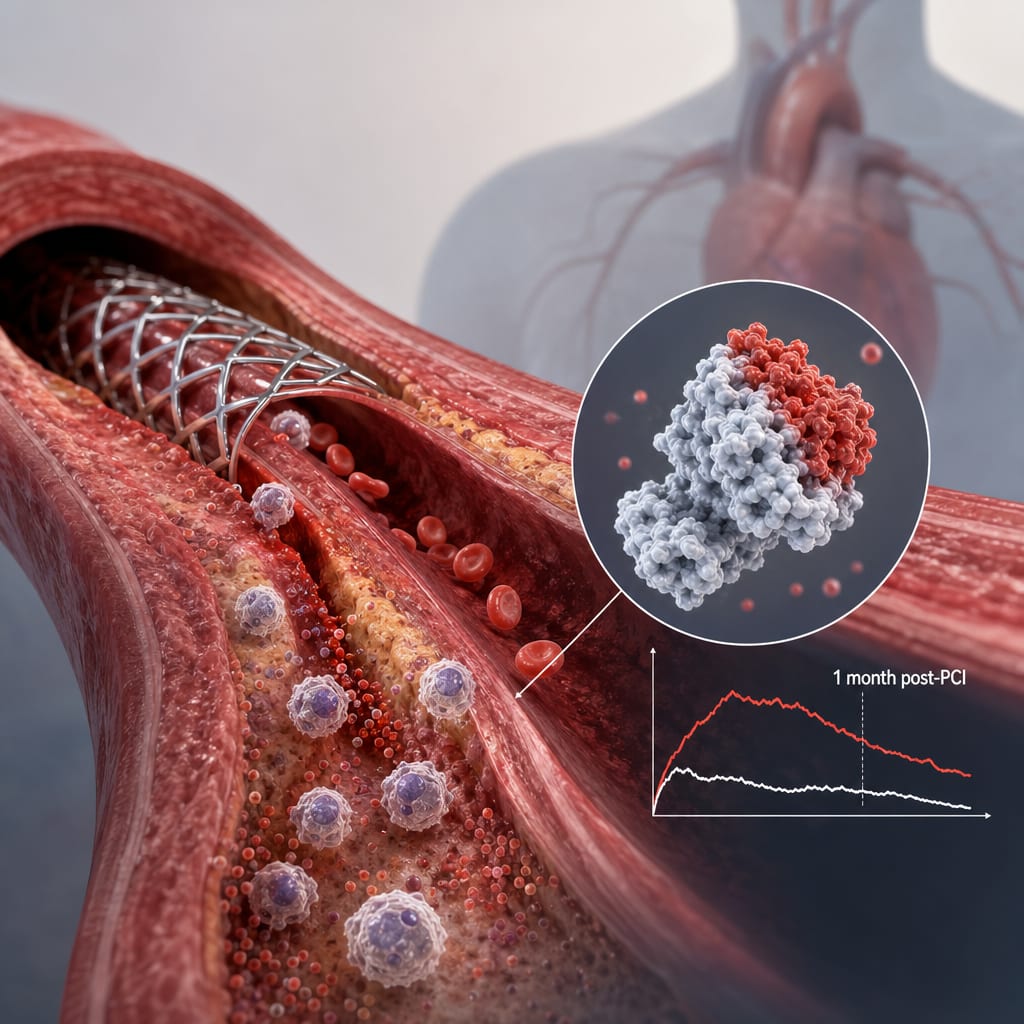
This study demonstrates that a higher intrinsic capacity (IC) score is significantly associated with increased all-cause and cardiovascular rehospitalization risk in patients with coronary artery disease (CAD) following percutaneous coronary intervention (PCI). The findings suggest that IC can serve as a valuable tool for predicting rehospitalization outcomes in this population.
Background
Coronary artery disease (CAD) poses a significant burden on patients and healthcare systems, with high rates of rehospitalization following PCI. Identifying patients at risk for readmission is crucial for improving long-term outcomes and quality of life. The concept of intrinsic capacity (IC) offers a new perspective on patient health, focusing on functional ability rather than solely on disease presence.
Data Highlights
Outcome
Hazard Ratio (HR)
95% Confidence Interval (CI)
All-cause rehospitalization (IC = 4 vs IC = 0)
3.07
1.89–5.00
Cardiovascular rehospitalization (IC = 4 vs IC = 0)
5.23
2.30–11.89
AUC for all-cause rehospitalization
-
0.692 (0.664–0.729)
Key Findings
A higher IC score is independently associated with increased all-cause rehospitalization risk.
IC score predicts cardiovascular rehospitalization risk with a significant hazard ratio.
The relationship between IC score and rehospitalization risk is consistent across different lesion morphologies and revascularization strategies.
IC score does not significantly predict non-cardiovascular rehospitalization.
Healthcare providers should consider incorporating IC assessments into routine evaluations for CAD patients post-PCI to identify those at higher risk for rehospitalization. Early interventions based on IC scores may improve patient outcomes and reduce healthcare utilization.
Conclusion
The study highlights the importance of intrinsic capacity as a predictive tool for rehospitalization in CAD patients following PCI, suggesting that functional assessments can enhance risk stratification and patient management.