Orosomucoid 2 (ORM2) in type 2 diabetes and coronary artery disease: a potential link between insulin resistance and vascular inflammation - Report - MDSpire

Orosomucoid 2 (ORM2) in type 2 diabetes and coronary artery disease: a potential link between insulin resistance and vascular inflammation

  • By

  • Xia Sun

  • Xiang Tang

  • Guoyue Yuan

  • June 25, 2026

  • 0 min

Share

Clinical Report: The Role of Orosomucoid 2 (ORM2) in T2DM and CAD

Background

Type 2 diabetes mellitus (T2DM) and coronary artery disease (CAD) are major contributors to global morbidity and mortality, with a well-established bidirectional relationship. Chronic inflammation and metabolic dysregulation are central to the progression of atherosclerosis in this context. Understanding the molecular mediators, such as ORM2, that link these conditions is crucial.

Data Highlights

No numerical data or trial data provided in the source material.

Key Findings

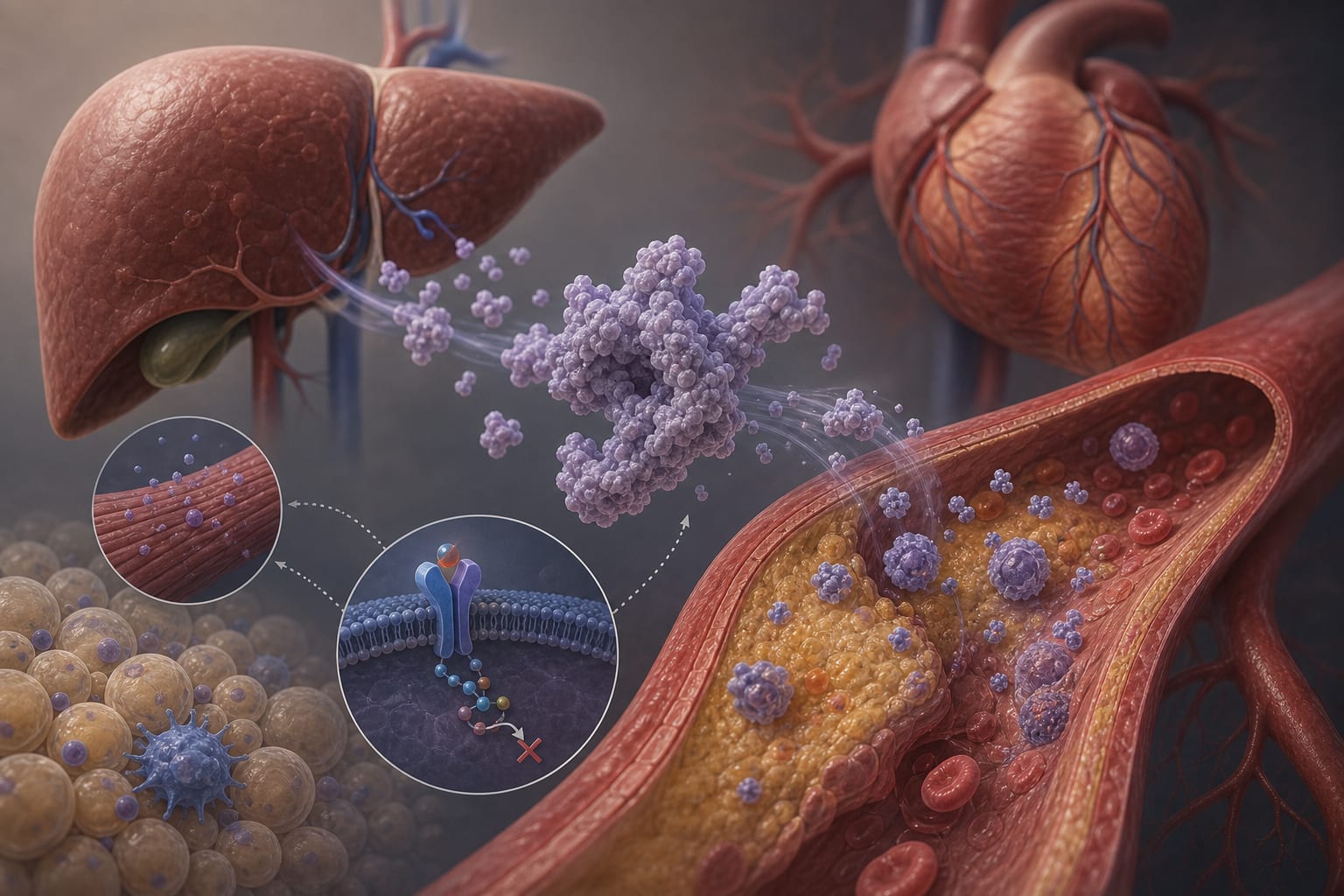
  • ORM2 is a hepatocyte-derived glycoprotein involved in metabolic regulation and vascular inflammation.
  • Reduced ORM2 expression is observed in obesity and insulin-resistant states.
  • Circulating ORM2 levels are associated with diabetic nephropathy and increased risk of myocardial infarction.
  • ORM2 suppresses hepatic de novo lipogenesis and enhances insulin sensitivity through specific signaling pathways.
  • Recombinant ORM2 has been shown to attenuate atherosclerosis and hepatic steatosis in preclinical studies.
  • ORM2 is regulated by pro-inflammatory cytokines that are relevant to T2DM and CAD pathogenesis.

Clinical Implications

Further research is needed to explore the role of ORM2 in the context of T2DM and CAD.

Conclusion

ORM2 emerges as a significant player in the interplay between T2DM and CAD, warranting further investigation into its role as a biomarker and therapeutic target.

Related Resources & Content

  1. Frontiers in Cardiovascular Medicine, 2026 -- Role of glucagon-like peptide-1 receptor agonists in type 2 diabetes-associated atherosclerosis: from vascular mechanism to omics-based biomarkers and imaging
  2. The Journal of Clinical Endocrinology & Metabolism -- Influence of Osteocalcin on Insulin Sensitivity, Secretion, and β-cell Function in Mexican American Populations
  3. Frontiers in Endocrinology -- Gut microbiota in type 2 diabetes mellitus: mechanistic links between dysbiosis, insulin resistance, and chronic low-grade inflammation
  4. The American Diabetes Association Releases “Standards of Care in Diabetes—2026” | American Diabetes Association
  5. ACC/AHA Task Force on Clinical Practice Guidelines
  6. Inflammation and Cardiovascular Disease: 2025 ACC Scientific Statement: A Report of the American College of Cardiology | JACC
  7. Soluble Urokinase Plasminogen Activator Receptor (suPAR) Mediates the Impact of Diabetes on Adverse Outcomes in Coronary Artery Disease | Diabetes Care | American Diabetes Association
  8. Exploring the pathways linking fasting insulin to coronary artery disease: a proteome-wide Mendelian randomization study | BMC Medicine
  9. Frontiers | Orosomucoid 2 (ORM2) in Type 2 Diabetes and Coronary Artery Disease: A Potential Link Between Insulin Resistance and Vascular Inflammation
  10. Identification of Potential Therapeutic Targets for Coronary Atherosclerosis from an Inflammatory Perspective Through Integrated Proteomics and Single-Cell Omics
  11. Basic Research in Cardiology — Inflammatory Signaling Pathways Involving the CD40–CD40L–TRAF Cascade in Diabetes and Hypertension: Findings from Animal and Human Research
  12. The American Diabetes Association Releases “Standards of Care in Diabetes—2026” | American Diabetes Association
  13. ACC/AHA Task Force on Clinical Practice Guidelines
  14. Inflammation and Cardiovascular Disease: 2025 ACC Scientific Statement: A Report of the American College of Cardiology | JACC
  15. Soluble Urokinase Plasminogen Activator Receptor (suPAR) Mediates the Impact of Diabetes on Adverse Outcomes in Coronary Artery Disease | Diabetes Care | American Diabetes Association
  16. Exploring the pathways linking fasting insulin to coronary artery disease: a proteome-wide Mendelian randomization study | BMC Medicine | Full Text
  17. Frontiers | Orosomucoid 2 (ORM2) in Type 2 Diabetes and Coronary Artery Disease: A Potential Link Between Insulin Resistance and Vascular Inflammation
  18. Identification of Potential Therapeutic Targets for Coronary Atherosclerosis from an Inflammatory Perspective Through Integrated Proteomics and Single-Cell Omics

Original Source(s)

Related Content