Clinical Report: Integration of Dual-Modal DWI-ADC MRI with Clinical Data
Overview
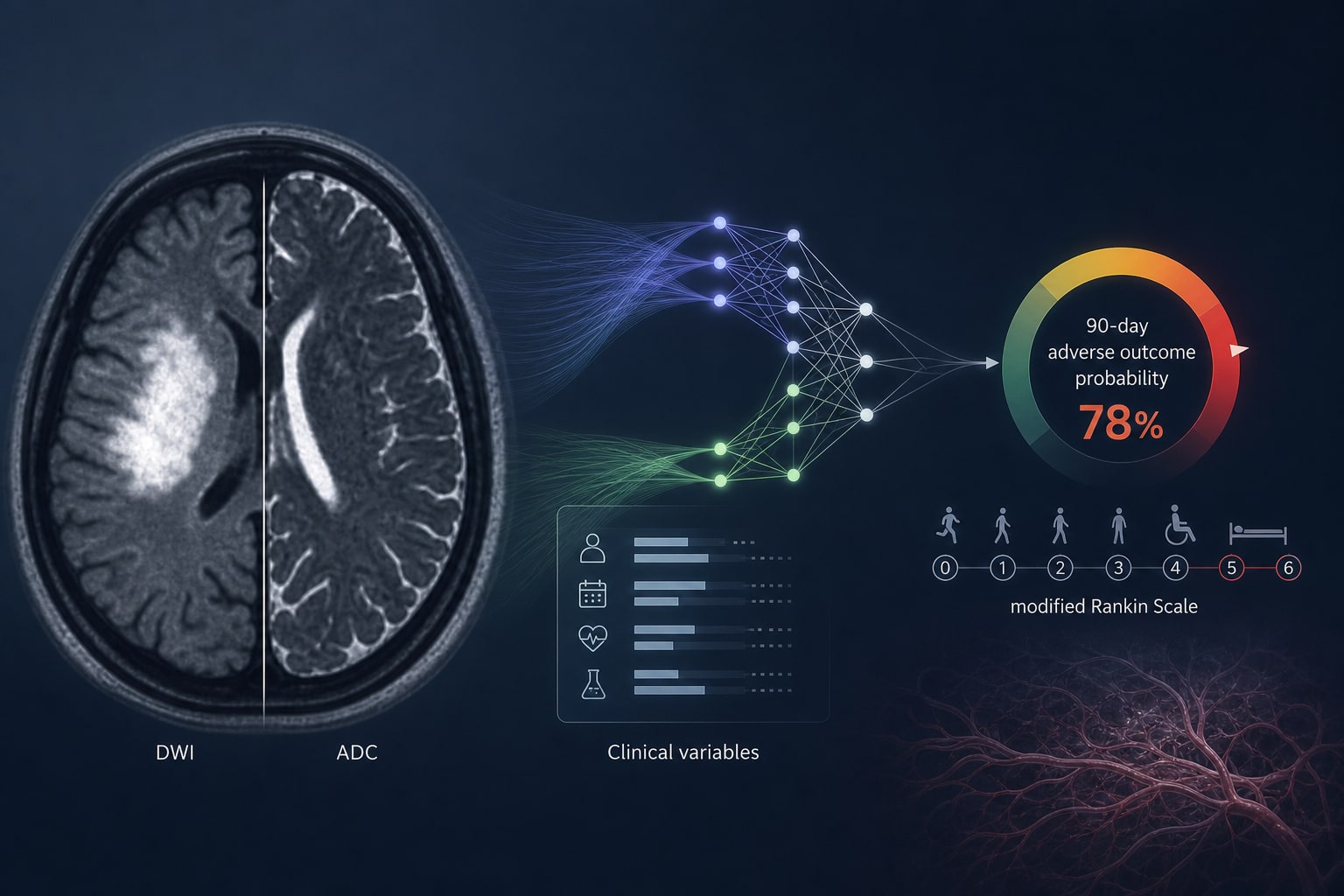
This study developed a stacked ensemble model that integrates DWI and ADC MRI imaging predictions with clinical data to predict poor functional outcomes in acute ischemic stroke patients.
Background
Acute ischemic stroke (AIS) can lead to significant neurological damage. Early prediction of functional outcomes is essential for effective risk stratification and rehabilitation planning.
Data Highlights
Model
AUC
Sensitivity
Specificity
Brier Score
Fusion Model
0.951 (95% CI: 0.908–0.994)
0.889
0.911
0.094
Clinical Model
-
-
-
0.089
Wouters 2018 Model
-
-
-
0.077
Imaging Model
-
-
-
0.122
Key Findings
The fusion model achieved an AUC of 0.951 in predicting poor functional outcomes at 90 days.
Sensitivity and specificity of the fusion model were 0.889 and 0.911, respectively.
The fusion model significantly outperformed the imaging model in terms of AUC (p < 0.05).
Brier scores indicated that the fusion model had a score of 0.094, which was better than the imaging model's score of 0.122.
Clinical Implications
The integration of DWI and ADC MRI with clinical data may enhance the predictive accuracy for functional outcomes in AIS patients. However, further external validation and prospective evaluation are necessary before implementing this model in clinical practice.
Conclusion
The fusion model demonstrates high internal discrimination for predicting outcomes in acute ischemic stroke.